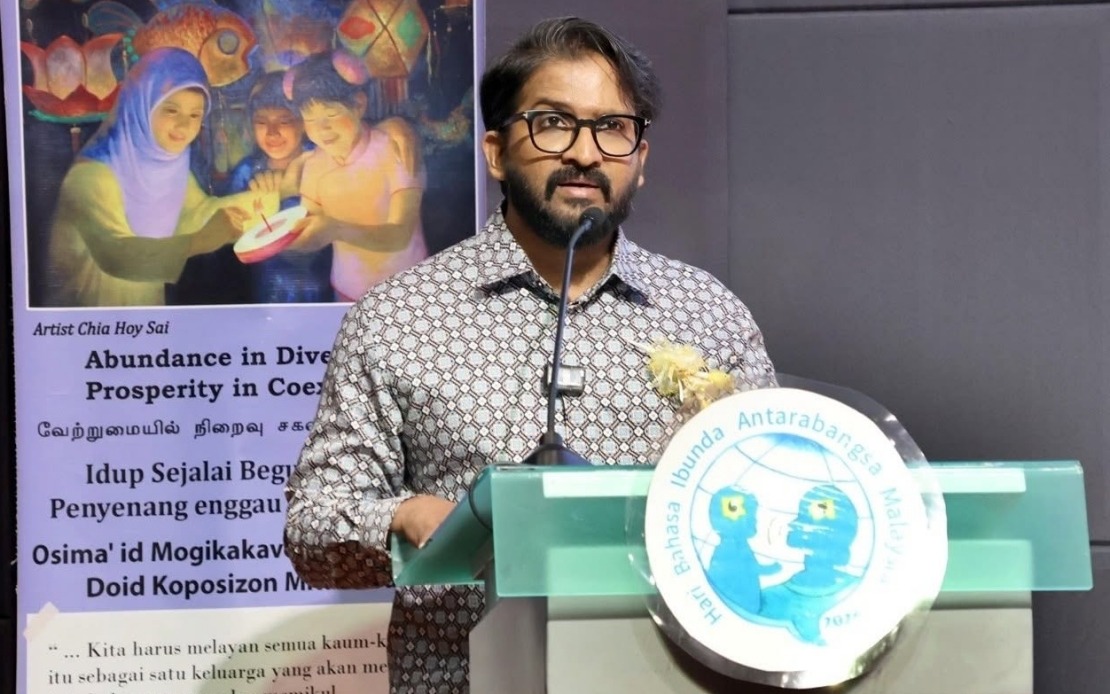
Deputy National Unity Minister R. Yuneswaran has called for a reinvigorated focus on mother-tongue proficiency, particularly among Malaysia's younger generation, as a strategic tool to reduce societal friction stemming from race, religion and royalty disputes that plague social media platforms. Speaking through a social media post, Yuneswaran articulated a vision in which linguistic competency in one's heritage language serves as a foundation for deeper intercommunal understanding and respect.
The minister attributed the persistent emergence of 3R controversies—which regularly ignite heated exchanges and polarisation across digital spaces—to a fundamental gap in mutual comprehension regarding cultural histories and linguistic traditions. His diagnosis suggests that superficial knowledge of one another's backgrounds leaves communities vulnerable to misunderstandings that can rapidly escalate into confrontation. By extension, he proposes that investing in mother-tongue literacy creates pathways toward genuine appreciation of the distinct identities that coexist within the Malaysian tapestry.
Yuneswaran emphasised that language transcends its utilitarian function as a communication mechanism. Rather, he framed it as a vessel carrying profound dimensions of identity, heritage and the values systems that bind communities together. This conceptual framework reorients the conversation away from language as a potential divisive element and toward its role as a repository of cultural wisdom and social cohesion. The minister's position aligns with scholarly understanding that linguistic proficiency enables individuals to access the intellectual and emotional landscapes embedded within their ancestral traditions.
Malaysia's extraordinary linguistic ecosystem, comprising approximately 130 distinct languages across its population, represents a testament to the nation's historical openness to diverse settlements and cultural integration. Rather than construing this diversity as inherently fragmentary, Yuneswaran advocated for reconceptualising it as a competitive advantage and source of collective strength. This reframing carries particular resonance in Southeast Asia, where linguistic diversity remains a defining characteristic of regional societies grappling with similar questions of national coherence and pluralistic governance.
A significant dimension of Yuneswaran's argument addresses a persistent anxiety among policymakers and parents: whether proficiency in mother tongues might undermine competency in the national language or broader multilingual capacity. Drawing on his personal background as an Indian Malaysian with exposure to both Chinese and national school systems, Yuneswaran rejected this false dichotomy. His testimony suggests that foundational literacy in one's heritage language actually strengthens rather than weakens the cognitive architecture required for acquiring additional languages and engaging with Bahasa Malaysia.
This position carries important implications for Malaysian educational policy and resource allocation. Current national curricula increasingly prioritise English and Bahasa Malaysia, often at the expense of vernacular language instruction. Yuneswaran's intervention implicitly challenges this hierarchy by suggesting that mother-tongue education warrants institutional parity and dedicated funding. The argument resonates particularly with communities whose ancestral languages face erosion among younger cohorts, threatening the intergenerational transmission of cultural knowledge.
The National Unity Ministry's mandate under the 13th Malaysia Plan encompasses a deliberate strategy to consolidate nation-building initiatives centred on understanding, respect and reciprocal learning. This institutional framework provides Yuneswaran with a platform to position mother-tongue education as integral to national unity rather than peripheral to it. The alignment between linguistic proficiency and social cohesion reflects a sophisticated understanding of how language shapes consciousness and community belonging.
For Malaysian policymakers and civil society, the minister's intervention offers an alternative lens through which to address persistent 3R tensions that have periodically destabilised national discourse. Rather than relying primarily on legal prohibitions or moral exhortations against divisive speech, the approach emphasises the preventative potential of cultural literacy and linguistic competency. By encouraging deeper familiarity with one another's linguistic and heritage traditions, communities develop empathetic frameworks less susceptible to inflammatory stereotyping and hostile generalisation.
The challenge in implementing this vision lies in translating rhetorical commitment into concrete policy measures. Schools require adequate teacher training, curriculum development and resource investment to meaningfully deliver mother-tongue instruction alongside national curriculum requirements. Additionally, digital platforms where 3R controversies flourish demand complementary interventions addressing content moderation and digital literacy. Yuneswaran's formulation, while conceptually compelling, requires institutional coordination across education, digital governance and community engagement sectors.
For regional observers, Malaysia's grappling with linguistic diversity and social cohesion offers pertinent lessons. Indonesia, Singapore and other Southeast Asian nations similarly navigate competing demands between linguistic heritage preservation and national language unification. The deputy minister's advocacy for complementarity rather than zero-sum competition between language domains presents a model potentially transferable across borders, though implementation would require adaptation to distinct constitutional frameworks and demographic contexts.
%22%2F%3E%3C%2Fpattern%3E%3C%2Fdefs%3E%3Crect%20width%3D%22100%25%22%20height%3D%22100%25%22%20fill%3D%22url(%23ph180wag)%22%2F%3E%3Crect%20width%3D%22100%25%22%20height%3D%22100%25%22%20fill%3D%22url(%23ph180wap)%22%2F%3E%3Ctext%20x%3D%2250%25%22%20y%3D%2250%25%22%20text-anchor%3D%22middle%22%20dominant-baseline%3D%22central%22%20fill%3D%22rgba(255%2C255%2C255%2C0.95)%22%20font-family%3D%22Georgia%2C%20'Times%20New%20Roman'%2C%20serif%22%20font-weight%3D%22700%22%20font-size%3D%22170%22%20letter-spacing%3D%22-0.02em%22%3EMalaysia%3C%2Ftext%3E%3C%2Fsvg%3E)