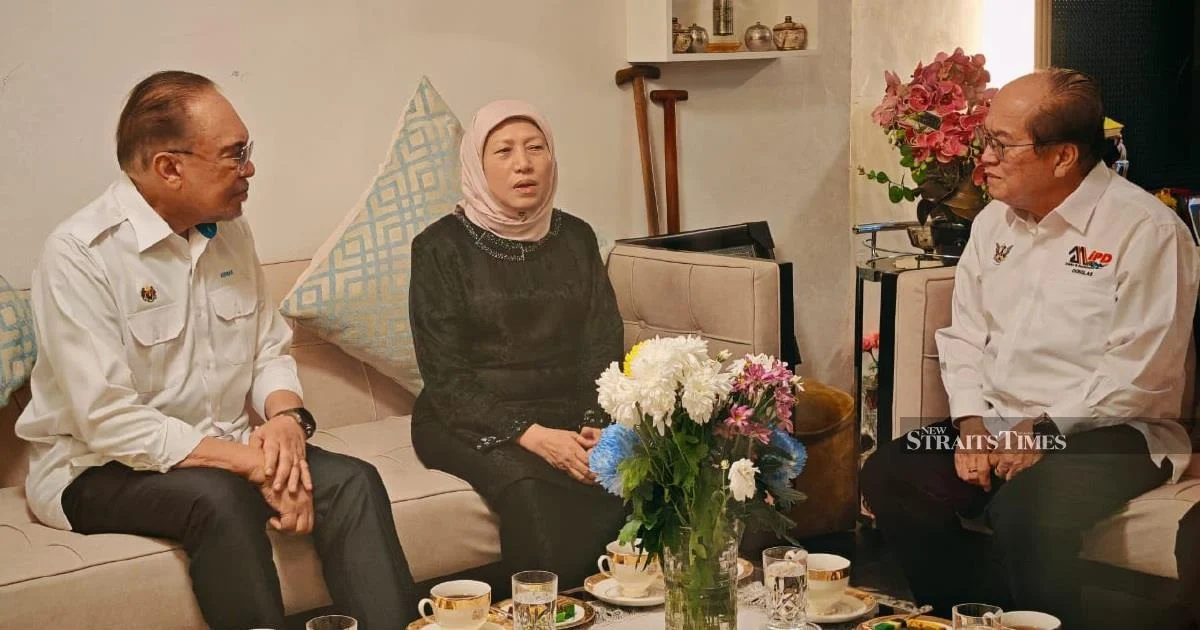
Prime Minister Datuk Seri Anwar Ibrahim made a compassionate gesture by visiting Women, Family and Community Development Minister Datuk Seri Nancy Shukri in Kuching to express his sympathies following the loss of her husband, Datuk Kamil Misuari. The visit underscores the government's commitment to supporting senior officials during personal difficulties and demonstrates the bond maintained among Malaysia's political leadership during times of grief.
Nancy Shukri has held the portfolio for Women, Family and Community Development, a position that places her at the forefront of efforts to strengthen family institutions and promote the welfare of Malaysian women and children. Her tenure in this role has involved overseeing critical policy initiatives affecting millions of families across the nation. The loss of a spouse represents a profound personal challenge that extends beyond the realm of political duty, affecting her both as a public servant and as an individual navigating significant life change.
The Prime Minister's decision to personally visit Kuching to pay his respects carries symbolic weight within Malaysia's political context. Such gestures, while rooted in traditional expressions of condolence common across Malaysian society, carry particular significance at the highest levels of government. They reflect the protocols and courtesies that bind the cabinet together and reinforce the sense of collective responsibility within the administration.
Datuk Kamil Misuari's passing represents the loss of a member of a prominent family with connections to Malaysia's political and social landscape. While details about his background and life remain limited in public discourse, his relationship to a serving minister means his death touches upon the broader Malaysian community, particularly given Nancy Shukri's position of influence and visibility in national affairs.
The timing and nature of such condolence visits often carry implications for ministerial stability and government cohesion. When a Prime Minister personally attends to the needs of a cabinet colleague during personal loss, it signals the government's recognition of that minister's continued importance to the administration's functioning. This becomes particularly relevant in the context of Malaysia's complex political landscape, where maintaining cabinet unity remains essential to governing effectively.
Nancy Shukri's portfolio involves managing matters that directly impact Malaysian families and society at large. Issues relating to women's empowerment, family welfare, and community development continue to be areas of significant focus within the government's broader agenda. The ministry's work encompasses everything from supporting vulnerable populations to promoting gender equality and strengthening social cohesion across diverse communities.
In Malaysia's political culture, death and mourning hold particular significance in the Islamic faith, which is practised by the majority population. Traditional practices around condolence and funeral observances form an integral part of the nation's social fabric. The Prime Minister's visit aligns with these established customs while also demonstrating the human dimensions of leadership beyond policy and administration.
The gesture illustrates how Malaysia's political leadership maintains personal relationships alongside their professional responsibilities. Such moments, though centred on individual grief, become part of the broader narrative of government operations and highlight the human elements that underpin institutional functioning. They reveal that despite the pressures and complexities of running a nation, acknowledgment of personal loss remains an important aspect of how political communities operate.
For Nancy Shukri, balancing the demands of her ministerial role with personal grief presents a significant challenge that many working parents and spouses have faced during difficult periods. The public acknowledgment of her loss through the Prime Minister's visit provides both personal comfort and professional validation of her importance to the administration's continuity. This becomes relevant as Malaysia continues navigating its political and social priorities in the coming months.
The incident also serves as a reminder of the interconnectedness of Malaysia's political leadership and the broader business, social, and family networks that characterise the nation's elite circles. These connections, while sometimes scrutinised in public discourse, also function as sources of mutual support and solidarity during challenging moments.
As the nation moves forward, Nancy Shukri's ministry will continue its work on issues affecting Malaysian families and communities. The Prime Minister's show of support ensures that the government's commitment to its policy agenda remains firm while simultaneously acknowledging the human realities facing those entrusted with leading critical portfolios.