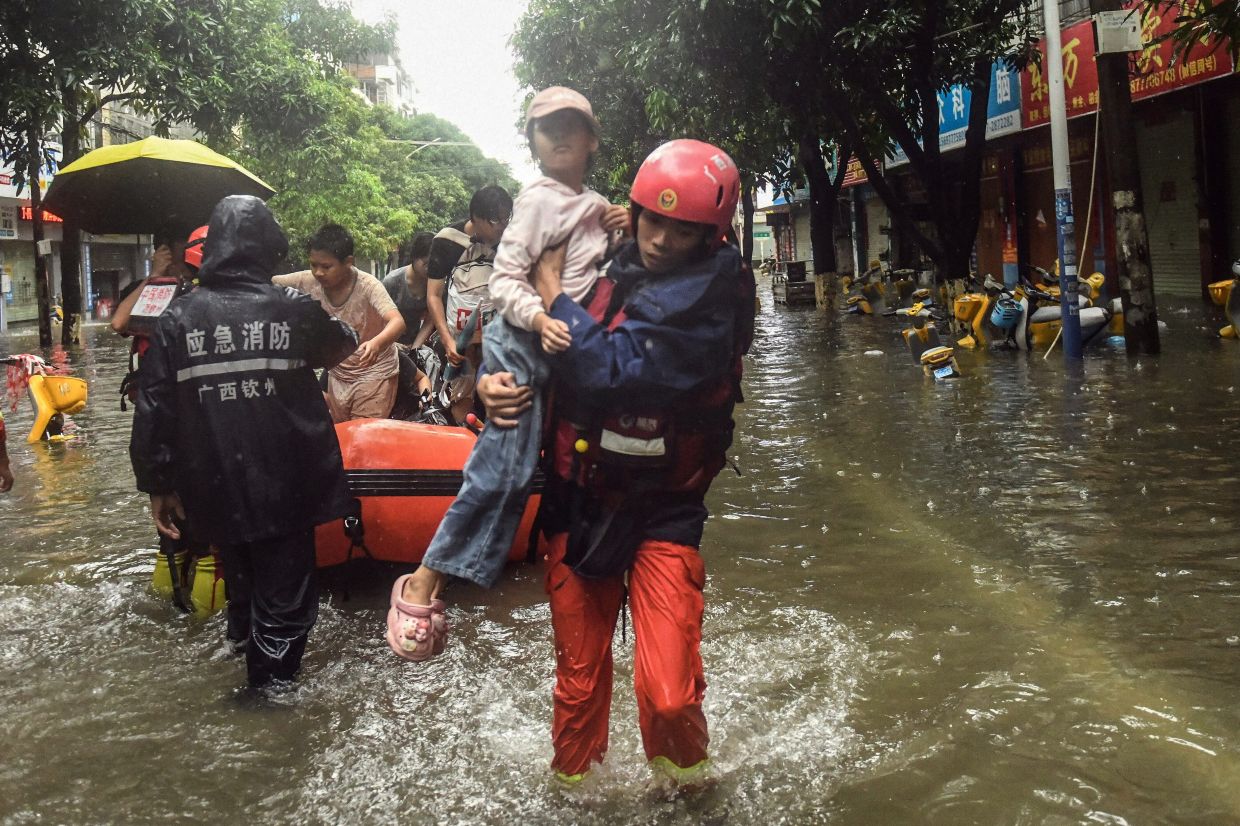
Rescue teams across China are intensifying their search for survivors in flood-ravaged regions following a series of severe weather events that have claimed at least 17 lives and displaced more than 100,000 people. The disasters underscore the country's vulnerability to extreme weather patterns, particularly during the summer monsoon season when multiple provinces face simultaneous threats from torrential rains, flash floods, and violent storms. Officials have warned that conditions will deteriorate further on Wednesday as persistent rainfall continues to batter affected areas, compounding an already dire humanitarian situation.
The southern province of Guangxi has borne the brunt of destruction from Typhoon Maysak, with regional authorities reporting six confirmed deaths and at least 130,000 people evacuated to safety. The unprecedented rainfall has triggered a cascade of hydrological failures, with 40 rivers and waterways bursting their banks as water levels surge uncontrollably through densely populated areas. Agricultural communities have been particularly hard hit, with nearly 13,000 acres of farmland inundated or destroyed, threatening food security in the region and compounding economic losses for rural populations already vulnerable to climate-related shocks.
One of the most dramatic consequences of the flooding has been the catastrophic failure of a reservoir dam in Guangxi. Footage broadcast by state television CCTV captured the moment massive concrete walls collapsed under the relentless pressure of floodwaters, releasing torrents of muddy water downstream and forcing emergency rescue operations. Rescue personnel deployed on inflatable boats navigated through surging currents to evacuate stranded residents from flooded homes and villages, a dangerous endeavour that highlighted the intensity and speed of the water surge. Engineers and hydrologists have issued urgent warnings that additional water peaks are expected to reach dangerous levels at key monitoring points such as the Wuzhou Hydrological Station, where flood waters are predicted to exceed warning thresholds by more than six metres early Thursday.
China's central province of Hubei has simultaneously been ravaged by a separate weather system featuring violent thunderstorms and gale-force winds, conditions that have proven equally lethal. State media confirmed 11 deaths and injured 331 people in Hubei, with additional tornado warnings issued for multiple locations across the region. The infrastructure damage has been substantial, with nearly 4,800 houses damaged and 22 structures completely collapsed, displacing families and destroying homes built over generations. This dual catastrophe straining resources and rescue personnel across multiple provinces simultaneously demonstrates the cascading nature of extreme weather events in densely populated regions.
Chinese officials have elevated the emergency response to the second-highest alert level for flood-control operations in Guangxi, mobilising government resources across multiple agencies. Water Resources Minister Li Guoying articulated the severity of the situation, noting that the combination of unrelenting heavy rainfall and prolonged high water levels poses an unprecedented threat to the structural integrity of embankments and reservoirs throughout the disaster zone. The minister warned that infrastructure systems designed and built over decades may be overwhelmed by the magnitude of current hydrological stresses, a sobering acknowledgment of how extreme weather increasingly exceeds engineering safety margins.
Statewide relief operations have shifted into emergency mode, with authorities coordinating the distribution of essential supplies including food provisions, protective raincoats, and rubber boats to affected communities. The State Flood Control and Drought Relief Headquarters has directed resources toward the hardest-hit areas, though the speed and scale of the disaster continue to challenge logistics and coordination. International observers note that China's rapid deployment of rescue assets reflects institutional learning from previous catastrophic floods, though the increasing frequency and intensity of such events raise questions about the long-term adequacy of disaster preparedness frameworks.
Compounding the immediate crisis in Guangxi and Hubei, northwestern Gansu province is simultaneously managing a separate but equally deadly catastrophe. A catastrophic landslide that occurred Tuesday morning in Rencang village, Dangchang County, has claimed 21 lives as of Wednesday, with search and rescue operations concluding after initially reporting 33 people buried. The landslide, which struck around 6:56 am on Tuesday, buried entire sections of the village under tonnes of rock and soil, a disaster that unfolded with terrifying speed. Local authorities have allocated 30 million yuan (US$4.4 million) in reconstruction funding, though investigators continue examining the geological and meteorological factors that triggered the collapse.
These concurrent disasters across vastly different regions illustrate how China's geography and climate patterns expose multiple population centres to simultaneous hazards during certain seasons. Summer weather systems frequently deliver either torrential rainfall to some provinces while others experience drought conditions, creating disparate but equally severe challenges for resource allocation and emergency response coordination. The concentration of these events within a single week suggests that climate variability may be intensifying beyond historical patterns that informed current infrastructure and evacuation planning protocols.
President Xi Jinping has directed rescue personnel to pursue maximum effort in organising emergency operations and ensuring survivor recovery, political messaging that reflects both the severity officials assign to the situation and the traditional expectation that leadership will publicly prioritise disaster response. The directive underscores the political sensitivity surrounding natural disaster management in China, where public perception of government responsiveness to humanitarian crises influences broader confidence in state institutions. Rescuers are working under conditions of extreme physical danger, navigating flooded terrain, unstable structures, and ongoing severe weather to locate missing persons and extract survivors from dangerous situations.
These cascading disasters have renewed focus on climate adaptation and infrastructure resilience in China, issues that extend beyond immediate emergency response. Meteorological experts have identified links between changing precipitation patterns and broader climate dynamics, though debate continues regarding appropriate policy responses. The economic costs of simultaneous disasters across multiple provinces—spanning agricultural losses, infrastructure damage, reconstruction expenses, and disrupted economic activity—will accumulate substantially, with implications for regional growth and national fiscal planning. For Southeast Asian nations including Malaysia, China's experiences with extreme weather offer cautionary lessons about climate vulnerability and the necessity of strengthening disaster preparedness frameworks before catastrophic events occur.

