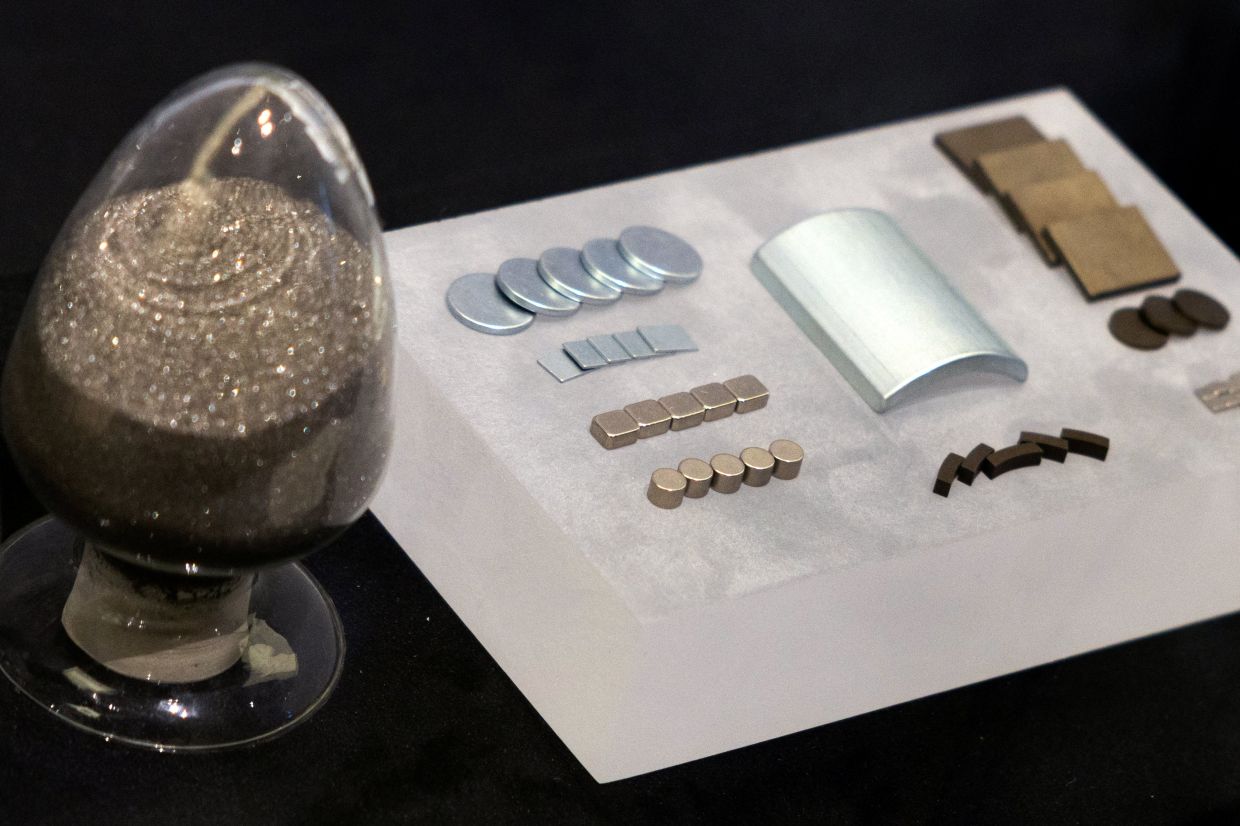
China is deepening its scientific engagement with Iran by extending collaborative research into rare earth exploration and processing, a domain that sits at the intersection of technological advancement and strategic geopolitical competition. The move, coordinated through China's National Natural Science Foundation (NSFC) and Iran's National Science Foundation, represents a calculated expansion of bilateral cooperation into minerals that have become central to modern defence systems and clean energy transitions globally.
The financial arrangement illustrates Beijing's commitment to the partnership. China will allocate 30,000 yuan—approximately US$4,200—per workshop to cover operational expenses such as meetings, accommodation, and domestic travel. Iran's foundation will assume responsibility for international travel costs for Iranian researchers and lodging for Chinese scientists visiting Iranian facilities. This shared investment model demonstrates mutual interest in developing Iran's mineral capabilities, which remain largely underdeveloped compared to global standards.
Rare earths comprise 17 metallic elements possessing distinctive magnetic and electronic properties essential to contemporary weapons systems. Their applications span from advanced missiles and fighter aircraft to sophisticated radar installations and electronic warfare equipment. The strategic importance of these materials has intensified significantly as nations recognise their role in military modernisation and economic competitiveness, particularly in aerospace and defence manufacturing.
The timing of this collaboration is notably consequential. The United States has recently repositioned itself regarding rare earth vulnerabilities, with Washington deploying rare earth elements in military operations and subsequently announcing US$3 billion in investment initiatives concentrated on critical mineral development and battery technology. These initiatives aim simultaneously to replenish military inventories and diminish American dependence on Chinese supply chains—a priority that has accelerated under renewed Trump administration policies.
China maintains overwhelming dominance in the global rare earth sector, possessing the planet's largest proven reserves whilst controlling the majority of worldwide production and processing capacity. More significantly, Beijing has progressively restricted the overseas transfer of technologies related to rare earth extraction and refinement. When tensions escalated following the previous trade dispute, China deployed export restrictions on rare earth materials, demonstrating the vulnerability of international supply chains and underscoring Washington's reliance on Chinese sources for critical defence applications.
Iran's rare earth endowment, by contrast, remains incompletely surveyed but holds considerable geological promise. The country's terrain encompasses iron ore and phosphate formations that scientists consider structurally compatible with rare earth mineral occurrence. Research has identified rare earth anomalies distributed across approximately 7,000 square kilometres of central Iranian territory, according to analysis conducted by the Hague Research Institute in the Netherlands. Nevertheless, Iran currently lacks the technological sophistication and industrial infrastructure required for commercial-scale extraction and processing, positioning it far behind established producers.
The scientific cooperation framework connecting the two nations traces its origins to 2017, when the respective foundation leaders signed a foundational memorandum of understanding in Beijing. The NSFC has characterised Iran as strategically important within China's Belt and Road Initiative framework, emphasising that enhanced collaboration will advance mutual scientific capabilities whilst generating tangible benefits for both populations. This rhetorical positioning underscores how Beijing integrates rare earth cooperation within its broader infrastructure and connectivity agenda across Eurasia and beyond.
Since the 2017 agreement, the two organisations have systematically funded collaborative research spanning mathematics, biological sciences, medicine, renewable energy systems, materials science, climate dynamics, and artificial intelligence applications. The breadth of this scientific cooperation provides diplomatic cover and legitimate institutional channels for knowledge exchange that might otherwise prove politically contentious. The joint workshop programme itself commenced in 2024, initially addressing climate change, artificial intelligence, advanced materials science, and manufacturing innovation, with each workshop receiving 150,000 yuan in funding.
The expanded 2024 call for proposals extends considerably beyond rare earth applications. Participating scientists may pursue research into nanomaterials for medical diagnostics, environmental pollution detection methodologies, earthquake-resistant construction techniques, and sustainable manufacturing processes. This diversification strategy allows both nations to frame their cooperation within conventional scientific domains whilst simultaneously building technical expertise and institutional relationships directly applicable to rare earth development. The portfolio approach also provides political insulation by demonstrating commitment to multiple fields rather than singular strategic objectives.
For Malaysia and Southeast Asia more broadly, this deepening China-Iran scientific partnership carries several implications. The region depends substantially on stable rare earth supplies for electronics manufacturing, renewable energy systems, and emerging green technology sectors. Chinese efforts to secure alternative rare earth sources, including through Iran's development, could reshape regional supply dynamics. Additionally, the expansion of Chinese scientific influence through mechanisms like joint foundations and workshop programmes represents a soft power instrument that mirrors Washington's technological engagement strategies, creating competitive dynamics that smaller nations must navigate carefully.
The geopolitical significance extends to questions of supply chain resilience and technological sovereignty. As the United States invests heavily in domestic rare earth production and seeks alternatives to Chinese sources, China's simultaneous cultivation of Iranian rare earth capabilities suggests Beijing is building redundancy whilst securing leverage over potential future global shortages. This strategic calculation differs markedly from conventional scientific collaboration, positioning rare earth research within classical great power competition for resource control and technological dominance.
The ongoing intensification of China-Iran scientific cooperation demonstrates how contemporary great power competition increasingly operates through institutional channels that blur distinctions between genuine academic exchange and strategic resource development. Malaysia, as a significant manufacturer and technology hub within Southeast Asia, should monitor developments in rare earth markets and supply chains that may emerge from this collaboration, whilst considering how regional nations might cultivate technological partnerships that enhance their strategic autonomy within increasingly contested mineral and technology domains.

