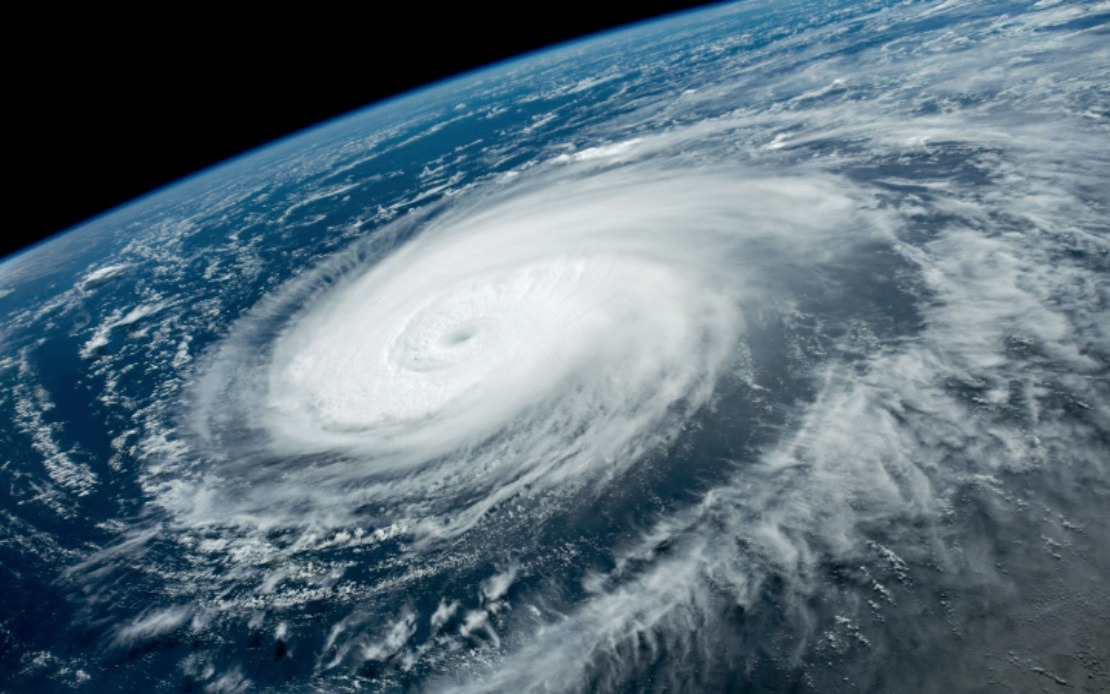
Eastern China's coastal provinces are in heightened state of readiness as Typhoon Dolphin bears down on the region, with government authorities implementing comprehensive precautionary measures to safeguard lives and infrastructure. The meteorological administration elevated its emergency classification to Level III on Saturday, simultaneously raising the public typhoon warning from yellow to orange, reflecting the intensifying threat posed by the approaching system. The storm is forecast to make landfall between Zhoushan in Zhejiang Province and Fuding in Fujian Province, with the critical window expected to occur from Sunday evening through Monday morning, giving regional authorities a narrow timeframe to complete evacuation and preparation activities.
Zhejiang Province, which faces direct exposure to Dolphin's path, declared its own typhoon emergency response at the second-highest level on Saturday, signalling the severity with which provincial officials regard the impending weather event. The scale of preparatory action has been substantial: more than 4,000 trained monitors have been stationed across the province to conduct systematic inspections of approximately 7,500 locations judged vulnerable to secondary hazards including landslides and other geological instability triggered by torrential rainfall. This preventive deployment reflects lessons learned from previous typhoon seasons when ground failures caused by heavy precipitation compounded initial storm damage and created rescue complications in affected mountainous and hilly terrain.
The economic disruptions initiated by provincial authorities underscore the seriousness of forecasts. By Friday morning, Zhejiang had already suspended passenger ferry operations across its entire network of 162 routes, effectively isolating island communities and severing transport corridors that normally facilitate commerce and movement of essential goods. Simultaneously, all 193 offshore construction projects were halted, with authorities mandating that 474 construction vessels be brought into protected harbours, preventing potential loss of expensive maritime equipment and eliminating the risk of worker casualties at sea during dangerous weather conditions.
Fujian Province has undertaken parallel defensive measures commensurate with its geographic vulnerability. Authorities implemented suspension of 40 passenger ferry services by Saturday midday and ordered cessation of operations at 115 offshore construction sites scattered along the littoral zone. Most significantly, all 1,210 registered fishing boats operating from the coastal city of Fuding were instructed to return to port, a massive mobilisation of the maritime workforce that displaces livelihoods and constrains food supply chains throughout the region. The mandatory recall of fishing fleets demonstrates official prioritisation of human safety, as vessels caught at sea during typhoon conditions face extreme peril from wind-driven waves and sudden changes in weather patterns.
Shanghai, positioned north of the primary impact zone, nevertheless remains exposed to Dolphin's outer bands and secondary effects. City authorities issued a blue-level typhoon alert on Friday, with meteorological forecasters warning that the metropolis could experience four consecutive days of strong winds and substantial rainfall. The disruption extends to transport networks serving the broader Yangtze River Delta economic zone; rail services throughout the region will face suspensions beginning Sunday, disrupting commuter movements and freight distribution across one of China's most economically vital corridors. This wider area of influence illustrates how typhoon impacts radiate beyond the immediate landfall zone, creating cascading consequences across multiple provinces and sectors.
Metorological assessments indicate that Typhoon Dolphin represents a more formidable threat than Typhoon Bavi, which made landfall in July and already occasioned significant damage. Xu Yinglong, chief forecaster at the National Meteorological Centre, explicitly cautioned that Dolphin may deliver stronger wind velocities and more abundant rainfall than its predecessor, suggesting the current storm system has organised more effectively over warm ocean waters and accumulated greater energy. Such comparative analysis provides crucial context for emergency planners, indicating that response protocols calibrated for Bavi may prove insufficient for Dolphin's actual force, necessitating enhanced precautions.
China's systematic approach to typhoon hazards reflects institutional maturity in disaster management protocols. The nation maintains a colour-coded warning framework with four graduated levels—red signifying maximum severity, followed by orange, yellow, and blue—permitting rapid public comprehension of threat intensity. Complementing this alert system is a parallel four-tier emergency response classification, with Level I representing the highest operational status. The dual-system architecture enables authorities to communicate threat escalation to both specialists and general populations, facilitating coordinated action across government agencies, private enterprises, and civilian populations.
For Malaysian observers, the Chinese response to Typhoon Dolphin offers instructive lessons regarding tropical cyclone preparedness in the region. Southeast Asia's monsoon zone experiences comparable storm systems with regularity, and the systematic evacuation protocols, maritime vessel recalls, and construction site suspensions employed by Chinese authorities represent proven methodologies applicable to Malaysian contexts. The pre-positioning of monitoring teams to detect secondary geological hazards reflects sophisticated understanding of typhoon-related risks beyond immediate wind and rainfall damage, a consideration increasingly relevant as climate variability intensifies extreme precipitation events throughout the equatorial and tropical zones.
The economic dimensions of Typhoon Dolphin's approach merit attention from regional policymakers concerned with supply chain resilience and disaster-induced economic losses. The suspension of ferry services, offshore construction projects, and fishing operations represents substantial immediate economic disruption across Zhejiang and Fujian, impacts that ripple through supply chains extending into Southeast Asia. Given China's position as a major trading partner for Malaysia and other ASEAN nations, disruptions to Chinese ports and production facilities following typhoon damage can generate secondary effects on regional commerce extending weeks beyond the initial weather event.

