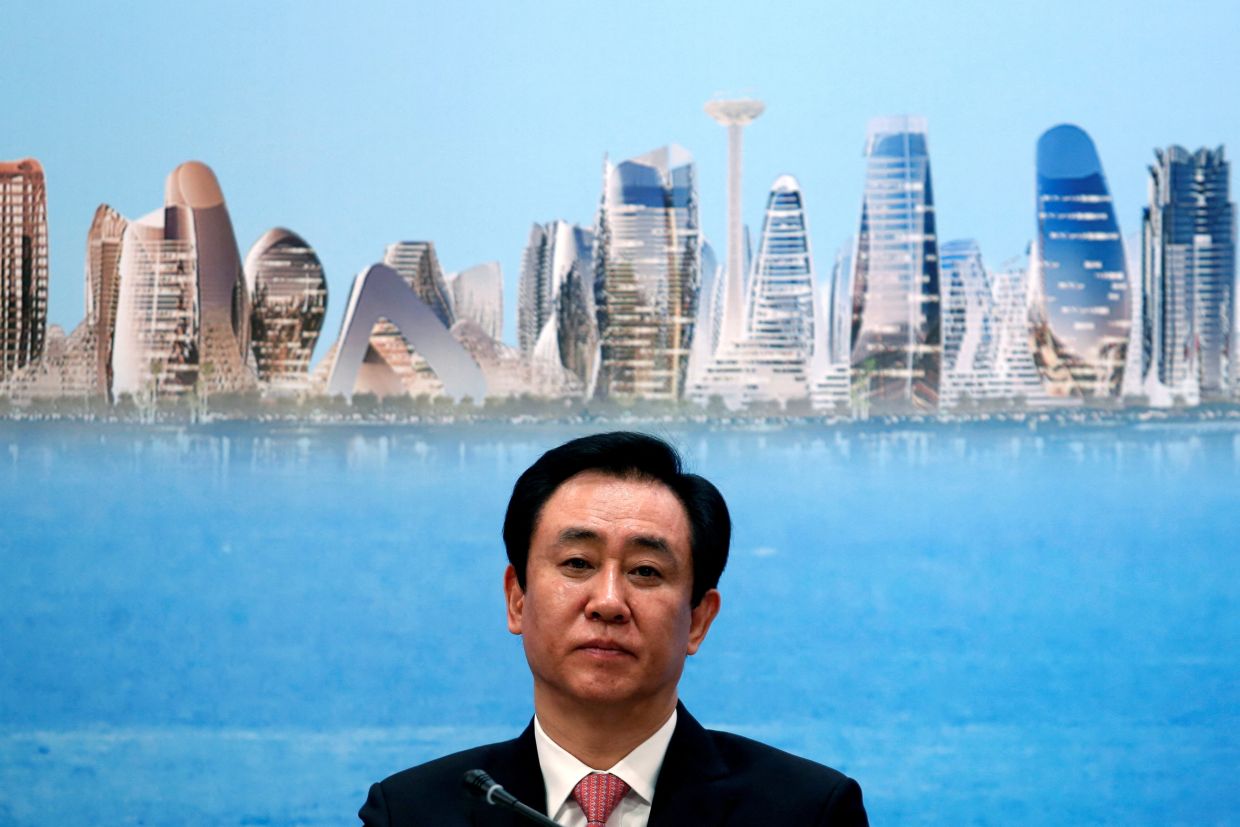
Hui Ka Yan, the founder of China Evergrande Group and once Asia's richest man, has been sentenced to life imprisonment by a Shenzhen court, bringing an end to one of the world's most dramatic reversals of fortune. The conviction on Thursday culminates a five-year saga that began with Evergrande's spectacular collapse, an event that reverberated across China's economy and global financial markets. Hui, who appeared in court images as a grey-haired 67-year-old flanked by security officers, pleaded guilty in April to eight charges encompassing misuse of company funds, fraudulent fundraising practices, illegal acceptance of public deposits, unauthorised lending arrangements, securities fraud, and bribery.
The downfall of Evergrande represents far more than the ruin of a single corporate empire. As the world's most-indebted property developer, the company's collapse exposed fundamental weaknesses in China's real estate sector, a pillar of the country's economic growth that has struggled with persistent structural problems for years. The firm's liabilities totalled approximately $300 billion at the time of default, a staggering sum that underscores the scale of mismanagement and financial engineering that underpinned its expansion. The property crisis triggered by Evergrande's failure has continued to weigh on China's second-largest economy, dampening consumer confidence and complicating Beijing's efforts to stabilise growth amid broader economic headwinds.
The court's judgement against Hui extended beyond imprisonment, ordering the confiscation of all his personal assets and imposing financial penalties on the conglomerate itself. Evergrande faced a fine of 8.82 billion yuan, equivalent to $1.31 billion, whilst its primary subsidiary Hengda received a separate penalty of 7 billion yuan. Additionally, five other senior executives received sentences ranging from six to 18 years in prison, with the court indicating that 56 individuals connected to Evergrande were sentenced on the same day. The judicial response demonstrated China's determination to hold corporate leaders accountable for egregious financial crimes, with the court explicitly stating that the scale and severity of the crimes warranted severe punishment.
Hui's ascent from humble beginnings to billionaire status had seemed almost scripted for a rags-to-riches narrative. Born in rural Henan province and raised by his grandmother after working as a steel technician, he established Evergrande in 1996 and methodically built it into China's largest property developer by contracted sales volume. At the zenith of his wealth in 2017, Forbes ranked Hui as Asia's richest individual with a net worth of $45.3 billion. His aggressive expansion strategy, characterised by heavy debt accumulation and rapid market acquisition, appeared invincible during the boom years when China's property sector seemed capable of endless growth. Yet this very model of relentless leverage and expansion contained the seeds of ultimate collapse.
The impact on ordinary citizens has proven particularly devastating and has fuelled widespread public anger. Many middle-class investors and lower-income individuals had purchased wealth-management products issued by Evergrande, anticipating secure returns on their savings. When the company defaulted, these investments evaporated, leaving hundreds of thousands of Chinese households facing substantial financial losses. Social media discussions among Evergrande homeowners reveal deep resentment, with residents questioning why executives escaped accountability whilst ordinary citizens bore the costs of corporate misconduct. Homebuyers who had paid deposits for apartments that were never completed found themselves trapped in a nightmare of incomplete construction and lost capital, adding another layer to the broader crisis.
The liquidation process initiated following Evergrande's collapse has proceeded with frustrating slowness, highlighting the practical challenges in unwinding such a vast corporate structure. A Hong Kong court ordered the company's formal liquidation in 2024, and the Hong Kong Stock Exchange subsequently delisted Evergrande shares last year, severing its final ties to international capital markets. However, the actual work of recovering assets has barely begun relative to the scale of creditor claims. As of August last year, liquidators had managed to realise only approximately $255 million in asset sales, a pittance when measured against the $45 billion in total creditor claims. This glacial pace has left creditors—including domestic depositors, overseas bondholders, and contractors—in a state of prolonged uncertainty about whether they will recover meaningful portions of their investments.
One dimension of the recovery effort involves attempting to reclaim assets allegedly transferred abroad. Liquidators are pursuing legal action in jurisdictions beyond mainland China to freeze offshore holdings belonging to Hui and his former spouse, seeking to recover approximately $6 billion in dividends and executive compensation that had been distributed to company leadership. This transnational dimension of the case reflects how the collapse extended beyond China's borders, affecting international investors and creating complexities requiring coordination across multiple legal systems. The struggle to recover overseas assets underscores how aggressively Hui and other executives had extracted wealth from the company during its peak profitability years.
Further damaging Hui's credibility, China's securities regulator had previously determined that Evergrande's flagship unit had engaged in systematic earnings inflation and securities fraud. In 2024, regulators imposed a $6.6 million fine on Hui personally and banned him permanently from participating in securities markets. This regulatory finding revealed that financial misrepresentation had been deliberate and pervasive, not merely the result of aggressive accounting interpretations. The evidence presented to regulators and courts painted a picture of an organisation whose leadership had systematically deceived investors and regulators about the company's financial health and operational performance.
For Southeast Asian observers and investors, the Evergrande saga carries sobering lessons about the risks of property-sector concentration and the dangers of allowing single companies to accumulate excessive leverage within national economies. Malaysia, Thailand, Vietnam, and Indonesia all have significant real estate sectors that could theoretically face similar pressures if major developers pursue similarly aggressive debt-fuelled expansion strategies. The case demonstrates how a single corporate collapse can cascade through entire financial systems, affecting not only direct investors but also construction workers, material suppliers, retail businesses, and communities where unfinished projects sit idle. Regional governments and regulators are monitoring the Evergrande resolution process carefully as they formulate policies governing real estate development and corporate governance standards.
The sentencing of Hui Ka Yan and other Evergrande executives does not, however, promise swift justice for aggrieved creditors and investors. Criminal convictions and asset confiscation do not automatically reverse the financial losses suffered by millions of Chinese citizens who invested in wealth products or purchased unfinished apartments. The liquidation process will likely require years to complete, and recovery rates may remain disappointingly low. Hui's life sentence ensures he will not personally benefit from any eventual asset recovery or corporate restructuring, but this provides cold comfort to ordinary investors seeking recompense. The case thus stands as a cautionary tale about unchecked corporate ambition, weak financial oversight, and the social consequences when large-scale financial institutions collapse under the weight of accumulated fraud and mismanagement.

