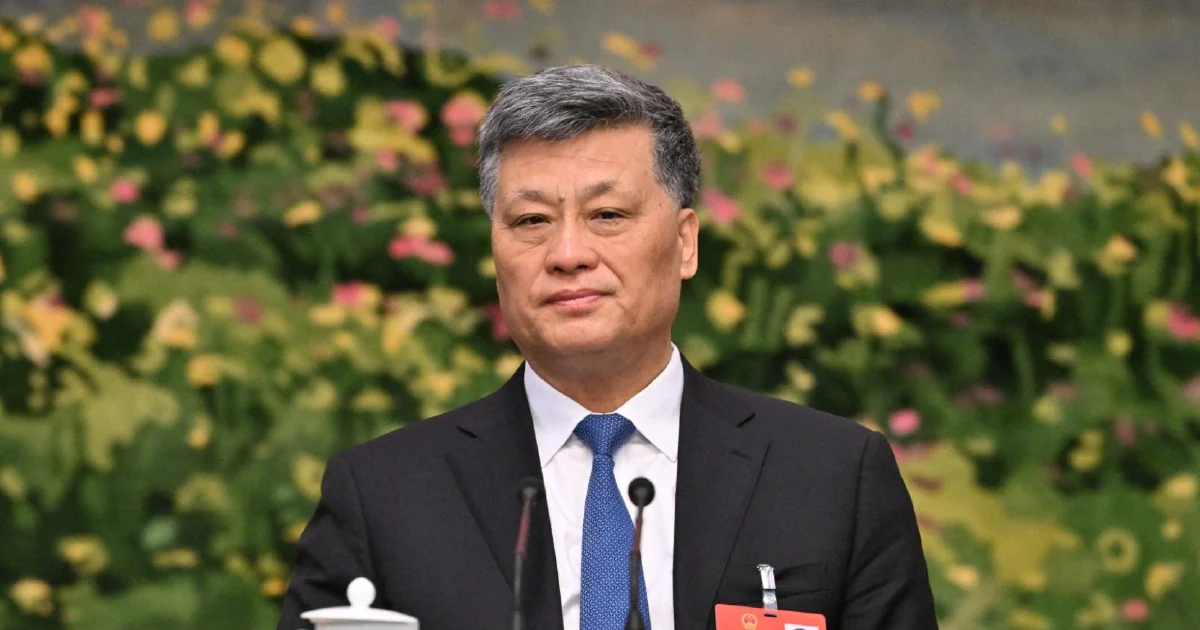
China's Communist Party has taken decisive action against a prominent former Xinjiang official, expelling him from its ranks entirely and removing him from all public positions after establishing evidence of serious corruption. The enforcement action, confirmed through state media channels on Tuesday, represents the latest instance of Beijing's ongoing anti-corruption campaign targeting senior regional administrators who have abused their authority and engaged in illegal conduct while in office.
The charges levelled against the dismissed official span multiple categories of misconduct that underscore the scope of his alleged wrongdoing. According to official statements, investigators uncovered evidence of nepotism—the abuse of official position to benefit family members and close associates—alongside documented cases of bribery in which he accepted improper payments or favours in exchange for official decisions. The allegations also extend to allegations involving sexual misconduct, indicating a pattern of behaviour deemed incompatible with Communist Party membership and the standards expected of officials holding high office in China's governance structure.
This expulsion forms part of a broader pattern of anti-corruption activity within China's government. The ruling party has maintained a sustained focus on eliminating corruption at senior administrative levels, particularly targeting officials in western regions like Xinjiang where the concentration of power and distance from central oversight can create conditions enabling misconduct. The party's disciplinary apparatus has demonstrated willingness to move decisively against officials regardless of their seniority or regional standing when evidence emerges of systematic abuse of authority.
Xinjiang, as China's largest western administrative region, occupies significant strategic importance within the nation's governance framework. The region's administration requires officials of proven integrity and loyalty, making the removal of a compromised senior functionary particularly significant from Beijing's perspective. The expulsion sends a message that no position, regardless of prominence, shields an official from accountability when corruption is established through investigation.
The mechanisms through which such actions occur in China's system typically involve parallel investigations conducted by party disciplinary commissions and state security organs. These investigations, once complete, are referred through formal party channels where senior bodies review findings and determine appropriate sanction. The complete removal from party membership represents the most severe punishment available within the party hierarchy, effectively ending the individual's career in public administration and signalling the irreversible nature of the breach of trust involved.
For Malaysian and regional observers, this case illustrates how China's approach to administrative governance emphasises personal rectitude and party loyalty as non-negotiable expectations. The public nature of such expulsions—announced through official channels—reflects a deliberate communications strategy designed to demonstrate the party's commitment to clean governance and deterring similar conduct among other officials who might otherwise consider exploiting their positions for personal gain.
The emphasis on multiple categories of misconduct—nepotism, bribery, and sexual impropriety—demonstrates the comprehensiveness of modern Chinese anti-corruption investigations, which examine not only financial crimes but also abuse of position for personal social advantage. This holistic approach to accountability has become characteristic of disciplinary actions at provincial and regional administrative levels, where officials' personal conduct is increasingly scrutinised alongside their fiscal probity.
Xinjiang's particular significance within China's administrative structure means that officials appointed there operate under heightened expectations regarding conduct and loyalty. The region's complex demographic composition and strategic location along China's western borders make it a priority for central authority, requiring administrators of unquestionable reliability. The expulsion thus represents not merely a routine corruption case but a reassertion of central control and standards within a critically important regional administration.
The political implications of such actions extend throughout China's bureaucratic system. When officials of substantial rank face expulsion, the message reverberates through administrative hierarchies, reminding aspiring officials that advancement depends not only on demonstrated competence but also on strict adherence to behavioural expectations and party discipline. This serves as both punishment and deterrent, affecting the calculations of officials throughout the system regarding appropriate conduct in office.
For Southeast Asian nations engaged in governance reforms and anti-corruption initiatives, China's approach presents both a model and a cautionary example. The efficiency with which China's system identifies and removes compromised officials contrasts sharply with the prolonged legal processes common in democracies, yet raises questions about due process protections that characterise liberal legal systems. Malaysia and regional counterparts must navigate the tension between swift accountability and the legal safeguards that protect officials from arbitrary or politically motivated prosecution.
The case also underscores how corruption manifests across multiple dimensions of official misconduct rather than confined solely to financial crimes. Bribery, nepotism, and sexual misconduct often emerge together in investigations, suggesting systemic ethical failure rather than isolated lapses. This pattern has implications for how anti-corruption agencies throughout Southeast Asia structure their investigations and allocate resources, encouraging comprehensive rather than narrowly focused examinations of official conduct.
Moving forward, the expulsion will likely influence the conduct of other Xinjiang administrators and officials serving throughout China's regional administrations. The establishment of clear consequences for corruption, announced publicly, creates an environment where future officials understand precisely what standards apply and what penalties follow breaches. This reinforces the party's authority and demonstrates its capacity to police its own membership effectively, a critical element in maintaining public confidence in governance institutions.

