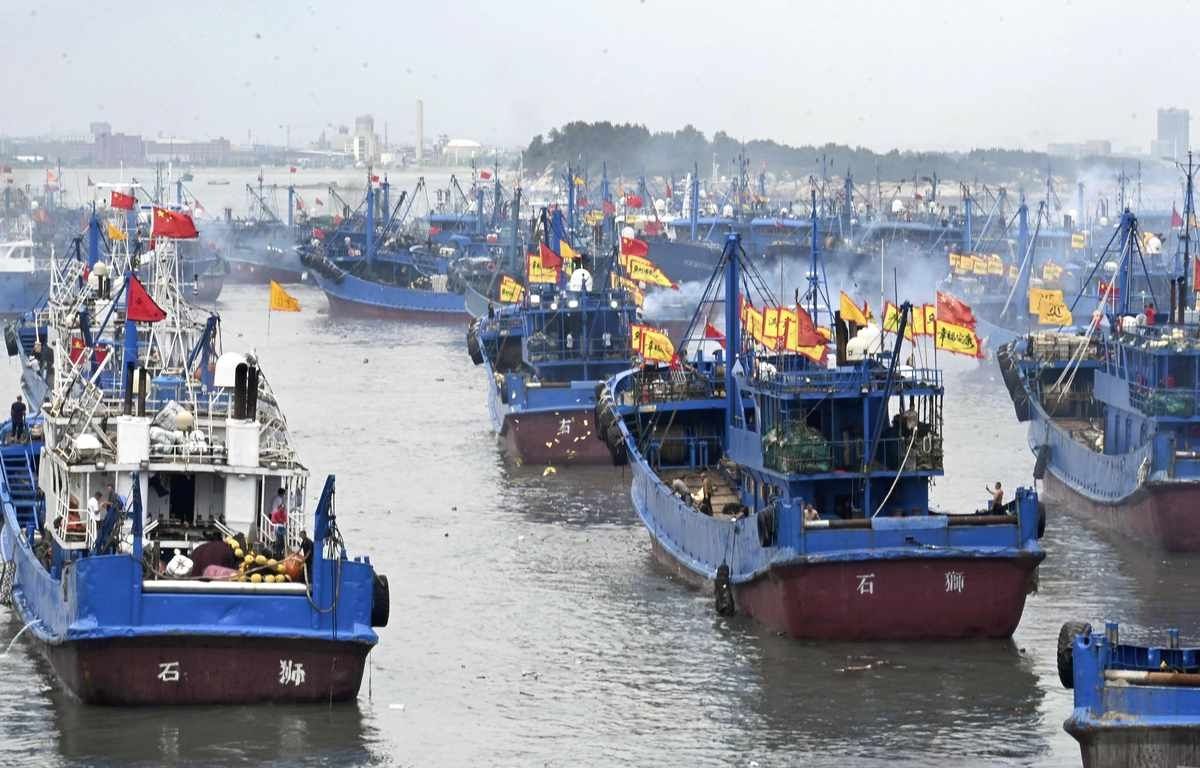
China's decision to lift its annual fishing restrictions in the East China Sea has reopened a contentious chapter in its relationship with Japan, as hundreds of vessels departed from Fujian Province ports over the weekend to resume operations in disputed waters. The ban, which typically constrains Chinese fishing activities from May through mid-August, ended on Saturday, with local media reporting that 654 boats alone departed from the port city of Shishi on Sunday morning. Many vessels set out with ceremonial flourish, displaying Chinese national flags alongside traditional red and yellow banners symbolizing hopes for safe passage and abundant catches, reflecting the cultural and economic significance of the fishing season for coastal communities.
The timing of the ban's expiry carries particular weight given the deterioration in Japan-China relations and the persistent territorial disagreements that define the maritime space both nations claim. The Senkaku Islands, known as the Diaoyu Islands in China, represent one of East Asia's most sensitive flashpoints, with Japan administering the uninhabited archipelago while China contests Tokyo's sovereignty. These waters have historically attracted Chinese fishing vessels in large numbers, and Japan has grown increasingly vigilant about monitoring their activities. The situation gained international attention in August 2016 when Chinese Coast Guard vessels and between 200 and 400 fishing boats coordinated operations around the islands, with multiple incursions confirmed in Japanese territorial waters. Analysts at the time suggested the actions appeared deliberately coordinated, prompting Japan to lodge formal protests and characterise the incidents as unilateral provocations.
The 2016 escalation occurred against the backdrop of a significant legal decision that had inflamed regional tensions just weeks earlier. In July 2016, The Hague's Arbitral Tribunal issued a landmark ruling that rejected China's sweeping claims to the South China Sea, a decision that Beijing refused to acknowledge and Japan publicly demanded China accept. Many observers at the time interpreted the subsequent fishing vessel and Coast Guard incursions as a calculated response to international pressure on China's maritime ambitions. This historical context frames why Japan now watches the resumption of fishing activities with particular concern—the memory of coordinated maritime operations and their potential to escalate tensions remains fresh in Tokyo's strategic calculations.
Interestingly, Beijing appears to have exercised some restraint in recent years, suggesting internal recognition of the accident risk and diplomatic costs that uncontrolled fishing activity could entail. Chinese local government authorities have subtly instructed fishermen to avoid what are euphemistically termed "sensitive waters," a designation that encompasses areas around the Senkaku Islands and other disputed zones. This cautious approach has yielded measurable results: warnings issued by the Japan Coast Guard to Chinese fishing vessels illegally entering Japanese territorial waters around the Senkaku Islands declined sharply from 81 incidents in 2021 to just four in 2025. The dramatic reduction suggests either improved compliance by Chinese fishermen or a deliberate policy shift to minimise confrontational encounters.
Yet the underlying dynamics remain unresolved and fragile. A fisherman interviewed on Saturday, speaking on condition of anonymity, revealed the calculation that persists in fishing communities along Fujian's coast. The waters around the Senkaku Islands remain among the richest fishing grounds in the region, offering economic returns that make the risk of arrest or confiscation worth considering. The fisherman acknowledged the presence of Chinese authorities conducting surveillance specifically to prevent cross-border operations, but notably stressed that no explicit prohibition against fishing in the area has been communicated to the fishing community. This distinction between informal discouragement and formal prohibition reflects an ambiguous policy environment that leaves room for individual decisions and potential provocations.
Clearer evidence of shifting Chinese government posture emerges from close examination of official guidance documents. China's fisheries authorities traditionally issue annual notices in May stipulating operational restrictions and sensitive areas. Last year's notice explicitly warned against "cross-border fishing in sensitive waters such as those of South Korea, North Korea and Japan," providing clear delineation of prohibited zones. This year's notice, issued on April 30, contains notably revised language, prohibiting only "fishing operations in the interim measures area between China and South Korea" while conspicuously omitting any reference to Japanese waters. The deletion of Japan from the official guidance represents a significant diplomatic signal, whether intentional or otherwise, suggesting a possible relaxation of restraints on fishing activities in disputed territories.
For Japanese policymakers and regional observers, these linguistic changes carry considerable weight in assessing Beijing's intentions. The alteration could indicate a strategic decision to tacitly permit increased fishing activities in contested waters as a form of civilian pressure on the territorial dispute, a common tactic in maritime nationalism across Asia. Alternatively, it may reflect bureaucratic revision that officials in Tokyo would prefer not to overinterpret. Diplomatic sources quoted by regional media have cautiously recommended close monitoring of actual fishing patterns once vessels reach the contested waters, noting that the divergence between official policy language and operational reality will determine whether the situation remains stable or escalates.
The resumption of unrestricted fishing comes at a particularly delicate moment in Japan-China relations, which have cooled considerably in recent years over issues ranging from historical grievances to strategic competition and Taiwan. Any significant increase in fishing vessel incursions or coordinated Coast Guard operations around the Senkaku Islands could trigger rapid escalation, with Japan's nationalist constituencies demanding firm governmental responses. The Japanese Coast Guard maintains constant vigilance in the waters and would likely lodge protests and increase its own monitoring operations if Chinese activity increases markedly. The risk calculus for both nations remains precarious: Beijing must balance the domestic political benefits of permitting fishing in traditional grounds against the risk of military confrontation, while Tokyo must respond assertively to protect its claimed territorial integrity without overreacting to situations that could spiral uncontrollably.
The broader pattern suggests that the East China Sea will remain contested and potentially volatile as long as fundamental disagreements over maritime boundaries persist unresolved. For Southeast Asian nations, particularly those with their own maritime disputes involving China, the situation serves as a reminder of how civilian fishing operations become instruments of sovereignty assertion and how the line between peaceful commerce and strategic provocation can blur dangerously. The coming months will test whether China's removal of formal restrictions translates into actual increased fishing activity and whether this translates into heightened confrontation or sustainable coexistence based on the informal understandings that have kept tensions manageable in recent years.

