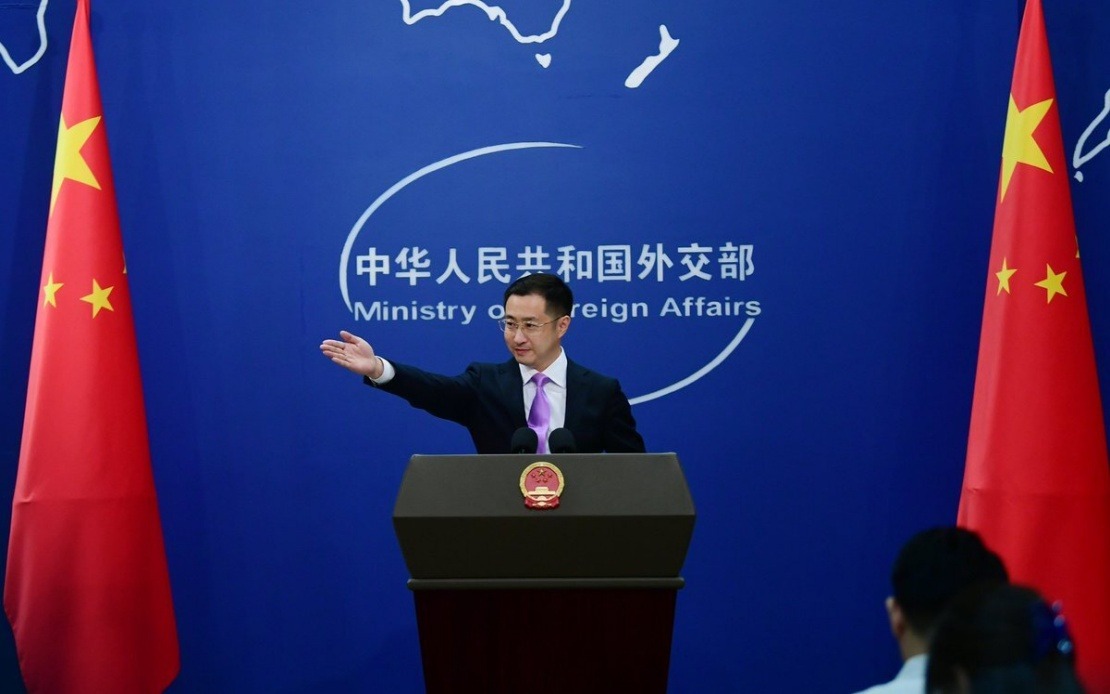
China's Ministry of Foreign Affairs has formally acknowledged Prime Minister Datuk Seri Anwar Ibrahim's consistent advocacy for the one-China principle, marking another instance of diplomatic alignment between Kuala Lumpur and Beijing on one of Asia's most sensitive geopolitical issues. The commendation came through an official statement posted on the ministry's social media channels on Wednesday, highlighting Anwar's public remarks on the Taiwan question and his steadfast adherence to a position that reflects Beijing's longstanding territorial claims.
The Malaysian Prime Minister's recent comments during an interview with Al Jazeera formed the basis of Beijing's recognition. Anwar explicitly stated his view that Taiwan constitutes part of China, framing the matter in absolute terms by declaring "It is one China. It is accepted by all." This unequivocal declaration aligns Malaysia with the diplomatic consensus that underpins relationships across the region, where most nations maintain formal recognition of Beijing while maintaining pragmatic economic and cultural ties with Taipei.
Chinese Foreign Ministry spokesperson Lin Jian elaborated on Beijing's position during a regular press briefing in the capital, underscoring that upholding the one-China principle reflects the sentiments of ordinary citizens and represents the side of historical justice. Lin's framing positioned the principle not as a mere diplomatic courtesy but as a reflection of popular will and moral correctness, language that carries significant weight within China's domestic and international communications strategy. The spokesperson reiterated the core Beijing position: Taiwan remains an inseparable component of Chinese territory, a claim rooted in both historical narrative and international legal arguments that have shaped regional diplomacy for decades.
This public endorsement from China arrives at a moment when Malaysia continues to navigate complex relationships with multiple regional powers. As a maritime nation with significant economic interests and strategic geography, Malaysia has historically maintained balanced relationships across the Indo-Pacific, a position that requires careful calibration when addressing contentious issues like Taiwan's political status. Anwar's clear statements suggest Malaysia is prioritizing its relationship with China while maintaining its broader geopolitical positioning.
Beijing's characterization of Taiwan's reunification as an "unstoppable historical trend" reflects the rhetoric consistently employed by Chinese officials when discussing the island's future. This language, reported through official news agency Xinhua, frames the matter not as an open question subject to negotiation but as an inevitability rooted in history and destiny. Such framing carries implications for how Beijing approaches the issue in diplomatic and military contexts, positioning reunification as a matter of national will rather than conditional on particular circumstances.
Malaysia's diplomatic stance on Taiwan has traditionally reflected broader Southeast Asian approaches, which generally recognize the People's Republic of China while avoiding provocative language regarding the island's political future. By explicitly endorsing the one-China principle in unambiguous terms, Anwar has positioned Malaysia within a particular diplomatic camp, one that aligns more directly with Beijing's preferred formulation than with the more cautious language typical of other ASEAN nations. This has potential ramifications for how Malaysia engages with other regional partners, particularly those with closer security arrangements with Western powers or Taiwan itself.
The timing of these remarks and Beijing's swift acknowledgment reflects the value China places on having its territorial claims affirmed by regional leaders, particularly those leading significant Muslim-majority nations. Malaysia's position as a major Muslim-majority country and an active ASEAN member gives particular weight to Anwar's statements within both regional and global diplomatic discourse. When leaders of such nations explicitly endorse Beijing's position on Taiwan, it potentially influences how other developing nations approach the question.
From an international relations perspective, Malaysia's clear positioning on this matter represents a continuation of its historical approach to great power relations. Rather than attempting to maintain strict neutrality on Taiwan, Anwar has chosen to articulate support for Beijing's position, a choice that may reflect calculations about Malaysia's economic dependencies, regional strategic alignment, and long-term partnership priorities. China remains among Malaysia's most significant trading partners and investors, factors that inevitably influence diplomatic positioning on sensitive issues.
The broader context involves ongoing tensions between Beijing and Western powers regarding Taiwan's future, with the island increasingly at the center of strategic competition in the Indo-Pacific. As Western nations, particularly the United States, have intensified their support for Taiwan in various forms, Beijing has simultaneously sought to consolidate diplomatic support among key regional and developing nations. Anwar's remarks serve this purpose, potentially influencing how other nations calibrate their own positions on an issue expected to remain central to regional security and diplomacy for years to come.
For Malaysia specifically, this diplomatic alignment with China on fundamental territorial questions may yield benefits in terms of enhanced economic cooperation and investment flows. However, it also signals to other regional partners, including those with security arrangements with Western powers, Malaysia's preferred orientation on geopolitical matters. ASEAN's traditional emphasis on non-interference in internal affairs and respect for sovereignty increasingly sits in tension with the Taiwan question, which forces member states to choose between competing diplomatic frameworks.
Moving forward, Malaysia's explicit position on the one-China principle may become a reference point in regional discussions about Taiwan's status and broader questions about how developing nations engage with great power competition. The fact that Beijing deemed Anwar's comments worthy of formal institutional recognition suggests these statements carry diplomatic weight and may be cited in future discussions about regional consensus on the Taiwan question.

