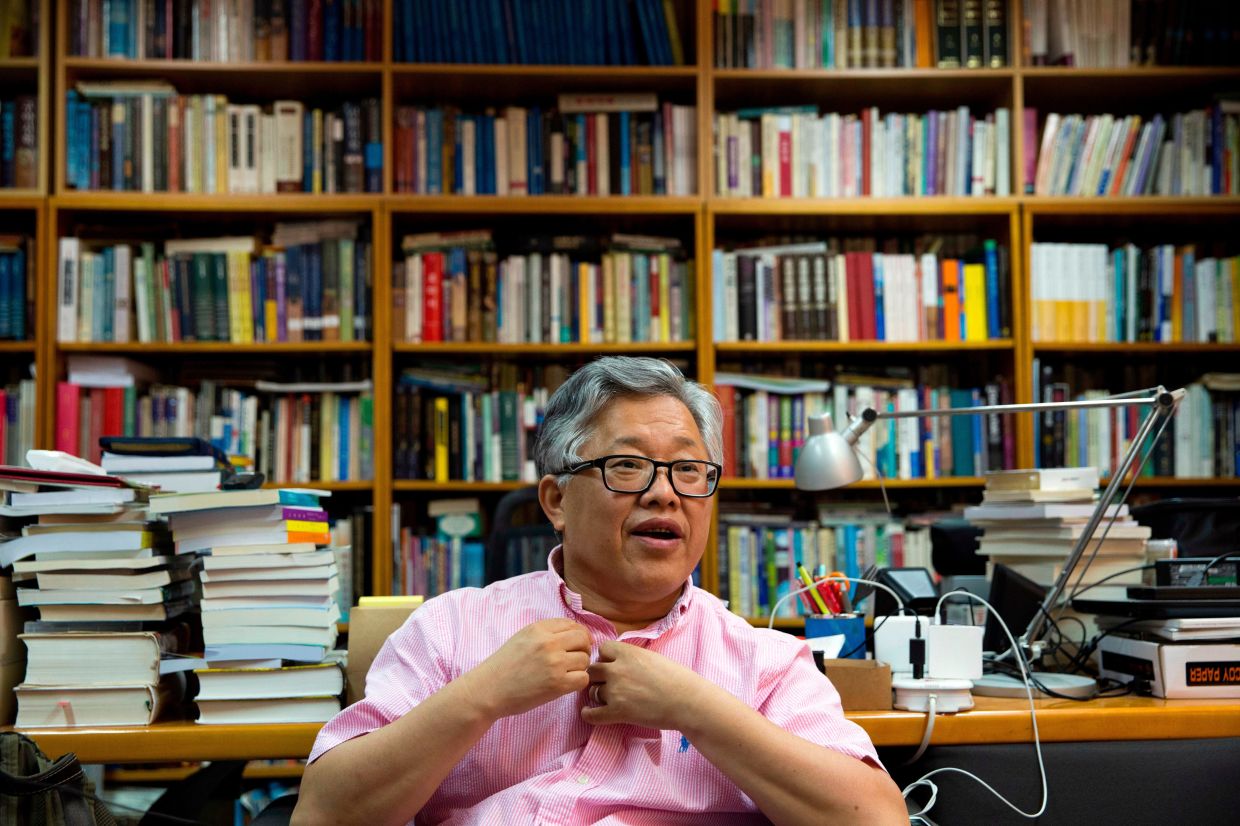
China has freed Ezra Jin, the pastor who founded Zion Church, one of the country's most prominent unregistered Christian congregations, his family and church confirmed on Sunday. The release represents a significant development in China's fraught relationship with underground religious movements and marks an unusual moment of diplomatic pressure yielding tangible results. Jin, who is also known by his Chinese name Mingri, arrived in Los Angeles after being held in Chinese custody since early October, when authorities detained him alongside several other church members on charges relating to the alleged misuse of information networks.
The pastor's case had attracted international attention partly because of deliberate advocacy by the Trump administration. During a visit to Beijing in May, United States President Donald Trump discussed Jin's situation directly with Chinese President Xi Jinping, reportedly securing an agreement that the Chinese leader would "strongly consider" his release. Chinese officials later confirmed to rights organisations that Jin's freedom resulted specifically from these bilateral discussions and was framed as a goodwill gesture timed to coincide with American Independence Day celebrations.
Zion Church occupies a unique position within China's complex religious landscape. Founded in 2007 in Beijing, it expanded to encompass some 1,500 members before being forced to shut its physical operations in 2018 amid escalating pressure from state authorities. Despite this setback, the congregation evolved into a largely digital community that flourished during the Covid-19 pandemic, extending its reach across approximately 40 cities throughout China. This expansion through online channels represented an adaptation strategy that many unregistered churches adopted to maintain community bonds while operating beyond the reach of direct government supervision.
The distinction between state-sanctioned and underground churches remains a defining tension in contemporary China's religious sphere. The Communist Party's historical wariness of organised religion has intensified markedly under Xi Jinping's leadership, with authorities subjecting unofficial congregations to heightened scrutiny and enforcement actions. Rather than criminalising faith itself, Beijing operates a licensing system that effectively grants approval only to churches that accept state oversight and control. This regulatory architecture forces believers who seek independent worship to choose between complying with government supervision or accepting the risks associated with illegality.
Jin's detention represented part of a broader crackdown on unregistered churches that has accelerated in recent months. In June, authorities raided an Early Rain Covenant Church service in Sichuan province, detaining two leaders and following up on earlier arrests of other prominent members from the same congregation in January. In the same month, officials in Zhejiang province took the extraordinary step of scaffolding the Yayang church building and removing its cross, a symbolic action that demonstrated the physical dimensions of government hostility toward unofficial worship spaces. These incidents underscore a systematic approach rather than isolated enforcement actions.
The Zion Church incident itself reveals the ongoing vulnerability of pastor Jin's community. Although Jin himself has secured release and departure from mainland China, eight other members who were detained alongside him in October remain incarcerated, illustrating the incomplete nature of the diplomatic resolution. For these individuals and their families, the departure of their spiritual leader while they remain in custody creates a painful situation that complicates any narrative of comprehensive victory. Their continued detention indicates that international pressure, while occasionally effective for high-profile cases, does not automatically translate into broader policy shifts.
Jin's personal circumstances underscore the human costs of China's approach to religious freedom. His family had relocated overseas after 2018, but he chose to return to mainland China to remain with his congregation, subsequently facing travel restrictions that prevented him from leaving. The separation proved lengthy and profound—Jin had not seen most of his family, including two young sons, for more than seven years before his release, according to statements from his daughter Grace. This personal sacrifice, combined with his detention, reflects the genuine risks faced by religious leaders who prioritise pastoral commitment over personal safety and family unity.
The significance of this case extends beyond Jin's individual circumstances to reflect shifting dynamics in US-China relations. The Trump administration's willingness to raise religious freedom issues in high-level bilateral discussions represents a deliberate foreign policy prioritisation that had been less prominent in recent administrations. For religious minorities and underground communities across China, such diplomatic pressure offers occasional leverage, though its effectiveness remains inconsistent and dependent on broader geopolitical considerations. The timing of Jin's release near American Independence Day, as officials noted, suggests that humanitarian concerns were balanced against strategic diplomatic choreography.
For Southeast Asian observers and Malaysian religious communities, this episode carries several implications. Malaysia's own diverse religious landscape and the complex regulations governing Christian worship in certain contexts create natural points of identification with communities facing government restrictions. Additionally, the case demonstrates how diaspora networks and international advocacy organisations such as ChinaAid play crucial roles in maintaining visibility for persecuted religious figures. Grace Jin's statement expressing hope that her father's release signals "a positive turn for people of faith in China" reflects the cautious optimism of religious communities, though the continued detention of eight other church members suggests that systemic constraints remain largely unchanged.
The broader trajectory of religion in China under Xi Jinping's governance continues moving toward tighter integration of faith communities within state frameworks. Unregistered churches face mounting pressure through multiple channels—legal prosecution, property seizure, surveillance, and administrative harassment. While occasional high-profile releases like Jin's occur through diplomatic intervention, they represent exceptions rather than indicators of fundamental policy revision. The situation facing Chinese Christians outside state-sanctioned structures remains precarious, with no indication that Beijing views religious pluralism or independent worship as compatible with its political objectives.

