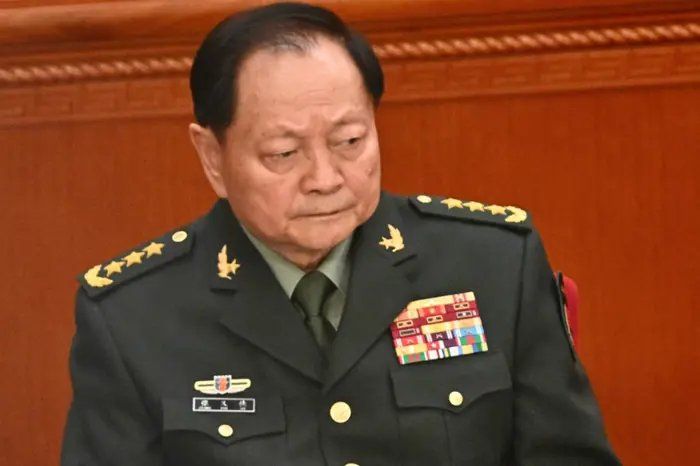
China has formally removed Zhang Youxia from his position as vice chairman of the Central Military Commission, marking the conclusion of a corruption investigation that began in January and sending ripples through the country's military hierarchy. The decision, announced through state media on Friday following a standing committee meeting of China's legislature, represents a dramatic fall for an officer who until recently occupied the second-most powerful military role in the world's most populous nation.
Zhang's removal carries particular weight because his position had elevated him to the status of China's highest-ranking general. As the more senior of two vice chairmen on the Central Military Commission, he occupied a tier of authority directly below the chairman, a position currently held by President Xi Jinping himself. His ousting therefore signals a significant personnel shift at the apex of China's military bureaucracy, with potential implications for defence policy, military appointments, and strategic decision-making across the People's Liberation Army and related security agencies.
The investigation into Zhang was formally initiated in January when China's defence ministry disclosed that both he and Liu Zhenli, another high-ranking Central Military Commission member and chief of staff of the joint staff department, faced allegations of "serious violations of discipline and the law". This phrasing, standard in Chinese government communications regarding corruption cases, typically encompasses bribery, embezzlement, abuse of authority, and related offences. The seven-month interval between the announcement of the investigation and Friday's removal reflects the deliberate, methodical pace of major corruption inquiries within China's system.
Zhang's case represents another chapter in the extensive anti-corruption campaign that has defined Xi Jinping's presidency since 2012. This drive has resulted in the investigation and removal of numerous senior officials across military, civilian government, and state enterprise sectors, fundamentally reshaping China's leadership landscape. However, Zhang's prominent position made his downfall particularly striking to international observers and analysts monitoring Chinese politics. His prior perception as a figure close to Xi raised questions about the scope and unpredictability of the anti-graft campaign, demonstrating that even those seemingly well-positioned within the inner circle remain vulnerable to investigation and removal.
The removal of Liu Zhenli alongside Zhang underscores the breadth of the current purge within military structures. Liu held responsibility for the joint staff department, an organ responsible for overseeing combat planning and operational coordination within the People's Liberation Army. His removal therefore potentially affects both personnel management and strategic military planning processes at critical levels of command. The simultaneous removal of two such senior figures suggests either coordinated misconduct or part of a larger restructuring initiative within military governance.
For Southeast Asian nations and other regional powers closely monitoring military dynamics in East Asia, these developments carry strategic implications. Changes in China's military leadership, particularly removals of senior commanders, can influence defence policies, military posture towards neighbouring regions, and the continuity of established strategic relationships. The purge signals internal focus on consolidating control and eliminating perceived threats, which may temporarily redirect attention from external security matters, though this remains speculative without further evidence.
The anti-corruption mechanism itself has become an increasingly sophisticated tool within China's political system. The investigative process typically involves detention, interrogation, and access to internal party discipline enforcement bodies before formal removal from office. The time lag between initial investigation announcements and final dismissals allows for thorough evidence gathering and reduces the possibility of legal challenges, as decisions rest with legislative or party bodies rather than civil courts. This administrative approach enables swift removal without the complications of transparent judicial proceedings.
Zhang's case also illustrates how economic misconduct within China's military establishment extends beyond individual benefit to encompass broader systems of privilege and influence. High-ranking military officials often interface with defence contractors, state enterprises, and provincial governments, creating opportunities for illicit financial arrangements. The investigation into Zhang likely examined his interactions with such entities across his operational career, potentially implicating networks beyond his individual actions.
The announcement through Xinhua and the standing committee procedure reflects the formal, institutionalised nature of China's governance structures, even when addressing high-level removals. This approach provides procedural legitimacy and creates permanent records within legislative documentation, distinguishing such actions from arbitrary dismissals. It demonstrates that despite Xi's centralised authority, removal of officials still follows established protocols and requires formal legislative action, maintaining appearances of institutional continuity.
Looking forward, the removal of these two figures opens space within the Central Military Commission hierarchy for new appointments and potential restructuring of command relationships. The promotion or appointment of replacement officials will provide insight into Xi's current priorities for military leadership, whether emphasising loyalty, technical competence, regional expertise, or other considerations. The timing also occurs as China navigates complex security challenges across multiple frontiers, making military leadership stability a significant internal political concern.
For regional observers including Malaysia, such personnel changes within China's military establishment merit attention as indicators of Beijing's internal stability and external strategic orientation. Military leadership transitions can occasionally signal shifts in approach to regional disputes, defence spending priorities, or technological development trajectories. While individual removals do not necessarily presage dramatic policy reversals, they form part of the broader context within which Southeast Asian nations formulate their own security policies and international alignments.

