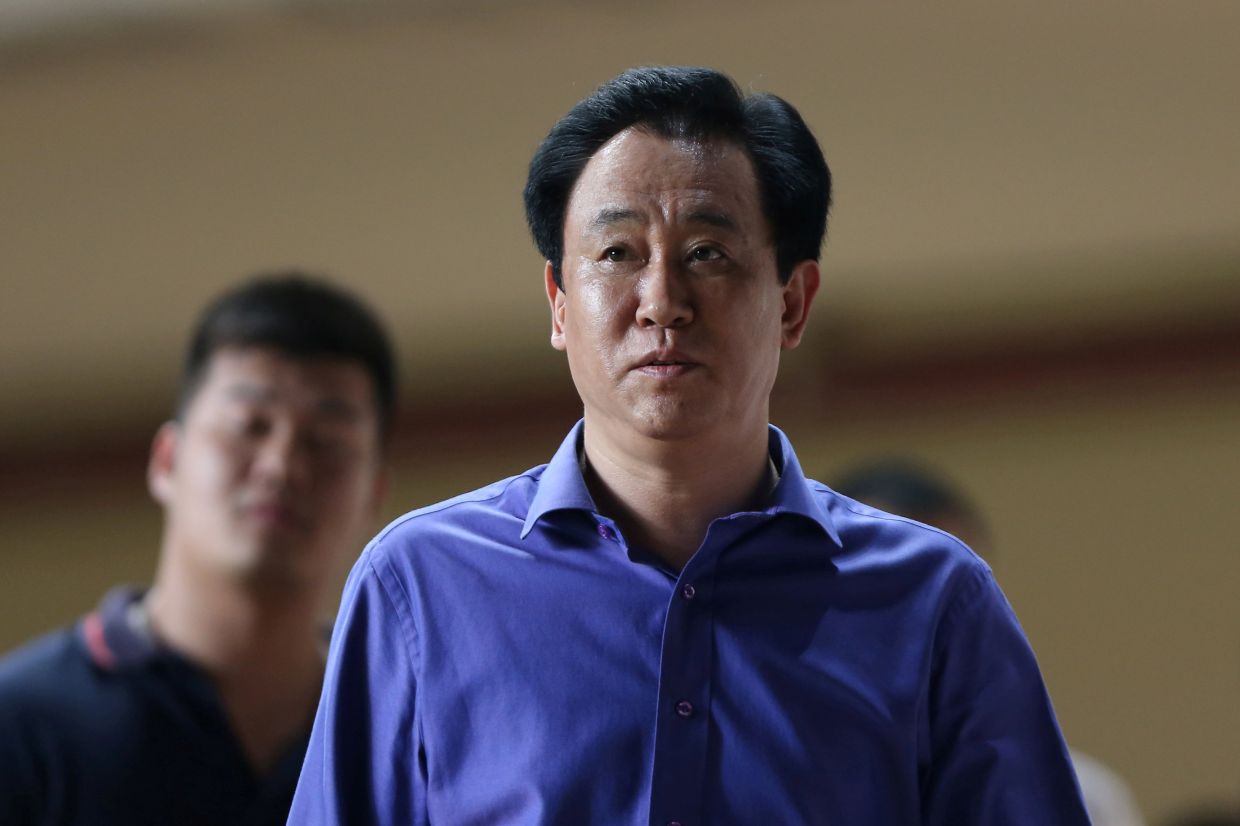
The Shenzhen Intermediate People's Court in Guangdong province on Thursday delivered a life sentence to Xu Jiayin, the embattled founder of China's largest property developer Evergrande Group, while simultaneously imposing financial penalties exceeding US$2.4 billion on the company and its real estate subsidiary. The judgment marks the conclusion of a sprawling investigation into one of Asia's most dramatic corporate collapses, spelling the end of a once-dominant figure in Chinese real estate and delivering a symbolic reckoning for a firm that symbolised Beijing's property sector at its zenith.
Evergrande's downfall represents a fundamental rupture in China's property market, where decades of uninterrupted growth created a culture of aggressive expansion and financial risk-taking. The company emerged as the country's leading developer by capitalising on the government's encouragement of homeownership and the seemingly endless availability of credit. Xu transformed Evergrande from a mid-tier builder into a behemoth spanning property development, car manufacturing, and sports franchises, making him one of China's wealthiest individuals. Yet this meteoric rise was built upon structures the courts now characterise as systematically fraudulent.
The court's verdict detailed charges spanning from 2016 to 2021, a period when Evergrande and Xu orchestrated what officials describe as a coordinated scheme of financial deception. During these years, the company systematically misrepresented its asset holdings while concealing liabilities through falsified documentation and accounting manipulations. Beyond simple misrepresentation, the indictment alleges that Evergrande leveraged bribery to secure control over financial institutions, though the court stopped short of identifying these entities by name. Such allegations underscore how thoroughly the firm infiltrated the financial system and how deeply rooted misconduct had become within its operations.
Xu's culpability extends beyond fraud to encompass embezzlement and bribery offences, charges to which he entered a guilty plea in April following months of detention and questioning. The life sentence represents the maximum penalty available under Chinese law, coupled with permanent revocation of political rights and complete forfeiture of personal assets. This totality of punishment signals Beijing's determination to make an exemplary case of Evergrande's leadership, signalling to both investors and executives that financial transgressions of such magnitude will face the harshest consequences.
The firm's spectacular unravelling began in 2021 when Evergrande proved unable to honour its mounting debt obligations, triggering a default that reverberated through China's financial system. Creditors ranged from middle-class homebuyers who had purchased apartments off-plan to institutional investors holding corporate bonds. The default exposed the vulnerability of China's property sector to abrupt policy shifts, particularly the government's 2020 decision to impose strict borrowing limits designed to cool speculative excess. Evergrande, having gorged on cheap credit during the previous decade, found itself unable to refinance or restructure its debts when funding sources dried up.
Five additional senior executives from Evergrande also faced sentencing on Thursday, receiving prison terms ranging from six to eighteen years for their respective roles in the fraud conspiracy. These parallel proceedings underline that wrongdoing extended well beyond Xu himself and permeated the company's upper echelons. The court's treatment of multiple perpetrators suggests a systematic culture where financial manipulation became normalised practice rather than the deviation of individual actors. This institutional dimension carries significance for Malaysian observers, as it raises questions about governance structures and oversight mechanisms within major regional property firms.
For Southeast Asian readers, Evergrande's trajectory holds cautionary lessons about property market dynamics and regulatory frameworks. Many regional developers pursued similar aggressive expansion strategies during boom periods, accumulating leverage whilst relying on continuous credit availability. Malaysia's own property sector, whilst more tightly regulated through mechanisms such as Real Estate Investment Trusts oversight and the Construction Industry Development Board's requirements, nonetheless encountered challenges during market downturns. The Evergrande case demonstrates how inadequate financial disclosure and weak enforcement mechanisms create conditions for systemic risk to accumulate beneath the surface of apparent prosperity.
Beijing's handling of Evergrande also reflects broader Chinese government priorities regarding property sector restructuring and financial system stability. Rather than allowing a managed restructuring that might have preserved jobs and asset value, authorities pursued criminal prosecution of the founder whilst the company entered liquidation procedures. This approach prioritises accountability and deterrence over economic stabilisation, suggesting that Chinese policymakers view the property boom era as fundamentally misconceived and wish to prevent future iterations of similar excess.
The fines imposed on Evergrande and its real estate arm totalling 15.82 billion yuan (US$2.4 billion) represent compensation mechanisms for creditors and the broader financial system, though the reality remains that such penalties cannot fully restore losses incurred by ordinary investors and homebuyers. Many purchasers who contributed deposits for unfinished apartments will likely recover only partial refunds at best. This creditor hierarchy reflects the order of claims in insolvency proceedings, leaving retail investors at the bottom of the list for recovery.
Looking forward, the Evergrande case establishes important precedent within China's legal framework regarding corporate fraud prosecutions of this magnitude. Xu's life sentence suggests that founders of failed firms can expect severe personal accountability rather than negotiated settlements or bankruptcy protections that might shield personal assets. This deterrent effect potentially influences how contemporary Chinese property developers approach leverage and disclosure standards, though critics argue it arrives too late to prevent similar crises.
The conviction and sentencing also carry geopolitical dimensions, as it demonstrates Beijing's willingness to pursue high-profile prosecutions that showcase government authority over market participants. International observers note that Chinese state control over the legal system allows for rapid trial procedures and severe sentencing relative to comparable cases in other jurisdictions, reflecting fundamentally different approaches to corporate accountability and judicial independence. For regional investors assessing China exposure, the case reinforces the reality that business operations remain subject to political imperatives and sudden enforcement priorities.
Evergrande's comprehensive collapse ultimately serves as a watershed moment in Chinese property market history. What began as a company reflecting government policies and national aspirations has become a cautionary tale about unsustainable credit expansion and governance failures. The severity of Xu's punishment signals that Beijing holds individuals accountable for systemic risks created during the property boom era, even as broader structural reforms continue reshaping China's real estate landscape and financial regulations.

