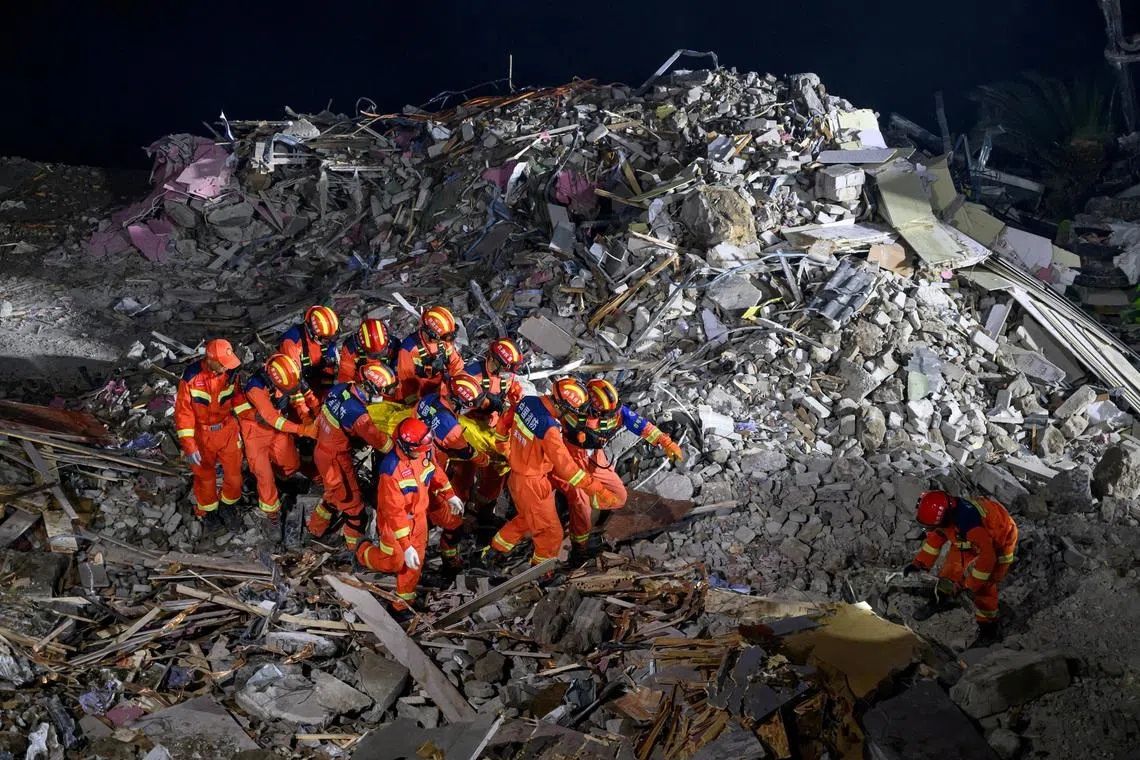
Rescue operations in southwestern China have escalated to using controlled explosions as teams battle against time to reach 34 people reported missing since Friday's catastrophic landslide near Chongqing. The blasting operation on Monday, which shattered a massive boulder under state media coverage, marks an intensification of efforts that authorities describe as entering a "deep rescue phase" following three days of difficult conditions in the mountainous terrain of Penghui county, approximately 270 kilometres from the regional hub of Chongqing municipality.
The disaster struck during torrential rainfall in an area renowned for its scenic beauty but notorious for its geological instability. Eight people have already been confirmed dead, with the death toll expected to rise as recovery efforts continue. President Xi Jinping has personally intervened by calling for scientific and methodical search and rescue operations alongside a thorough investigation into what triggered the mountainside collapse. This high-level political attention reflects the severity of the incident and the government's commitment to both saving lives and understanding the underlying causes.
The geography of Penghui county, home to approximately 500,000 residents, has made the disaster particularly challenging. Many communities are built precariously along steep hillsides that hug the Wujian river, with the main street of the narrow, hillside township now severed by a portion of the collapsed mountainside that cascaded into the waterway. In response to the immediate danger, authorities have evacuated more than 1,100 people from the affected area, a precautionary measure reflecting concerns about potential secondary collapses in the unstable terrain.
China's susceptibility to landslides stems from its unique combination of geographical and climatic factors. Mountains, hills, and plateaus comprise two-thirds of the country's landmass, creating an inherently hazardous landscape. During summer months, intense rainfall combines with rapid urbanisation, ongoing construction activities, and frequent tectonic movements to create perfect conditions for catastrophic failures. The infrastructure demands of China's continued development often place communities in vulnerable locations where geological risks are substantial.
The current weather situation compounds these dangers significantly. Heavy to torrential rain was forecast to continue across multiple provinces through Monday, prompting authorities to implement stronger safeguards in designated high-risk areas. The combination of abundant groundwater from persistent rainfall and intensive construction destabilises hillsides already weakened by natural geological processes. As of Monday, eight small and medium-sized rivers across Yunnan, Guangxi, Guangdong, Anhui, and Shanghai were already flowing above flood warning levels, suggesting that landslide risks would persist across the region for days to come.
Government response has extended beyond immediate rescue operations. Authorities have deployed specialist teams to investigate hidden geological dangers throughout Penghui county and to monitor for secondary disasters that could threaten both rescue workers and remaining residents. Xinhua, the official state news agency, reported these monitoring efforts on Saturday, indicating a systematic approach to managing the crisis beyond the initial emergency phase. This multi-layered response demonstrates an understanding that landslide disasters create cascading risks that require sustained attention.
The historical context underscores the recurring nature of this tragedy in China. Over the past decade alone, at least five major landslide incidents have claimed approximately 294 lives nationwide. The most catastrophic occurred in December 2015 in Shenzhen, when the collapse of a massive pile of construction debris at an industrial park killed more than 70 people. That disaster in the southern technology hub illustrated how development pressures and inadequate waste management can amplify natural hazards, a lesson particularly relevant to understanding contemporary risks in mountainous regions undergoing rapid change.
For Southeast Asian nations, China's struggle with landslide management carries important implications. Many countries across the region share similar geographical challenges, with mountainous terrain, tropical rainfall patterns, and rapid development creating comparable hazard profiles. The techniques and protocols China develops—from early warning systems to rescue methodologies—hold potential value for regional disaster management. However, the scale and frequency of China's landslide disasters also serve as a cautionary tale about the consequences of inadequately regulated development in geologically sensitive areas.
The Penghui county incident reflects broader tensions between economic development and environmental safety that characterise contemporary China. While construction and urbanisation drive prosperity, they simultaneously increase vulnerability to natural disasters. The government's response, including presidential directives for scientific rescue operations and investigations into causation, suggests an attempt to balance immediate crisis management with longer-term risk reduction. Whether such high-level political attention translates into structural changes in building practices and land-use planning remains uncertain, but the visibility of this disaster ensures it will influence policy discussions about development in hazardous terrain.

