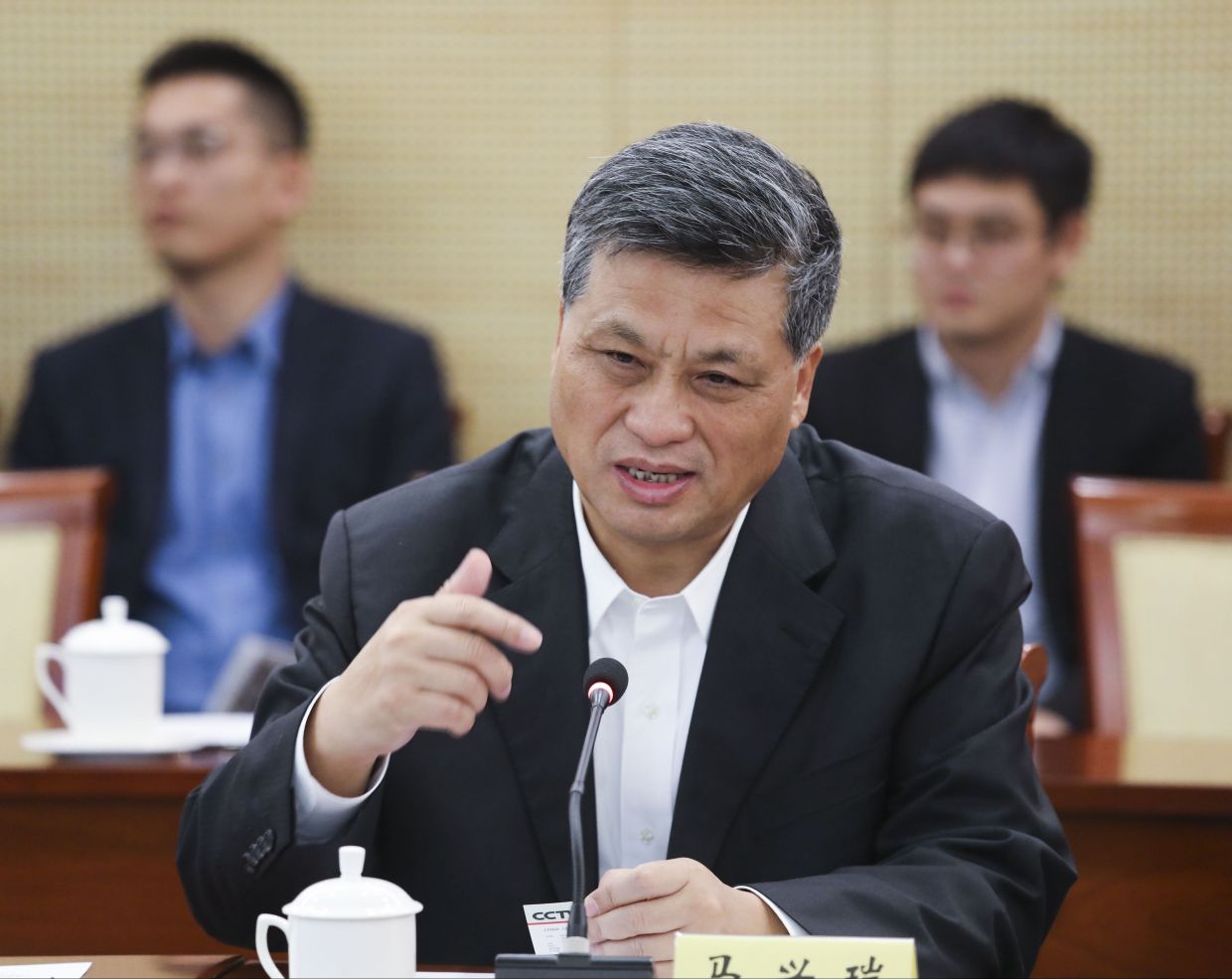
The Chinese Communist Party's Politburo has formally endorsed accusations against Ma Xingrui, a 67-year-old former aerospace engineer and regional administrator, linking him to "rampant corruption" centred on his family's use of his official position for financial gain. The development underscores the scope and depth of Xi Jinping's anti-corruption campaign, which has now ensnared three members of the party's most exclusive governing body within a single leadership term—a frequency not witnessed in recent Chinese history.
Ma's professional trajectory reads as a model of technocratic advancement before his downfall. He rose through aerospace manufacturing, serving as general manager of the China Aerospace Science and Technology Corporation from 2007 to 2013 while simultaneously directing China's manned space programme and overseeing development of the nation's new-generation carrier rocket initiative. This engineering background positioned him as part of Beijing's modernisation elite, yet the party's disciplinary apparatus now portrays his later political posts as opportunities for systematic personal enrichment.
After leaving the aerospace sector in 2013, Ma pivoted to territorial administration, first as deputy party secretary of Guangdong province before advancing through a series of increasingly powerful positions in southern China, including party chief of the tech hub Shenzhen and provincial governor of Guangdong. This trajectory would normally culminate in senior national roles. Instead, in 2021, he was assigned to lead Xinjiang Uygur Autonomous Region, succeeding Chen Quanguo. His elevation to the Politburo the following year represented recognition at China's highest political tier—precisely the status that has now become his liability as Xi's purge accelerates through the party apparatus.
The Central Commission for Discipline Inspection, the party's investigative and enforcement organ, catalogued a comprehensive list of alleged misconduct centring on Ma's instrumentalisation of public office for private benefit. Beyond the direct acceptance of bribes and improper gifts, investigators found that Ma facilitated his relatives' acquisition of property at artificially reduced prices—a mechanism enabling wealth transfer while maintaining deniability. More seriously for party legitimacy, the CCDI documented evidence of "power-for-sex and money-for-sex transactions," language suggesting sexual coercion linked to official favour.
A particularly damaging charge involves Ma's alleged tolerance and encouragement of his family members' commercial exploitation of his influence. Rather than policing their activities, he is accused of systematically protecting relatives who leveraged his authority to secure business contracts, approve development projects, and obtain preferential job placements. This characterisation moves beyond personal corruption into institutional decay, suggesting Ma constructed a patronage network that subordinated governmental functions to family interests. The CCDI's framing of "rampant corruption across his family" implies systemic rather than incidental wrongdoing.
Ma's position enabled him to intervene directly in cadre appointments and personnel decisions—a privilege that allowed him to reward associates and relatives with prestigious positions within the bureaucratic hierarchy. According to the disciplinary commission, he deployed both direct action and intermediaries, including family members, to channel benefits to favoured individuals in exchange for kickbacks disguised as gifts or property transactions. This mechanism transformed the administrative state into a vehicle for personal wealth accumulation, undermining meritocratic selection principles the party claims to uphold.
Particularly troubling from Beijing's perspective was Ma's failure to provide truthful statements during initial party investigations, suggesting conscious deception of the CCDI itself. The commission emphasised that his corruption continued even after Xi Jinping announced his sweeping anti-corruption campaign at the 18th party congress, indicating either brazen disregard for central authority or confidence in his political protection that proved catastrophically misplaced. The timing of his continued misconduct after these high-profile declarations of intent makes his conduct symbolically indefensible within party doctrine.
Ma's removal from the Politburo, combined with the expulsion of military figure He Weidong and another top officer, has reduced the body's membership to 21, further thinning the ranks of the highest political elite. For regional observers in Southeast Asia and beyond, the pattern becomes significant: Xinjiang, a region of crucial strategic importance for Belt and Road initiatives and internal security, has become the focus of extraordinary disciplinary attention. In recent months, investigators have ensnared Chen Weijun and Li Xu, both formerly powerful figures in Xinjiang administration, alongside Ma, suggesting either a systematic corruption problem within the regional apparatus or a deliberate consolidation of Xi's control over this geopolitically sensitive territory.
The aerospace sector that launched Ma's career has similarly experienced intensifying scrutiny, with several of his former colleagues and subordinates caught in anti-corruption investigations over recent years. This pattern raises questions about whether the corruption was endemic to particular institutional cultures or whether Xi's apparatus is methodically pursuing individuals connected to previous leadership networks. For Malaysia and the broader region, the implications carry weight: the reliability and stability of Chinese government counterparties—whether in infrastructure projects, trade negotiations, or security partnerships—depends partly on the integrity and permanence of their decision-making authority. When senior officials face sudden removal amid corruption allegations, it introduces uncertainty into long-term commitments and existing agreements.
The confiscation of Ma's ill-gotten gains and his transfer to judicial proceedings for trial signals that his case remains in early stages despite the Politburo's formal endorsement of charges. Chinese legal proceedings against high-ranking officials often involve lengthy periods where the outcome appears predetermined while formal processes unfold. For companies and governments engaging with China on major initiatives, such developments serve as reminders that even extraordinarily senior figures enjoy no immunity from Xi's centralising anti-corruption machinery, which operates according to political judgments that may not always align with conventional legal standards.

