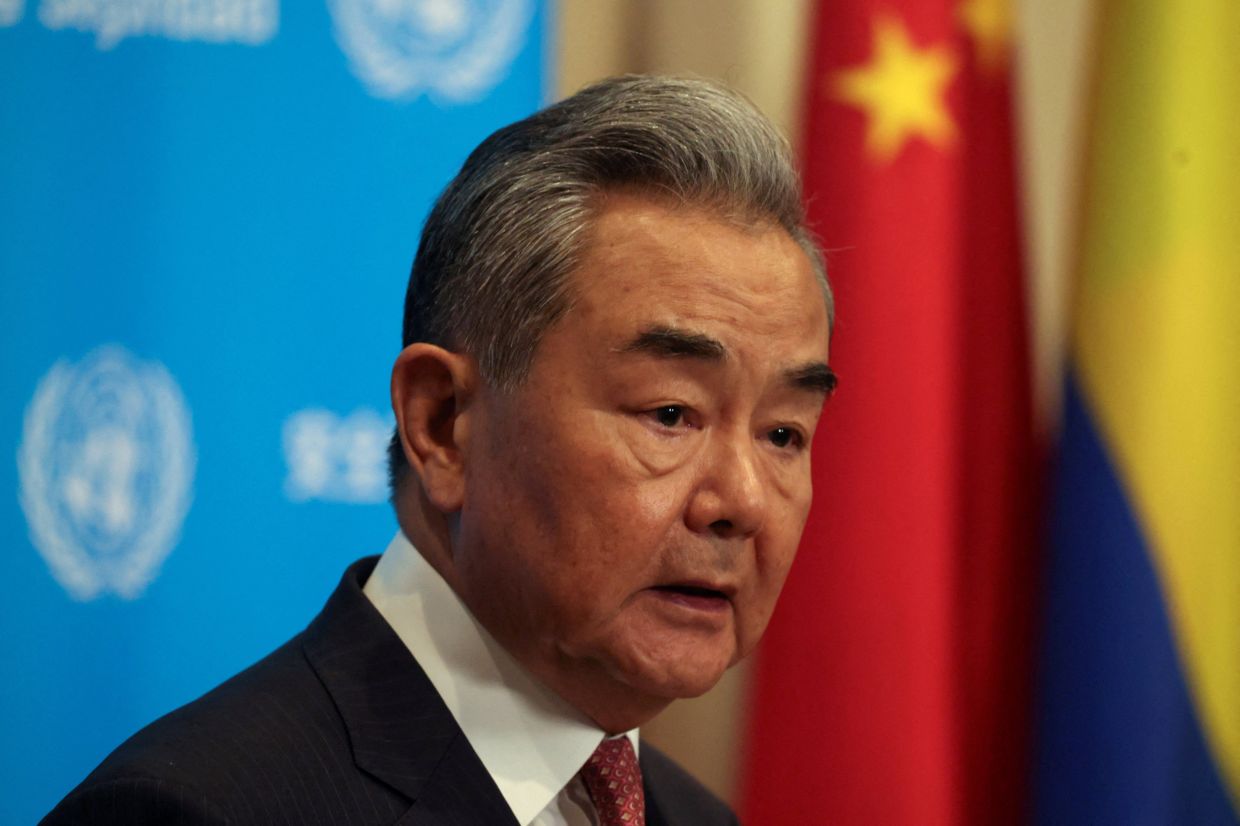
China's Foreign Minister Wang Yi has delivered a pointed message to newly appointed US Secretary of State Marco Rubio, urging him to approach Taiwan affairs with exceptional care as both nations attempt to navigate an increasingly complex relationship. The warning, conveyed during a Tuesday communication between the two officials, underscores Beijing's anxiety over how the Trump administration will manage perhaps the most volatile flashpoint in contemporary international relations.
Wang emphasised to Rubio that maintaining constructive and strategically stable ties between Washington and Beijing serves the interests of both countries and the broader international community. His message carries particular weight given the Trump administration's unpredictable approach to China policy and Rubio's hawkish reputation on Chinese affairs. The Chinese foreign minister stressed that progress toward improved bilateral relations demands concrete action rather than mere rhetorical commitment, calling for both sides to actively move toward one another through sustained diplomatic effort.
The substance of Wang's call reflected Beijing's growing concern about how the new administration intends to handle Taiwan, an island that China views as an integral part of its territory. This anxiety intensifies given Rubio's well-documented scepticism toward accommodating Chinese interests and his previous advocacy for stronger Taiwan relations. Wang's emphasis on the need for caution suggests Beijing fears that Rubio's appointment could signal a tougher line on issues China considers non-negotiable.
Central to Wang's message was a framework for managing bilateral relations that both nations should adopt. He articulated a vision wherein the two countries expand their areas of cooperation, develop positive agendas, and simultaneously work to contain problems and manage potential risks. This formulation essentially seeks to compartmentalise disputes while enlarging the sphere of mutual benefit—a strategy that requires careful calibration and mutual restraint from both sides.
The timing of Wang's communication carries significance beyond its immediate content. The call occurs in the context of previous high-level engagement between the Trump administration and Beijing, most notably the May summit between Trump and Chinese President Xi Jinping. That historic meeting produced what Washington characterized as major achievements, including Chinese commitments to address American concerns about semiconductor and critical mineral supply chain vulnerabilities. The summit was widely perceived as a diplomatic breakthrough that could stabilise what had become an increasingly fractious relationship.
During that same May meeting, President Xi raised Taiwan with considerable emphasis, warning Trump that any miscalculation or mishandling of the issue risked pushing US-China relations into an "extremely dangerous situation" and potentially precipitating conflict. His blunt language signalled that despite overall improvements in bilateral relations, Taiwan remains non-negotiable for Beijing and that careless American actions could rapidly destabilise the entire framework of improved ties.
The call between Wang and Rubio also occurs as both nations prepare for a potential reciprocal visit by Xi to the United States. Such a visit would represent a significant diplomatic gesture and could further cement the recent improvements in bilateral relations. However, the scheduling and success of such a visit depends heavily on avoiding escalation over Taiwan and demonstrating that both sides can manage their differences without allowing them to overwhelm cooperation.
Despite the apparent stabilisation achieved through the May summit, recent developments suggest underlying tensions persist beneath the surface. While the two nations have largely avoided major confrontations since the Trump-Xi meeting, observers have noted subtle signs of strain in the relationship. These tensions highlight the fragility of the current rapprochement and suggest that without careful management, particularly regarding sensitive issues like Taiwan, the apparent stability could quickly unravel.
For Malaysian policymakers and Southeast Asian observers, Wang's warning to Rubio carries important implications. Taiwan's security situation directly affects regional stability, particularly as major powers manoeuvre within the South China Sea and broader Indo-Pacific sphere. How the Trump administration ultimately handles Taiwan will significantly influence the strategic environment that smaller Southeast Asian nations must navigate. A miscalculation by either Washington or Beijing over Taiwan could force regional countries to choose sides more explicitly, disrupting the delicate balance many Southeast Asian states have maintained.
The Wang-Rubio exchange also reflects deeper uncertainties about American China policy under Trump's second administration. Rubio's appointment signals a potentially harder line, yet the administration's summit achievements suggest Trump may prioritise deal-making and stability over ideological confrontation. This ambiguity likely concerns Beijing, which prefers predictable adversaries to unpredictable ones. Wang's emphasis on "persistent efforts" and moving "toward each other" suggests Beijing is attempting to anchor Trump's administration to the framework established during the May summit, fearing that Rubio and others might pull policy in a more adversarial direction.
Wang's insistence that constructive relations require action rather than slogans represents a fundamental Chinese concern about American reliability and commitment. Beijing has experienced multiple shifts in US China policy across different administrations, and Wang's stress on sustained effort reflects anxiety that current diplomatic gains could evaporate if the Trump administration loses interest or faces domestic pressure to take a harder line.
Ultimately, Wang's carefully calibrated warning to Rubio reflects Beijing's recognition that managing Taiwan within an improving US-China relationship requires extraordinary diplomatic finesse. The message conveys both a threat—that mishandling Taiwan could destabilise bilateral relations—and an invitation to cooperate within boundaries that Beijing has clearly demarcated. Whether the Trump administration, through Rubio's influence and other voices, accepts this framework will shape not only US-China relations but the strategic environment throughout the Indo-Pacific region in coming years.

