China faces mounting challenges in advancing artificial intelligence-powered scientific research due to its substantial reliance on imported precision equipment, a vulnerability highlighted by leading researchers and policy analysts at a recent Shanghai conference. The issue extends beyond simple commercial inconvenience—it touches on the country's technological sovereignty and capacity for breakthrough discoveries that could shape competition with Western powers in cutting-edge fields from biotechnology to materials science.
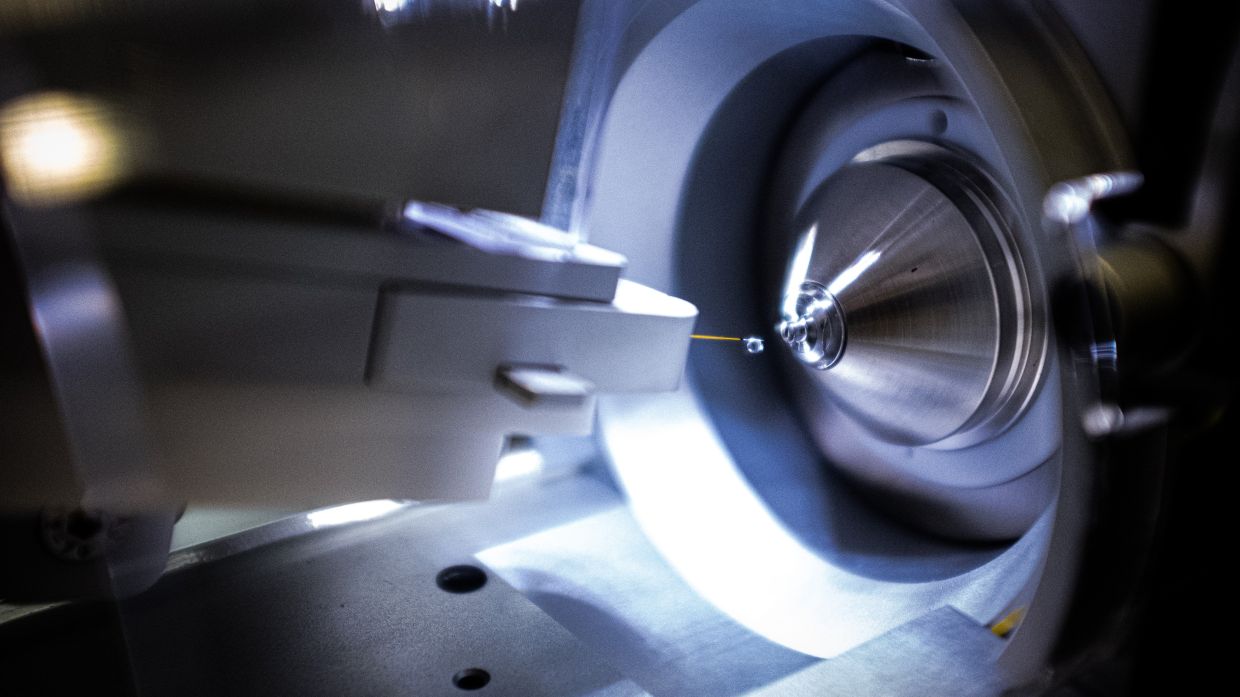
Weinan E, a mathematician at Peking University and member of the Chinese Academy of Sciences, articulated the fundamental problem during the "AI for Science" conference last week: without domestically manufactured precision instruments, generating the high-quality experimental data essential for developing and refining advanced artificial intelligence models becomes nearly impossible. He drew an apt analogy describing the predicament as attempting to cook without rice—the basic raw material required for success simply is not available. Advanced instruments such as mass spectrometers, chromatographs and spectrometers play irreplaceable roles in identifying molecular composition, separating and analysing chemical compounds, and characterising material properties through optical analysis. Without access to top-tier versions of these devices, researchers cannot gather the empirical information that AI systems require for training and validation.
The scale of China's import dependency is striking. Recent data from Beijing-based consulting firm Puhua Policy reveals that in 2024 alone, China imported nearly US$17 billion worth of scientific equipment, with more than three-quarters of major research instruments in use domestically originating from abroad. A separate analysis by consultancy LeadLeo underscores this further, showing that China relies on imports for 83 per cent of its mass spectrometers and chromatographs, and 75 per cent of its spectrometers. The reliance extends to near-total dependence on foreign sources for optical instruments and biological tissue analysis equipment. This structural dependence carries immediate practical consequences: research institutions face inflated equipment costs, extended maintenance cycles and sluggish after-sales technical support, ultimately diminishing research efficiency and creating fragility in critical supply chains.
The situation has been further complicated by escalating restrictions imposed by the United States. Washington has systematically restricted Chinese access to advanced scientific equipment as part of a broader technology containment strategy. By December 2020, during Donald Trump's first presidency, more than 42 per cent of China-related entries on the relevant US export control list had been newly added, signalling an intensified push to limit Beijing's technological advancement. This restrictive posture has continued unabated into Trump's second term, driven by American concerns that sophisticated instruments and technologies could facilitate Chinese military modernisation and enable the design of novel weapons systems through artificial intelligence applications.
In January of this year, the US Department of Commerce announced fresh export controls specifically targeting high-parameter flow cytometers and certain mass spectrometry equipment, explicitly citing concerns that such technologies could "generate high-quality, high-content biological data, including that which is suitable for use to facilitate the development of AI and biological design tools." The American approach reflects a strategic calculation that by controlling access to critical experimental infrastructure, the United States can meaningfully constrain China's capacity for scientific innovation and technological breakthroughs in strategically important domains.
Beyond equipment dependency, E identified a second critical constraint: significant gaps between China's artificial intelligence foundation models and those developed internationally. This disparity, which he characterised as a top-risk factor that cannot be minimised or avoided, stems from fundamentally different approaches to integrating scientific capabilities into AI systems. The United States has concentrated on strengthening general-purpose foundation models and coupling them with automated research infrastructure designed to accelerate discovery. China, by contrast, has pursued a more application-specific approach, building scientific AI infrastructure that integrates data repositories, software tools, computational resources and automated equipment, then deploying these integrated systems to particular research domains and scientific challenges.
E stressed that simply grafting scientific capabilities onto existing open-source AI models represents a flawed strategy that has failed to deliver results. Solving genuinely difficult scientific problems demands more robust underlying foundation models rather than cosmetic post-training modifications. This insight carries important implications for Southeast Asian scientific communities looking to establish their own AI research capacities. Nations in the region must consider not only acquiring equipment and data, but also developing or accessing sufficiently powerful foundational AI systems capable of grappling with complex scientific questions. Importing solutions designed elsewhere often produces suboptimal results when applied to locally-specific research challenges.
E called for fundamental restructuring of China's research system to realign it with the demands of the AI era. He identified three critical "breaks" that must occur: disciplinary boundaries must dissolve to enable genuinely cross-field investigation; the traditional divide separating theoretical research from experimental work must be bridged; and barriers separating academic institutions from industrial partners must be dismantled. Each of these changes requires not merely policy adjustments but cultural transformation within the research establishment itself. Additionally, E advocated for overhauling conventional research evaluation frameworks that place overwhelming emphasis on publications as the primary measure of scholarly contribution. Greater recognition must be accorded to equally important contributions including data infrastructure development, software creation and research equipment innovation.
For Malaysia and other Southeast Asian economies, China's struggles with scientific equipment autonomy and AI-powered discovery offer instructive lessons. The region's countries have opportunities to develop niche advantages in precision instrument manufacturing and scientific equipment design, particularly in specialised areas where they can compete effectively with established Chinese and Western manufacturers. Singapore has already moved in this direction through targeted investments in advanced manufacturing and scientific technology. Malaysia, with its existing semiconductor and precision engineering capabilities, could similarly position itself as a supplier of specialised scientific instruments to regional research institutions. At the same time, ASEAN nations should avoid becoming locked into dependent relationships with any single major power for critical research infrastructure, instead cultivating diversified sourcing strategies and building domestic technical capabilities where strategically feasible.
The broader geopolitical dimension of China's equipment vulnerability extends beyond Beijing's immediate scientific challenges. As major powers compete for technological supremacy, control over scientific instruments and data-generation capacity constitutes a form of power as consequential as control over advanced semiconductors or rare earth elements. Nations that can produce high-quality experimental data gain significant advantages in AI development and scientific discovery. This dynamic creates incentives for export controls and supply-chain restrictions that could fragment the global scientific ecosystem. Southeast Asian researchers and policymakers should recognise that securing stable access to precision equipment and maintaining partnerships with diverse equipment suppliers represents an increasingly important element of national technological strategy.
The intersection of China's import dependencies, American export restrictions and gaps in AI foundation models illustrates how scientific progress cannot be neatly separated from geopolitical considerations. The challenge facing Chinese researchers—obtaining the equipment and computational capabilities necessary for breakthrough discoveries while navigating escalating international restrictions—represents a microcosm of broader technology competition between major powers. For Southeast Asia, this situation underscores the importance of building regional scientific capacity and reducing reliance on any single external source for critical research infrastructure, while simultaneously strengthening intellectual property protection and domestic innovation ecosystems.

