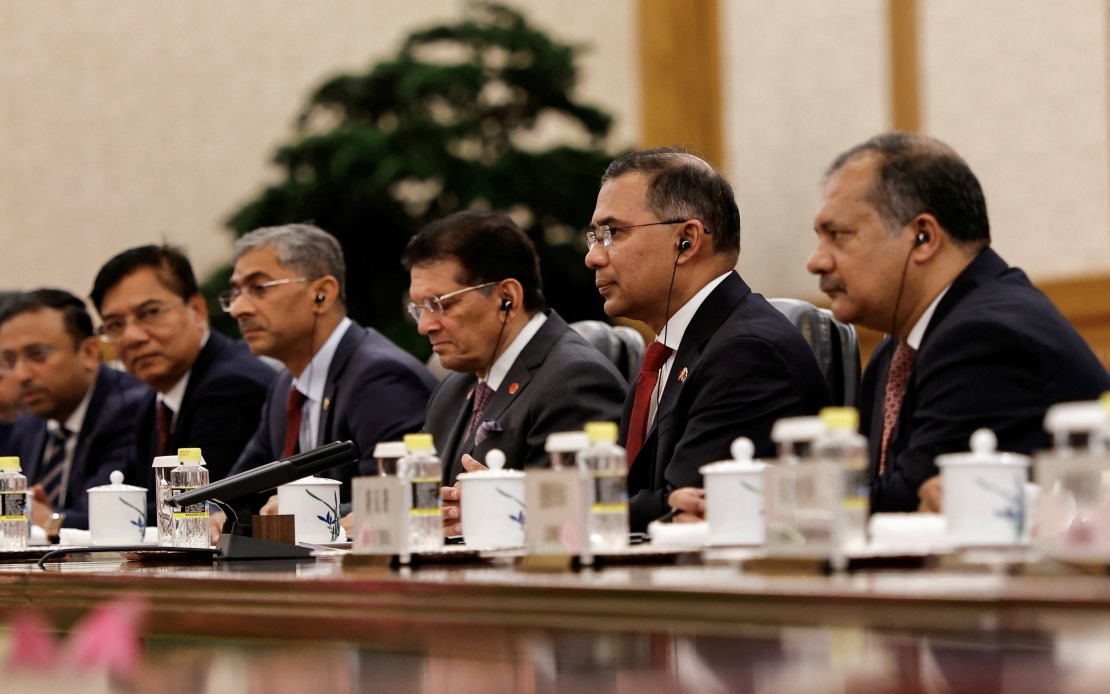
Bangladesh is positioning itself to capture a significant wave of Chinese capital, with twelve companies proposing investments totalling US$9.2 billion across multiple strategic sectors. The investment proposals emerged following Prime Minister Tarique Rahman's week-long visit to China from June 22 to 26, during which officials from both nations outlined an ambitious framework for expanded bilateral economic cooperation. The scale of these commitments underscores China's growing strategic interest in Bangladesh and reflects Dhaka's determination to leverage its geographic location and labour resources to attract manufacturing and infrastructure development.
The investment blueprint encompasses sectors central to Bangladesh's development ambitions, including energy generation, port operations, highway networks, waste management, and industrial manufacturing. This diversified approach differs from narrowly focused investment portfolios and suggests Chinese firms view Bangladesh as a multi-faceted economic opportunity rather than a single-sector destination. Bangladesh's government has explicitly prioritised attracting capital in these exact areas, recognising that infrastructure modernisation and industrial capacity expansion are prerequisites for sustained economic growth and employment generation. The timing of these proposals coincides with Bangladesh's broader push to transition from a primarily garment-focused economy towards a more diversified industrial base.
The largest single investment commitment comes from Sichuan Road and Bridge Group, which has proposed channelling US$4.5 billion into upgrading the critical Dhaka-Chattogram highway corridor through a public-private partnership structure. This project addresses a significant infrastructure bottleneck, as the highway represents one of South Asia's most congested transport arteries, connecting Bangladesh's capital to its primary seaport and commercial hub. By modernising this corridor, both nations anticipate improved freight movement, reduced logistics costs, and enhanced regional trade efficiency. The project's structure, involving private sector participation, also signals a pragmatic approach to financing infrastructure without exclusively burdening Bangladesh's government budget.
Port development constitutes another pillar of the proposed investment framework. China Civil Engineering Construction Corporation has committed US$650 million specifically towards developing and operating an economic zone surrounding Mongla Port, incorporating warehousing infrastructure and expanded logistics capabilities. Mongla Port, located roughly 230 kilometres south of Dhaka, has historically operated below capacity, and modernisation efforts could unlock its potential to become a major regional transhipment hub. Zhongxin Environmental Protection Group's parallel US$1.65 billion e-waste recycling facility proposal at Payra Port demonstrates how Chinese firms are conceptualising port-adjacent industrial zones as integrated economic ecosystems rather than isolated cargo terminals.
Energy security remains a persistent challenge for Bangladesh, and the proposed investments address this vulnerability through multiple pathways. Shanghai SUS Environment Company plans to establish waste-to-energy facilities with US$890 million in capital, converting municipal waste into electrical power whilst simultaneously addressing urban sanitation challenges. Separately, China Future Energy Group Holding Limited's US$250 million gas exploration project targets Bangladesh's offshore hydrocarbon reserves, potentially expanding domestic energy production. Huaxin Textile Industry Company's commitment to construct a 200-megawatt captive solar facility within the Payra economic zone illustrates how industrial investors are integrating renewable energy generation into manufacturing operations, offsetting grid dependency and reducing production costs.
The manufacturing sector projects reveal how Chinese capital aims to establish Bangladesh as a competitive production platform. Beyond Huaxin Textile's textile and battery manufacturing expansion, Shenzhen Kaifa Technology plans to invest US$250 million in smart metre manufacturing, targeting both domestic and regional markets. SF Express's US$180 million cold-chain logistics project addresses supply-chain infrastructure gaps, particularly relevant for agricultural and pharmaceutical exports. These manufacturing and logistics initiatives collectively suggest a strategic objective: positioning Bangladesh as an integrated production and distribution node within broader Chinese supply-chain architecture, especially as companies seek alternatives to concentration in China itself.
The proposed industrial park in Chattogram represents an institutional framework through which these investments will materialise. Chinese industrial parks, whether established in Southeast Asia, Africa, or South Asia, typically function as designated zones offering fiscal incentives, streamlined customs procedures, and shared infrastructure. Such parks have proven effective in aggregating Chinese manufacturing investment and facilitating technology transfer to host economies. Bangladesh's willingness to establish such a park indicates receptiveness to the comprehensive ecosystem approach that Chinese investors prefer, moving beyond project-by-project negotiations towards long-term industrial development partnerships.
From Bangladesh's perspective, the investment inflow addresses immediate employment and revenue generation needs whilst potentially reshaping the country's economic structure. Commerce Minister Khandakar Abdul Muktadir explicitly framed these investments as mechanisms for reducing Bangladesh's chronic trade deficit with China, which has widened considerably as Chinese manufactured goods dominate Bangladeshi consumer markets. By capturing investment in manufacturing and value-added industries, Bangladesh potentially reverses the one-directional flow of goods, enabling domestic production and export capacity. The anticipated creation of tens of thousands of jobs across energy, infrastructure, manufacturing, and logistics sectors would provide significant employment relief, particularly for semi-skilled and unskilled workers.
Regional implications extend beyond bilateral Bangladesh-China relations. Southeast Asian nations, particularly those competing for Chinese manufacturing relocation, are observing Bangladesh's investment success with considerable interest. Malaysia, Vietnam, Thailand, and Indonesia have long competed for Chinese capital, often offering similar incentives and operating advantages. Bangladesh's ability to attract US$9.2 billion in proposals from established Chinese engineering and industrial firms suggests the country has achieved sufficient stability, policy predictability, and infrastructure maturity to compete in this regional investment competition. The concentration of proposals from major state-connected enterprises—Sichuan Road and Bridge, CCECC, Shanghai SUS—indicates these are not marginal investors but central players in China's overseas investment architecture.
The joint communiqué issued following Tarique's visit emphasised multilateral trade system support and supply-chain integration, language reflecting China's strategic vision for Bangladesh within its broader Belt and Road Initiative framework. By positioning Bangladesh as a modernised production and logistics platform, Chinese policymakers envision deepening economic interdependence that extends beyond conventional trade into manufacturing ecosystems and financial architecture. For Malaysian policymakers and investors, Bangladesh's attractiveness to Chinese capital raises questions about competitive positioning within Southeast Asia's investment landscape and the broader implications of supply-chain diversification away from established hubs.
The investment proposals require regulatory approvals, land allocation, and infrastructure coordination to materialise into actual capital flows. Previous Chinese industrial park projects across South Asia have experienced implementation delays, environmental concerns, and labour-management tensions. Bangladesh's actual success in translating these US$9.2 billion proposals into operational facilities and delivered projects will substantially determine whether the country can sustain momentum in attracting Chinese investment or whether these figures represent aspirational rather than committed capital. Nevertheless, the scale and diversity of proposals reflect genuine Chinese confidence in Bangladesh's economic trajectory and investment climate.

