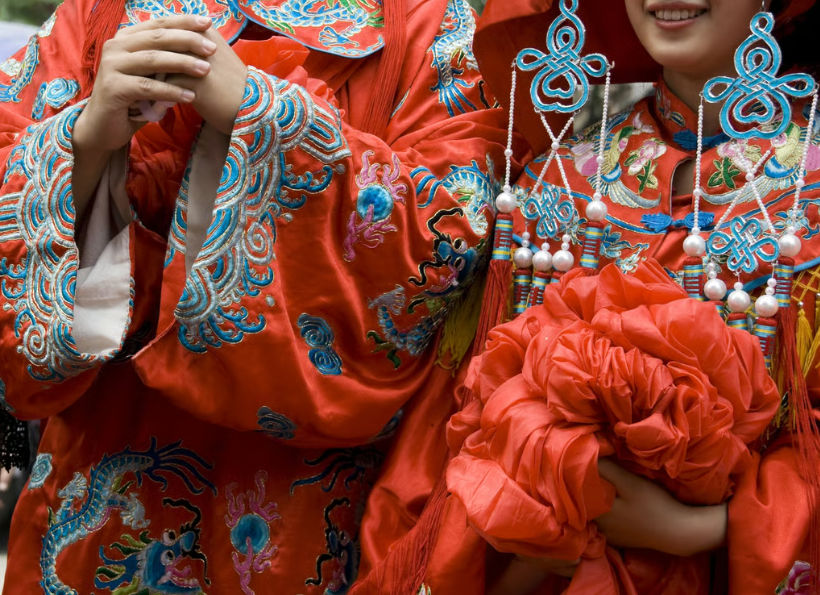
A court in Ruyang county, Henan province has delivered a landmark ruling that exposes the mounting dangers of traditional Chinese wedding hazing practices. The verdict, publicised in early July, centres on the case of Zhang, a bridesmaid who was grievously injured during what began as festive revelry but descended into recklessness and negligence. The court's decision to make the ruling public signals an effort by the judiciary to curb the escalating harm caused by hun nao, the centuries-old custom of wedding pranks that continues to flourish across much of China despite growing safety concerns.
Hun nao, rooted in thousands of years of Chinese tradition, was originally designed to create merriment at nuptials and ward off malevolent spirits. The practice remains deeply embedded in wedding culture across numerous regions of China, with participants viewing it as harmless fun and an integral part of celebration. However, what was once a lighthearted custom has increasingly morphed into something far more sinister in recent decades. As modernisation reshapes social norms and younger generations push boundaries, the line between entertainment and abuse has become dangerously blurred, prompting serious questions about whether the tradition can coexist with contemporary standards of safety and dignity.
On October 4, 2023, Zhang attended her friend Li's wedding as a bridesmaid. At a point during the celebrations, Zhang found herself alone in the bridal chamber with approximately ten men, predominantly groomsmen. When Zhang concealed herself in a cabinet for reasons not disclosed in the court proceedings, groomsman Wang Moubing forcibly extracted her and threw her onto the bed. Rather than stopping there, Wang orchestrated what he described as a game: the assembled men would use the corners of a bedsheet to launch Zhang into the air. The first toss proceeded without incident as they managed to catch her. The second time, however, coordination failed catastrophically, and Zhang plummeted to the floor with no one to break her fall.
During this escalating ordeal, the groom's aunt happened to pass the room and urgently counselled the men not to allow their pranking to spiral out of control. Her warning went unheeded, and the merrymaking continued unchecked. Only one man in the room, surnamed Hu, refrained from participating in the hazing. Recognising the severity of Zhang's condition, Hu carried her downstairs and ensured emergency services were summoned. Medical examination revealed that Zhang had sustained a lumbar vertebral fracture, a serious injury to the lower spine that demanded eighteen days of hospitalisation and intensive treatment.
The consequences of that single incident extended far beyond Zhang's hospital stay. In August 2024, a forensic medical assessment classified her disability as grade nine—a designation representing a severe level of impairment with lasting implications for her mobility, employment prospects, and quality of life. Confronted with medical evidence of permanent harm, Zhang pursued legal recourse against the married couple and the nine individuals involved in the prank. She sought compensation of 270,000 yuan, equivalent to approximately US$40,000, to cover medical expenses and damages for her suffering and diminished capacity.
The Ruyang county court determined that the newlywed couple bore direct responsibility for Zhang's injuries. As the organisers and hosts of the wedding, they possessed knowledge that hazing activities would take place yet failed to implement preventive measures or intervene when the escalating prank threatened safety. The court found that such passive negligence on the part of the couple constituted liability for the harm that ensued. Wang Moubing, as the instigator who physically coerced Zhang from her hiding place and conceptualised the dangerous bedsheet stunt, bore particular culpability for his aggressive initiation of events. The remaining eight participants could not produce evidence demonstrating non-involvement in the hazing, and the court therefore held them jointly and severally liable for their collective actions.
In its final judgment, the court ordered the defendants to collectively remit 230,000 yuan, approximately US$34,000, to Zhang. The distribution of financial responsibility reflected the degree of fault assigned to each party. The couple was mandated to pay forty percent of the total, amounting to 90,000 yuan. Wang Moubing bore the heaviest individual burden at approximately 50,000 yuan. The remaining eight co-participants were ordered to jointly contribute 90,000 yuan. This proportional allocation sends a clear signal that legal systems will differentiate between organisational responsibility, active perpetrators, and passive bystanders, though all remain accountable.
Zhang's case arrives amid a troubling pattern of wedding-related injuries across China that have captured public and judicial attention. The phenomenon extends beyond mere embarrassment or minor harm; it increasingly results in serious, life-altering trauma. In 2018, a bridegroom in Guizhou province endured multiple injuries after being struck by a vehicle while attempting to escape hazing on an expressway. More recently, another bridegroom in Guizhou sustained a broken leg while fleeing similar festivities. That individual subsequently pursued legal action, and a court determined that the perpetrators should compensate him with 50,000 yuan. These cases illustrate a troubling trajectory in which wedding pranks have evolved from socially-sanctioned revelry into scenarios producing genuine bodily harm and legal liability.
The Ruyang court's publicisation of its verdict represents a deliberate institutional response to curb these dangerous practices. By making the decision widely known through media channels, the judiciary seeks to educate the public about potential legal consequences and to reshape social expectations around what constitutes acceptable wedding conduct. This approach reflects an emerging consensus among legal authorities that voluntary adherence to safety norms cannot be relied upon, and that explicit legal deterrence may be necessary to protect participants from serious injury. The court's action implicitly acknowledges that hun nao, in its contemporary manifestation, has become sufficiently hazardous to warrant judicial intervention and public awareness campaigns.
For Malaysian and Southeast Asian readers, this Chinese case carries instructive lessons about how rapidly traditional customs can transform when social constraints weaken and risk awareness diminishes. While wedding hazing practices vary across the region, Malaysia and neighbouring countries share cultural contexts where similar traditions of wedding pranks exist, albeit typically in less extreme forms. The Ruyang verdict demonstrates how courts increasingly hold organisers and participants accountable for injuries sustained during celebratory activities, regardless of historical or cultural justifications. It signals a judicial trend across Asia toward prioritising personal safety and legal accountability over appeals to tradition. Chinese courts are establishing precedent that organisers cannot passively permit dangerous hazing, that instigators face enhanced liability, and that even passive participants may bear financial responsibility. This shift has implications for how wedding celebrations are conducted and regulated throughout the region.
The case also highlights an evolving tension in modern Asian societies between preserving cultural heritage and protecting individual safety. Hun nao represents millennia of Chinese tradition, yet its contemporary practice increasingly endangers participants. Similar dynamics may apply to wedding customs elsewhere in Asia. The Ruyang court has effectively determined that tradition alone cannot justify practices that result in serious, disabling injury. Courts and legislators across Southeast Asia may increasingly face similar questions: how do societies maintain cultural continuity while ensuring that celebratory practices do not inflict lasting harm? The answer, as illustrated by this precedent, is that legal systems will enforce safety standards regardless of historical pedigree. Going forward, wedding organisers and participants throughout China and potentially across Asia must navigate a new legal landscape in which responsibility for injuries is clearly delineated and financially consequential. Zhang's compensation represents not merely reimbursement for individual loss, but rather a broader recalibration of social and legal norms surrounding what constitutes acceptable risk in the pursuit of tradition.

