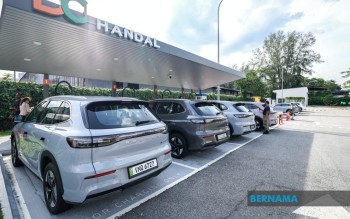
Malaysia's growing appetite for electric vehicles is drawing serious attention from international charging technology providers, particularly from China, which has emerged as a global leader in EV infrastructure development. Xi'an LINCHR New Energy Technology Co Ltd, a major player in smart charging solutions, is establishing a foothold in the Malaysian market through strategic partnerships and technology collaboration. The company's participation in the Global Automotive and Technology Expo 2026 at the Malaysia International Trade and Exhibition Centre this week signals the accelerating internationalisation of EV charging solutions as regional markets begin their transition away from combustion engines.
LINCHR's chairman Yuan Qingmin has articulated a critical perspective that challenges the notion of straightforward technology transfer. Rather than adopting a cookie-cutter approach to deploying Chinese EV infrastructure solutions across different markets, Yuan argues that meaningful expansion into new territories demands fundamental rethinking of how technologies function within distinct environmental and economic contexts. This nuanced approach reflects growing maturity within the global EV ecosystem, where industry leaders recognise that success in emerging markets depends on deep integration with local conditions rather than superficial customisation of existing products.
The interdependency between vehicle adoption rates and charging infrastructure represents a fundamental constraint on Malaysia's EV transition. As the market is projected to experience significant growth over the coming three to five years, bottlenecks in either the supply of vehicles or the availability of convenient charging options will inevitably throttle the other. This chicken-and-egg dynamic means that infrastructure development cannot afford to lag behind vehicle sales, placing substantial pressure on charging technology providers to rapidly scale operations whilst maintaining quality and reliability. LINCHR's engagement with local industry stakeholders through GATE 2026 reflects an understanding that building trust and establishing working relationships with government agencies, energy operators, and existing automotive players is essential to navigating this critical expansion period.
Malaysia's tropical maritime climate presents a specific technical challenge that illustrates why direct replication of Chinese designs proves insufficient. The country's high humidity, heat, and salt-laden air—particularly pronounced in coastal regions—create corrosive conditions that can degrade electronic components far more rapidly than in other climates. LINCHR has addressed this by incorporating oil-immersed insulation technology in the printed circuit boards of its charging stations, a design choice specifically engineered to enhance resistance to salt spray corrosion. This concrete example demonstrates how environmental factors demand material and engineering solutions that generic technology transfer frameworks frequently overlook.
The partnership between LINCHR and Swift Bridge Technologies Sdn Bhd, a homegrown EV charger manufacturer, represents a promising model for knowledge exchange and localised development. Rather than positioning itself as merely a vendor importing finished products, LINCHR is collaborating across the full spectrum of charging infrastructure development—encompassing design standards, physical products, technological integration, and engineering methodologies. This comprehensive approach creates opportunities for Malaysian engineers and technicians to acquire expertise in advanced charging systems whilst ensuring that solutions developed genuinely reflect local market requirements and technical capabilities.
Standardisation and testing protocols provide crucial infrastructure for building consumer confidence and ensuring interoperability across the charging ecosystem. The tripartite agreement signed in March last year between LINCHR, Swift Bridge, and the Standards and Industrial Research Institute of Malaysia represents meaningful progress toward establishing robust certification frameworks. These standards will be essential as the number of charging points proliferates across the country, preventing a fragmented landscape where different charging networks operate incompatible systems. Investment in upgrading equipment testing laboratories positions Malaysia to independently validate and certify charging infrastructure rather than remaining dependent on foreign testing facilities.
Yuan's observation that LINCHR's testing technology commands more than 70 per cent of China's market share underscores the company's technical expertise and competitive standing within the world's largest EV market. However, this dominance in China does not automatically translate to success elsewhere without substantial adaptation efforts. International expansion requires not merely licensing existing intellectual property but rather engaging in dedicated research and development partnerships with local organisations that understand regional market dynamics, regulatory environments, and customer expectations. This commitment to localised R&D distinguishes serious infrastructure partners from companies seeking quick profits through minimal-effort market entry.
The evolution of EV charging technology points toward increasingly sophisticated integration with broader energy systems. As vehicles become more connected and intelligent, charging will transcend simple energy transfer from grid to battery. Future EV systems will enable vehicle-to-grid capabilities, allowing automobiles parked at home, workplaces, or public locations to discharge stored electricity back into the grid during periods of high demand. This transformation converts electric vehicles from passive consumers of electricity into active participants in energy management, essentially turning the vehicle fleet into a distributed energy resource. Malaysia's charging infrastructure standards and testing protocols must anticipate these technological developments to avoid building systems that become obsolete within a decade.
The strategic implications for Malaysia extend beyond mere infrastructure deployment. By insisting on genuine technology transfer, localised research and development, and collaborative standard-setting with international partners, the country is building domestic capability in a technology sector that will remain strategically important throughout the twenty-first century. Rather than accepting a subordinate position as a market for imported solutions, Malaysia is positioning itself to develop indigenous expertise, create employment in advanced manufacturing and engineering, and potentially export homegrown innovations to other developing markets facing similar climatic and infrastructural challenges.
As Malaysia accelerates its EV transition over the coming years, the quality of infrastructure decisions made today will reverberate through decades of vehicle operations. Hasty deployment of inadequately adapted foreign technologies could result in premature system failures, costly replacements, and erosion of public confidence in EV adoption. Conversely, investments in collaborative technology transfer that genuinely reflects local conditions whilst building domestic expertise will create resilient, sustainable systems capable of supporting a thriving electric vehicle ecosystem. The LINCHR partnership model, with its emphasis on local adaptation, collaborative standards development, and commitment to research and development within Malaysia, offers a template for how technology transfer in the EV sector can serve both immediate infrastructure needs and long-term capacity building.

