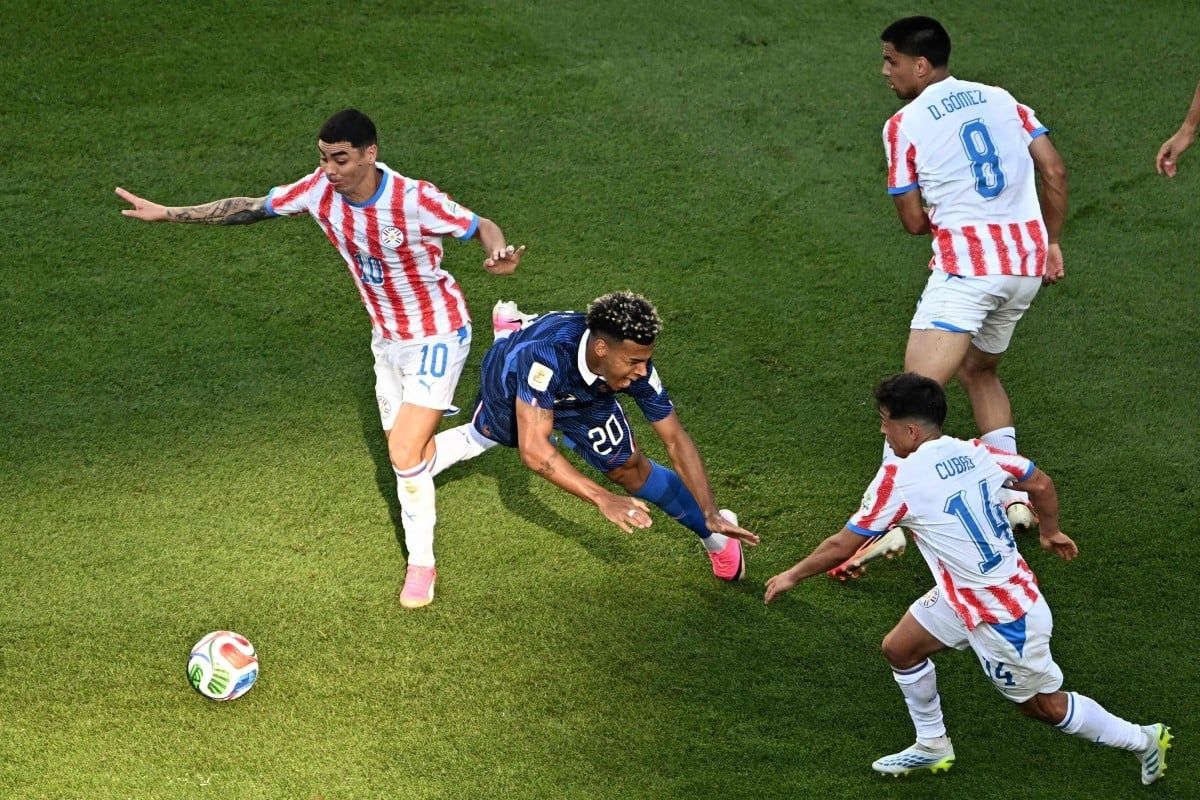
The behaviour of Paraguay during their World Cup elimination against France has sparked considerable discussion among Chinese football enthusiasts, who feel that the South American team's physical approach overshadowed the sporting contest itself. In a last-16 encounter contested in Philadelphia on Saturday, July 4, Paraguay appeared determined to unsettle their opponents through persistent physical challenges rather than establishing a meaningful attacking threat. A penalty conversion by Kylian Mbappe with twenty minutes remaining proved decisive, propelling France into a quarter-final meeting with Morocco and consigning Paraguay to elimination.
Rather than focusing on the match outcome, Chinese supporters directed their attention toward the officiating performance and Paraguay's conduct throughout the encounter. Uzbekistan referee Ilgiz Tantashev distributed only four yellow cards during a game characterised by repeated niggling fouls and aggressive challenges. Notably, three of those cautions went to France, a distribution that struck many observers as disproportionate given the nature of the contest. This card allocation became the flashpoint for extensive online commentary, with Chinese fans drawing unflattering comparisons to domestic refereeing standards.
The contrast with Chinese referee Ma Ning, widely recognised for his strict disciplinary approach, dominated social media discourse. Supporters suggested that Paraguay would have been reduced to minimal player numbers had Ma overseen proceedings, with online commenters expressing admiration for his reputation as a decisive official prepared to sanction foul play comprehensively. One commenter joked that Mbappe would finally understand the quality of Chinese refereeing standards, while others questioned whether Tantashev's lenient approach represented poor judgment or potential bias.
Critiques of Tantashev's performance extended beyond card distribution to encompass his overall management of the fixture. Observers labelled his display as "very low standard" and questioned his apparent inability to control the physical intensity of the encounter. Some Chinese fans attributed South America's notorious playing style to cultural factors, yet others suggested more troubling explanations. Accusations emerged that Tantashev harboured an agenda to eliminate France from the tournament, with his supposedly partial decision-making deliberately hampering the European champions' performance throughout ninety minutes.
Paraguay's conduct centred predominantly on aggressive challenges directed at Mbappe, the French forward who simultaneously served as a focal point for the South Americans' disruptive approach. Despite absorbing considerable physical punishment, Mbappe maintained his composure and demonstrated tactical awareness by acknowledging the nature of the encounter beforehand. The French captain later reflected on his team's capacity to match Paraguay's intensity, remarking that France possessed the technical knowledge to engage in physical confrontation and "ugly football" if circumstances demanded such an approach. His comments revealed a calculated understanding that success sometimes required adaptation to opponents' preferred playing styles.
French manager Didier Deschamps corroborated accounts of Paraguay's approach and added important context regarding off-field incidents that contributed to the overall atmosphere. The fifty-seven-year-old former World Cup champion indicated that physical aggression extended to the technical area, with insults directed from the Paraguayan bench creating an unpleasant environment. Deschamps expressed disappointment that Paraguay's tactics, however deliberate, detracted from the entertainment value that typically characterises World Cup football. His observations suggested frustration with opponents prioritising disruption over competitive football.
An incident involving Paraguay goalkeeper Orlando Gill provided additional ammunition for critics. Following the final whistle, Gill was observed throwing a ball at Mbappe's back after the French forward declined to acknowledge him. Chinese social media users remained unconvinced by Gill's subsequent explanation attributing the action to heat-of-the-moment emotional release. Instead, commenters interpreted the incident as evidence of Paraguay's overall unprofessionalism and characterised their conduct throughout the match as childish and unsporting.
The episode reflects broader patterns within international football where physical play and tactical aggression frequently test referees' judgment and threshold for intervention. Tantashev's performance illustrates the subjective nature of match officiating and the significant influence that refereeing decisions exert on football's aesthetic appeal. For Chinese audiences accustomed to Ma Ning's stricter standards, the contrast highlighted the varied approaches different officials adopt when managing contact-heavy encounters.
The incident also underscores how tournament football amplifies tensions and encourages some teams to employ unconventional strategies when facing superior technical opponents. Paraguay's approach, while ultimately unsuccessful, demonstrated determination and tactical flexibility despite inevitable elimination. However, from a Chinese audience perspective, such tactics fundamentally compromise football's inherent entertainment value and sportsmanship principles that international competition purportedly represents.
As tournament football progresses, these discussions about officiating standards and acceptable physical contact continue generating debate among global football communities. The contrast between Tantashev's relatively permissive approach and the stricter standards expected by Chinese supporters reflects broader international variations in match management philosophy and enforcement priorities. Ultimately, Paraguay's elimination ensured France's advancement, yet the manner of their defeat will likely remain contentious among observers who expected more consistent and decisive refereeing standards.

