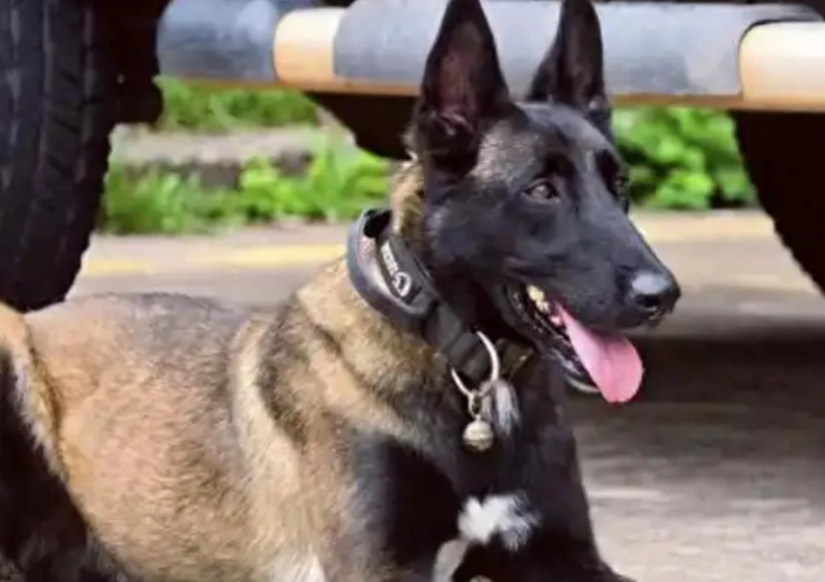
An emotional reunion between a Chinese police officer and his canine partner has resonated deeply across mainland social media, drawing over 10 million views and highlighting the profound bonds formed between law enforcement and working animals. The story centres on Bulu, a four-year-old German shepherd trained in narcotics detection, and his handler known as Awei from Chuxiong in Yunnan province's southwestern reaches. Their separation following a workplace injury and the dog's unwavering loyalty during months of separation has struck a chord with viewers seeking heartwarming narratives in an often-turbulent online landscape.
The dramatic incident unfolded in November when Awei and Bulu were deployed to an abandoned building as part of a narcotics operation targeting suspected drug traffickers. The dog's keen senses quickly detected movement as suspects attempted to flee the premises, and Bulu surged forward with his handler in pursuit. In the chaotic environment of a debris-strewn corridor with poor lighting, Awei lost his footing and plummeted from a second-storey height, sustaining catastrophic injuries in the fall.
First responders discovered Awei in critical condition, convulsing and vomiting blood as his consciousness flickered between awareness and unconsciousness. Body camera footage preserved the moment when a fellow officer urged the injured man to persevere, reminding him of their shared responsibilities and the battles ahead. Throughout this ordeal, Bulu remained at his side, circling anxiously and attempting to revive his handler through nuzzling and physical contact—a demonstration of the dog's distress and emotional attachment that would later move countless observers.
Medical assessment revealed multiple fractures affecting Awei's head and chest regions, necessitating an extended hospital stay. He remained unconscious for five days before gradually regaining awareness and beginning his recovery process. The separation from Bulu, however, extended far beyond those initial hospitalisation weeks. Awei remained absent from duty for approximately six months while undergoing rehabilitation for his serious injuries, during which Bulu resided at the training facility where both had worked.
During this extended separation, the German shepherd's behaviour reflected the psychological toll of his handler's absence. Rather than adapting to temporary care from other handlers or training staff, Bulu largely ceased participating in routine police work. The dog grew increasingly restless, exhibiting signs of emotional distress through decreased appetite and reluctance to consume food or water at normal levels. Security camera recordings documented his persistent search for Awei, as Bulu repeatedly returned to locations where he might encounter his missing partner—the dormitory, the base entrance, and familiar training routes they had traversed together.
One particularly poignant moment captured on film showed Bulu rushing excitedly toward a returning police vehicle, only to experience disappointment upon realising that Awei was not aboard. These scenes illustrated how deeply the dog's routine and emotional wellbeing had become intertwined with his handler's presence and routine. The training base staff maintained Bulu throughout this period, ensuring his physical health despite his emotional suffering and diminished appetite.
When Awei finally achieved sufficient recovery to return to his police duties, handlers arranged a carefully orchestrated reunion with his devoted partner. The subsequent video documentation showed Bulu barking intensely before sprinting toward the returning officer. Awei, overwhelmed by the moment, abandoned his luggage and dropped to his knees to embrace the dog. This raw emotional display resonated powerfully with online audiences, accumulating over 580,000 likes and spawning thousands of comments reflecting on the nature of loyalty and interspecies bonds.
The viral moment sparked broader conversations about the nature of commitment between working dogs and their handlers. Online commentators emphasised that Bulu's vigil represented devotion extending beyond simple conditioned responses or training—viewers interpreted the dog's behaviour as evidence of genuine emotional attachment and recognition of a comrade in arms. Such perspectives reflect evolving cultural attitudes in China toward animal consciousness and emotional capacity, topics that have generated increasing discussion in urban centres.
Meanwhile, Awei's absence from duty had not halted the investigation that prompted his injury. His colleagues continued the drug operation independently, ultimately achieving significant results through their efforts. The team successfully apprehended eleven suspects connected to the case and seized approximately 4.4 kilos of narcotics along with more than 500,000 yuan in illicit funds—amounts that concluded the investigation successfully despite the interruption caused by Awei's hospitalisation.
The renewed public interest in this story has directed attention toward China's broader police dog programmes and the experiences of working canines across the nation. According to CCTV News reporting, China maintained over 29,000 active police dogs as of 2024, representing a substantial investment in canine law enforcement personnel. These animals undergo rigorous training and deployment in demanding operational environments, typically serving an average of eight years in their roles. However, the intense nature of police work exacts a physical toll—prolonged high-intensity deployment frequently results in joint and spinal injuries that accumulate over a working dog's service years.
Retirement provisions for police dogs in China reveal a system that attempts to honour the contributions these animals make to law enforcement. Most retired dogs remain with their original police units, continuing to live under the care of their handlers who developed deep bonds with them during their working years. Some dogs eventually become available for public adoption, allowing civilian families to provide homes for animals who have served their communities. These post-retirement arrangements reflect a growing recognition in China that working animals deserve dignified conclusions to their service lives.
The Awei and Bulu story serves as a microcosm of the broader human-animal relationships that define police work globally. Their reunion has provided a counternarrative to cynical or despairing content that dominates social media discourse, offering viewers a moment of unambiguous emotional authenticity. For Malaysian and Southeast Asian readers, the story illustrates principles of loyalty, sacrifice, and inter-species connection that transcend geographic and cultural boundaries, while also providing a window into contemporary Chinese society's evolving relationship with animal consciousness and welfare.

