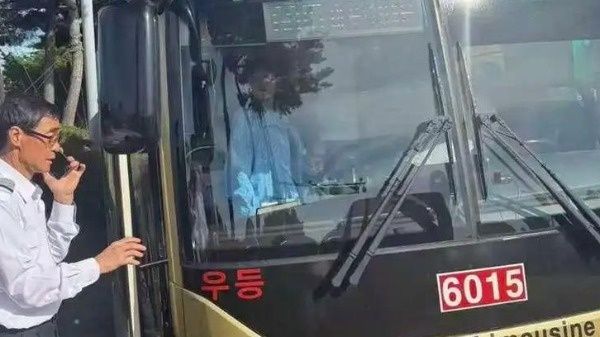
When a bus driver suddenly lost consciousness on a Seoul highway last Saturday afternoon, a group of Chinese tourists transformed themselves into an emergency response team within seconds, preventing what could have been a catastrophic accident. The No 6015 airport bus, carrying more than a dozen passengers predominantly from mainland China, veered dangerously across its lane after the driver collapsed, scraping against a roadside guardrail as the vehicle continued to accelerate out of control. Through coordinated action and clear thinking under extreme pressure, the passengers managed to bring the bus to a safe halt before any collision could occur, demonstrating the kind of instinctive human cooperation that transcends language and cultural boundaries.
Sun Qian, a healthcare professional aged over 35 from Nanjing in Jiangsu province, was positioned in an advantageous seat directly behind the driver when the emergency unfolded. Her occupation in China's health sector may have contributed to her composure during the crisis, though she has remained characteristically modest about her role. Observing the driver's sudden incapacity and the dangerous trajectory of the massive vehicle, Sun reacted without deliberation, lunging forward to grasp the oversized steering wheel of the coach and attempt to stabilise its path. She described the moment to China Daily with the kind of retrospective clarity that comes only after adrenaline has subsided, noting that her initial instinct was to prevent the bus from continuing its uncontrolled drift toward the guardrail.
Working in tandem with Sun's effort to control the steering, other passengers sprang into action with equivalent urgency. A fellow passenger scrambled to locate and operate the vehicle's braking systems, while additional travellers mobilised themselves toward the emergency brake button and handbrake mechanisms. The choreography of this spontaneous rescue, accomplished within mere seconds, reflected the natural human impulse to prevent disaster when circumstances demand immediate action. Sun, despite her knowledge of driving techniques, admitted to considerable nervousness whilst gripping the unfamiliar steering mechanism of the large coach, yet she persisted in her attempt to restore directional stability to the rapidly decelerating vehicle.
Sun's companion on the journey, Du He, aged 33 and also from Nanjing, occupied the adjacent seat and responded with equal decisiveness. Du's immediate instinct was to employ a traditional Chinese first-aid technique, attempting to stimulate the driver by applying pressure to the philtrum area beneath his nose. However, Du quickly recognised that the situation had progressed beyond such interventions when she observed the driver's lips turning purple and detected the absence of normal breathing patterns. This grim assessment prompted a rapid transition from initial first-aid measures to cardiopulmonary resuscitation, which Du and other passengers began performing immediately.
The coordination of the rescue effort extended beyond physical intervention to encompass communication across language barriers. Sun, who possesses fluent command of Korean, seized the driver's mobile telephone and successfully contacted emergency services whilst articulating their location and crisis in the local language. This linguistic capability proved invaluable in ensuring that professional medical assistance could be summoned with precision and urgency, even as other passengers continued administering chest compressions and resuscitation efforts. The passengers worked in shifts to maintain continuous CPR, each understanding that their collective effort represented the driver's best chance at survival, though their attempts ultimately proved insufficient to overcome whatever catastrophic medical event had occurred.
According to reports from South Korea's Yonhap News Agency, the driver was transported rapidly to hospital following the passengers' emergency intervention, but he was pronounced deceased after approximately two hours of intensive hospital treatment. Subsequent police investigation determined that cardiac arrest had precipitated the loss of consciousness, though the precise medical cause remained under examination. The tragic outcome, despite the passengers' commendable and sustained resuscitation attempts, underscores the unpredictability of sudden cardiovascular events and the limitations of emergency first aid in certain circumstances.
Du reflected on how the immediate crisis atmosphere had suppressed the full emotional weight of their experience, a psychological response common in emergency situations where survival requires sustained focus. She noted that the accumulated shock and fear arrived only after the acute danger had passed, manifesting at the airport several hours after the incident. Du expressed simultaneous gratitude that their rapid intervention had successfully halted the bus, thereby preventing secondary collisions with other vehicles and potential injuries to passengers. The passengers had quickly flagged down an alternative bus to continue their journey to Incheon International Airport, resuming their travel plans despite the traumatic intervening crisis.
Both women have approached the subsequent praise and media attention with characteristic humility, viewing their actions not as extraordinary heroism but rather as instinctive responses that anyone faced with such circumstances might have provided. Sun emphasised the collective nature of the rescue, noting that success derived from multiple passengers contributing their specific skills and efforts—one locating the brake, multiple others performing compressions, and all of them cooperating toward the shared objective of preventing disaster. Du articulated a perspective grounded in broader cultural values, suggesting that the readiness to assist others in critical situations represents a fundamental aspect of human nature rather than an exceptional display of character. This philosophical approach has resonated strongly with online audiences across both China and South Korea.
The incident has generated substantial discussion across social media platforms in both countries, with commentators noting the remarkable composure demonstrated by the passengers despite their status as foreign visitors navigating unfamiliar circumstances in a foreign country. South Korean netizens particularly appreciated the speed and effectiveness of the response given the language barriers and cultural unfamiliarity that might have complicated communication or coordinated action. Chinese social media users shared the women's accounts on platforms including Xiaohongshu, lavishing praise upon them for embodying values of community cooperation and mutual assistance. Du's observation that Chinese people possess a natural inclination toward unity and helping others has struck a chord with audiences seeking examples of positive intercultural cooperation in an era often dominated by divisive narratives.

