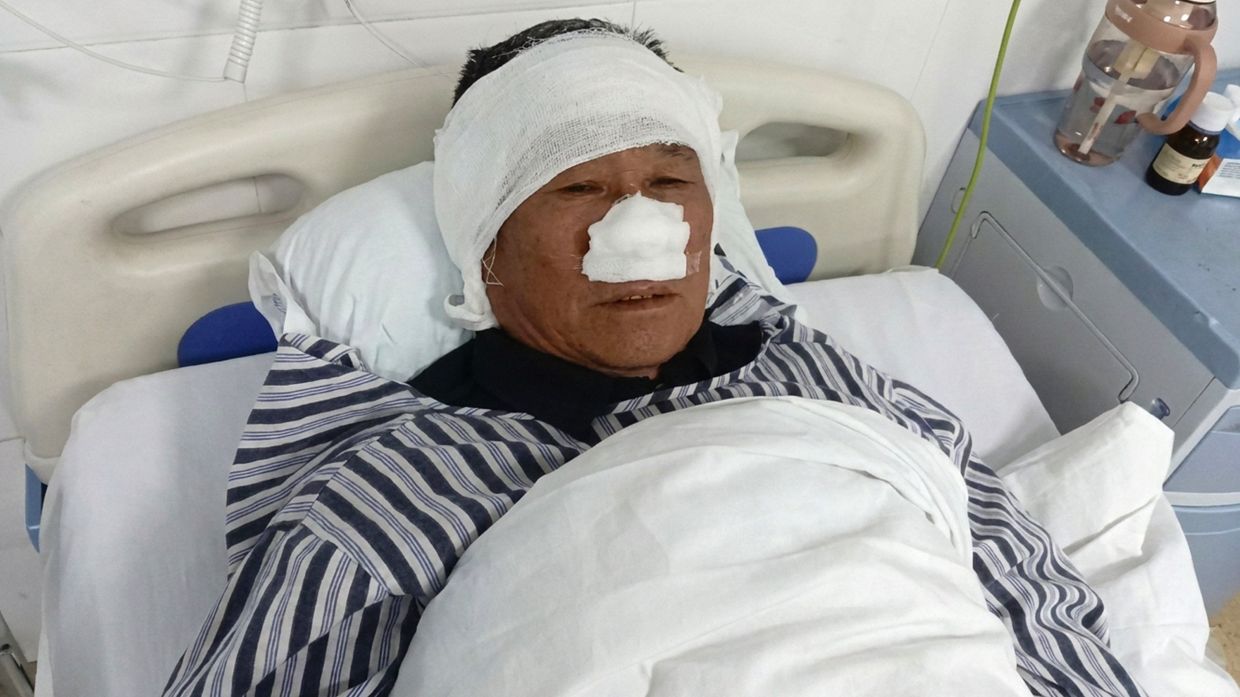
Zeng Fanlin, a 69-year-old from Chenzhou in Hunan province, has received official recognition from the Chinese government as a national hero following an act of civilian bravery that left him severely disfigured. The incident, which occurred in April, saw the retired village official and volunteer mediator intervene to save a woman's life at considerable personal cost, earning him a place on China's latest list of "national heroes for a just cause" announced on July 9.
The circumstances surrounding the attack were straightforward yet dangerous. A man in his twenties arrived in the village and embarked on an unprovoked rampage, attacking residents and attempting to force entry into homes. The violence escalated when he seized a woman riding an electric bicycle, gripping her around the neck with evident intent to cause serious harm. Witnesses to the assault, concerned about the attacker's erratic and aggressive behaviour, opted to contact emergency services rather than physically intervene, leaving the woman in immediate mortal peril.
Zeng did not hesitate. Despite having no official duty to act and facing an unknown assailant, he rushed forward and tackled the man, initiating a struggle that would have lasting consequences for his own wellbeing. Two other villagers joined him in restraining the attacker, but during the violent confrontation, the assailant bit off a significant portion of Zeng's nose. Even as he sustained this catastrophic injury, Zeng maintained his grip until police arrived at the scene. The suspect was arrested and taken into custody, while Zeng was transported to hospital for emergency treatment.
The medical aftermath proved complex and challenging. Surgeons reported that the majority of Zeng's nose had been severed, presenting significant reconstruction difficulties. The damage extended beyond initial aesthetic concerns; doctors warned of potential long-term complications and permanent scarring that could affect both his appearance and breathing function. The medical team devised a reconstructive strategy that proved gruelling, requiring at least six months of recovery and ultimately involving two separate surgical procedures. Skin grafts harvested from Zeng's head were used to rebuild the affected area, with surgeons working to restore the nasal passages and wings to preserve his breathing capacity.
The financial burden of treatment exceeded 70,000 yuan—approximately US$10,000—a substantial sum for a rural resident. However, government support helped cover the medical expenses, and recognition of his heroism led to additional assistance. The Alibaba Foundation and local media organisations awarded Zeng an additional 20,000 yuan for his bravery, acknowledging both his action and his sacrifice. Despite successful surgical outcomes that restored his ability to breathe normally, Zeng continues to experience daily pain from his injuries, a persistent reminder of the cost of his intervention.
Zeng's commitment to community welfare flows from his own life experiences. Orphaned during childhood, he was raised by villagers who took him in and supported his development. When he reached school age, the government provided educational assistance that enabled him to pursue learning. This early exposure to collective solidarity and public support appears to have shaped his worldview and sense of obligation to others. Throughout his life, he has sought to reciprocate the kindness shown to him, serving as a village official and later volunteering as a mediator to resolve disputes among residents.
His family members characterised him as someone with an ingrained moral compass and strong sense of justice—a person fundamentally unable to remain passive when confronted with wrongdoing. This disposition has manifested repeatedly. In 2016, Zeng helped police apprehend a thief, demonstrating that his willingness to assist law enforcement and protect community safety predates the April incident. His daughter's description of her father emphasises these embedded character traits rather than presenting his heroism as an aberration or one-off act of impulse.
When asked to reflect on his sacrifice, Zeng expressed a perspective that prioritises the value of the life he saved above his own suffering. "Compared with saving a life, everything I have given is worth it," he told local media, a statement that encapsulates a utilitarian moral framework common among those who describe themselves as having little choice but to act when others face danger. The woman he rescued has made no public statements about the incident, and her identity remains private.
The attacker's status remains under investigation, with police indicating that the man's violent outburst resulted from emotional loss of control. Under Chinese criminal law, deliberately inflicting serious bodily injury carries penalties ranging from three to ten years imprisonment, suggesting the suspect faces substantial legal consequences for his assault on both the woman and Zeng. The precise charges and eventual sentence will likely reflect the severity of the injuries inflicted and the circumstances of the attack.
Zeng's inclusion among 86 individuals named as national heroes on July 9 represents official validation of a principle that appears increasingly important in Chinese civic discourse: that ordinary citizens who demonstrate exceptional moral courage deserve public recognition and support. The honour coincides with his medical recovery and signals broader social appreciation for civilian intervention in defence of others. Online responses to his story have generally been supportive, with observers emphasising both the appropriateness of the government's recognition and the conviction that perpetrators of such violence should face severe punishment. For rural communities like Zeng's, his recognition carries additional weight, elevating the standing of village-level figures who contribute to social cohesion and collective wellbeing beyond formal administrative roles.

