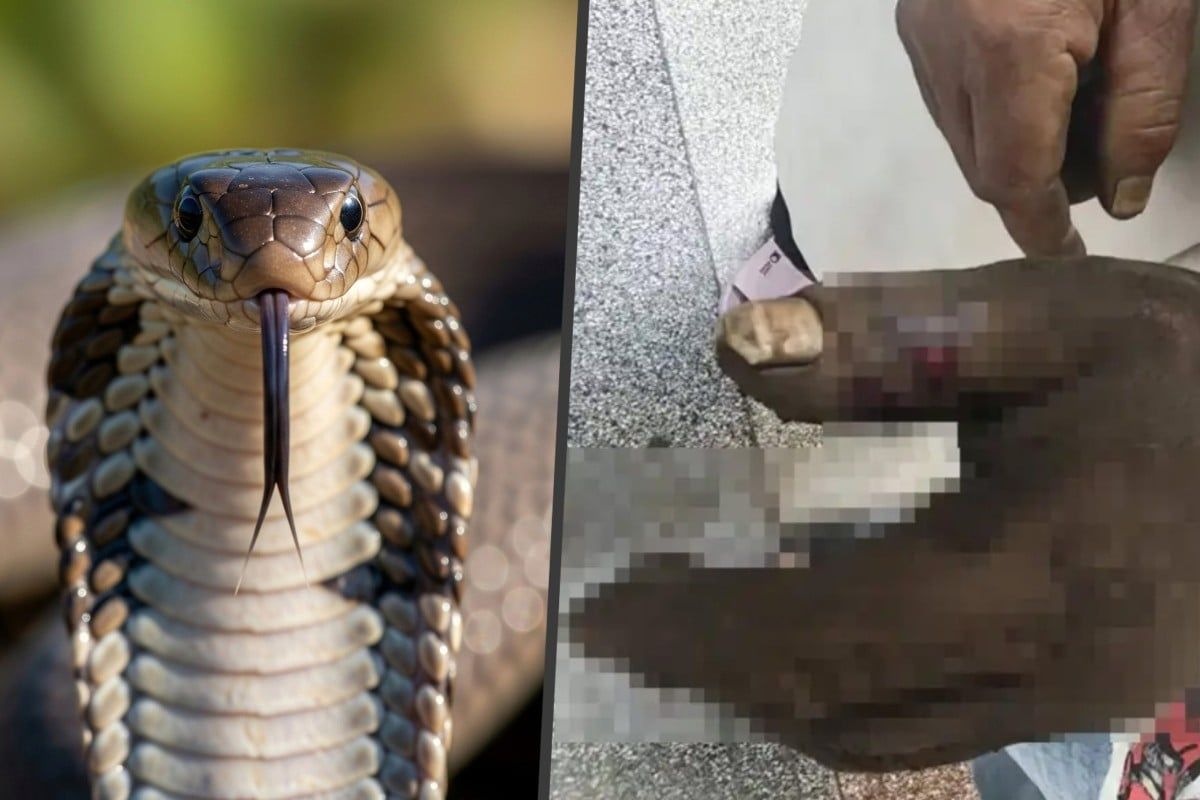
A dramatic medical incident in Yunnan province has highlighted the dangers of attempting to treat snake bites using remedies popularised by television dramas. When a farmer working in Yuanyang county sustained a cobra bite to his finger, his wife's instinctive response to extract the venom through suction resulted in her own hospitalisation, underscoring how popular misconceptions about snake bite first aid continue to put well-meaning people at risk across China.
The farmer's hand began swelling immediately following the cobra strike, and he quickly developed symptoms of systemic poisoning including dizziness and general weakness. Witnessing her husband's deteriorating condition and recalling emergency techniques she had observed in television programmes, his wife made the fateful decision to apply direct oral suction to the wound without any form of protection. Her husband was transported to hospital, but the consequences of her intervention would soon become apparent.
Within hours of the attempted extraction, the wife began experiencing concerning neurological symptoms. Numbness spread across her mouth, tongue, and facial region before extending into her limbs. By the following day, she was incapacitated by severe fatigue, prompting her family to seek immediate medical intervention. Both patients ultimately received treatment at Honghe Prefecture No 3 People's Hospital, where medical professionals confirmed that cobra venom had poisoned them both. The couple underwent courses of antivenom serum injections and supportive medical care, eventually stabilising enough to be discharged after several days of hospitalisation.
Medical experts at the Yunnan facility have used this case as an opportunity to educate the public about the fundamental flaws in the suction method. The danger lies partly in human anatomy itself. The oral mucosa, which lines the inside of the mouth, contains an exceptionally dense network of capillary blood vessels positioned just beneath the surface. When venom makes contact with these tissues, it rapidly crosses the mucosal barrier and enters the bloodstream, delivering the toxin directly into systemic circulation. A rescuer performing oral suction not only fails to extract significant quantities of venom but actively creates a new route of exposure, essentially poisoning themselves in the attempt to help.
Beyond the physiological vulnerability of the mouth, the procedure simply cannot work from a mechanical standpoint. Snake fangs create puncture wounds that superficially resemble pinpricks—tiny perforations that immediately bleed internally. Venom does not remain pooled at the surface awaiting removal; instead, it rapidly disperses into subcutaneous tissues and enters the circulatory system within minutes of injection. The notion that meaningful quantities of venom can be retrieved through suction represents a profound misunderstanding of how venom works and where it goes once injected into tissue.
Doctor explanations from the hospital reveal that suction-based extraction is merely one of several persistent and dangerous myths surrounding snakebite management. Another widespread misconception involves deliberately enlarging or cutting the bite wound to encourage bleeding, supposedly to flush out toxins. This approach creates additional trauma that can result in excessive blood loss and dramatically increases the risk of infection in an already injured area. Equally counterproductive are attempts to apply extreme heat or extreme cold to the bite site—both interventions can cause additional tissue damage without providing any therapeutic benefit.
The correct response to a snake bite requires patience and restraint rather than dramatic action. Medical professionals emphasise that bite victims should immediately cease physical activity, as movement accelerates the circulation of venom throughout the body. The priority should be contacting emergency services without delay, allowing trained medical personnel with access to species-specific antivenin to manage the situation. Whenever possible, observers should carefully note distinctive visual characteristics of the snake—colouration, scale patterns, head shape, and any other identifying features—and ideally capture photographic evidence. These details enable doctors to identify the species and administer the appropriate antivenom rather than relying on broad-spectrum treatments.
Snake bite incidents routinely capture public attention across China's social media landscape, often generating substantial discussion about emergency response protocols and the gap between medical reality and popular entertainment depictions. Just months earlier, a fourteen-year-old student in Guangdong province discovered a bite on his body while in the school grass but initially dismissed it as inconsequential since he felt no pain at the moment of contact and had not clearly seen the attacking animal. Only hours later, when numbness invaded his limbs and his vision became compromised, did he report the incident to school authorities. The physicians treating him noted grimly that a delay of merely one to two additional hours would have progressed to respiratory failure—a sobering reminder of how rapidly cobra venom can overwhelm vital functions.
The Yunnan case rapidly accumulated online commentary as Chinese social media users digested the implications. Observers noted the glaring disconnect between medical reality and television dramatisations that have conditioned audiences to expect oral suction to function as an effective emergency intervention. Some responses acknowledged the wife's actions through the lens of desperation and marital devotion, recognising that her instincts, though ultimately counterproductive, stemmed from genuine concern for her husband's survival. The incident serves as a powerful cautionary narrative about the real-world consequences of mimicking entertainment portrayals without understanding the underlying medical principles.

