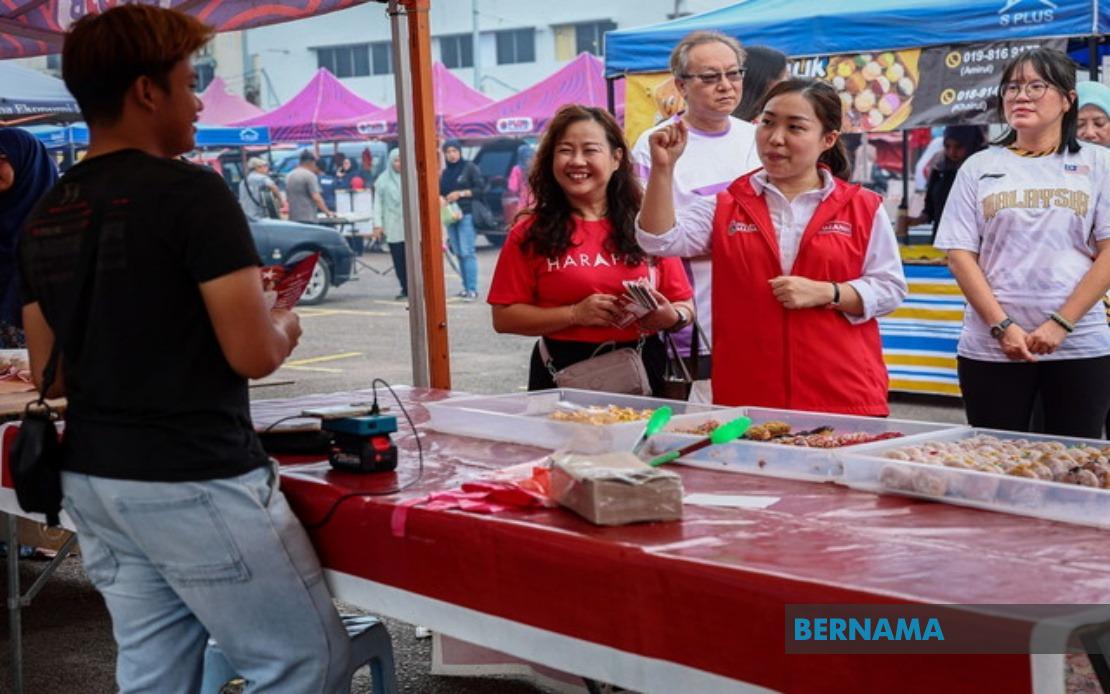
Chu Poh Yee, a young lawyer contesting the Mengkibol state seat for Pakatan Harapan in the upcoming Johor state election, has crystallised her campaign around three interconnected priorities: upgrading the constituency's physical infrastructure, unlocking local economic potential, and strengthening community welfare programmes. Speaking ahead of polling day on July 11, Chu articulated a vision focused on tangible improvements to residents' daily lives whilst addressing longer-term structural challenges that have historically plagued the Kluang area.
On infrastructure, Chu's platform emphasises a foundational overhaul of the constituency's transport networks and public amenities. Her campaign materials highlight the need for improved road conditions and expanded accessibility, recognising that basic infrastructure deficiencies often constrain economic activity and quality of life in smaller towns. Beyond conventional road maintenance, Chu has championed urban agriculture initiatives aimed at establishing community farming projects that could simultaneously enhance food security, create income-generating opportunities for residents, and foster a stronger sense of civic engagement at the grassroots level.
The economic development pillar of her agenda targets Kluang's demonstrated but underutilised commercial potential. Chu has noted that despite the constituency's location advantages and existing economic momentum, the local business ecosystem has not been fully optimised. She advocates for creating more accessible entrepreneurship platforms and expanding quality employment opportunities, framing these interventions as essential mechanisms to arrest the persistent pattern of youth out-migration that has characterised many smaller Malaysian towns. By retaining younger residents and providing viable career pathways, Chu argues that Kluang can sustain long-term demographic and economic stability.
Chu specifically cited the Kluang Rail Festival as evidence of the constituency's latent capacity for generating economic spillover benefits through creative tourism initiatives. This reference is particularly significant as it demonstrates how strategic event management and cultural programming can catalyse wider community prosperity beyond direct participant spending. Her position suggests that building upon existing successful models could unlock additional revenue streams and enhance Kluang's reputation as a destination, thereby attracting further investment and visitor attention from the Klang Valley and Singapore.
The third strand of her campaign addresses gender equity and family support systems, reflecting broader regional conversations about workforce participation and work-life balance. Chu has committed to strengthening mechanisms that enable women to participate fully in the economic sphere without shouldering disproportionate domestic burdens. She has identified well-equipped childcare facilities as a cornerstone policy, recognising that accessible, quality childcare directly facilitates maternal workforce participation and economic independence. This policy position appeals to an often-underrepresented constituency of working mothers and dual-income households in Kluang.
Mengkibol presents a competitive two-way contest, with Chu facing Barisan Nasional candidate Yap Zhi Peng in what is designated as one of 14 straight fights across the 56-seat Johor legislature. The straight fight designation indicates a polarised electoral environment with diminished third-party presence, intensifying the stakes for both major political coalitions. This configuration transforms Mengkibol into a microcosm of the broader BN-PH competition dominating Malaysian state politics.
Chu's campaign has encountered practical obstacles that underscore the heated political atmosphere surrounding this election. Her team has reported vandalism and defacement of campaign materials at multiple locations, along with instances of deliberate provocation. Such incidents, whilst challenging for campaign operations and volunteer morale, have become normalised features of Malaysian electoral contests. Chu has characterised these disruptions as insufficient to deter her team's commitment, employing the language of determination and forward-looking purpose that typically resonates with voters seeking stability-oriented candidates.
The Johor state election itself represents a significant political event within Malaysia's federal structure. Encompassing 172 candidates across 56 constituencies, this election functions both as a state-specific democratic exercise and as a barometer of broader shifts in Malaysian voter sentiment. Early voting has been scheduled for July 7, allowing for provisional results assessment before the main polling day on July 11, enabling media commentary and political analysis to crystallise around emerging electoral dynamics.
Chu's policy emphasis on grassroots economic development and infrastructure reflects a broader repositioning by Pakatan Harapan towards local delivery and tangible community benefits. Rather than emphasising abstract governance principles or federal-level reforms, her campaign exemplifies how contemporary Malaysian opposition parties are attempting to ground their electoral appeals in concrete, constituent-level improvements. This tactical shift acknowledges voter fatigue with high-level political rhetoric and the persistent salience of pocketbook issues in determining electoral behaviour, particularly in smaller urban and semi-rural constituencies like Kluang that have experienced relative economic marginalisation compared to metropolitan growth centres.
For Kluang residents, the electoral contest between Chu and Yap represents a choice between competing visions of local development priorities and governance philosophy. Chu's three-pronged platform synthesises infrastructure rehabilitation, economic diversification, and social support systems into a coherent narrative of inclusive development. Whether her emphasis on infrastructure modernisation, entrepreneurship promotion, and family-oriented welfare policies proves sufficiently compelling to shift electoral loyalty away from the incumbent BN will substantially depend on voter perceptions regarding both candidates' credibility, delivery capacity, and alignment with community aspirations. The result will provide instructive insight into how Malaysian voters in non-metropolitan constituencies weigh competing development narratives during a pivotal electoral cycle.

