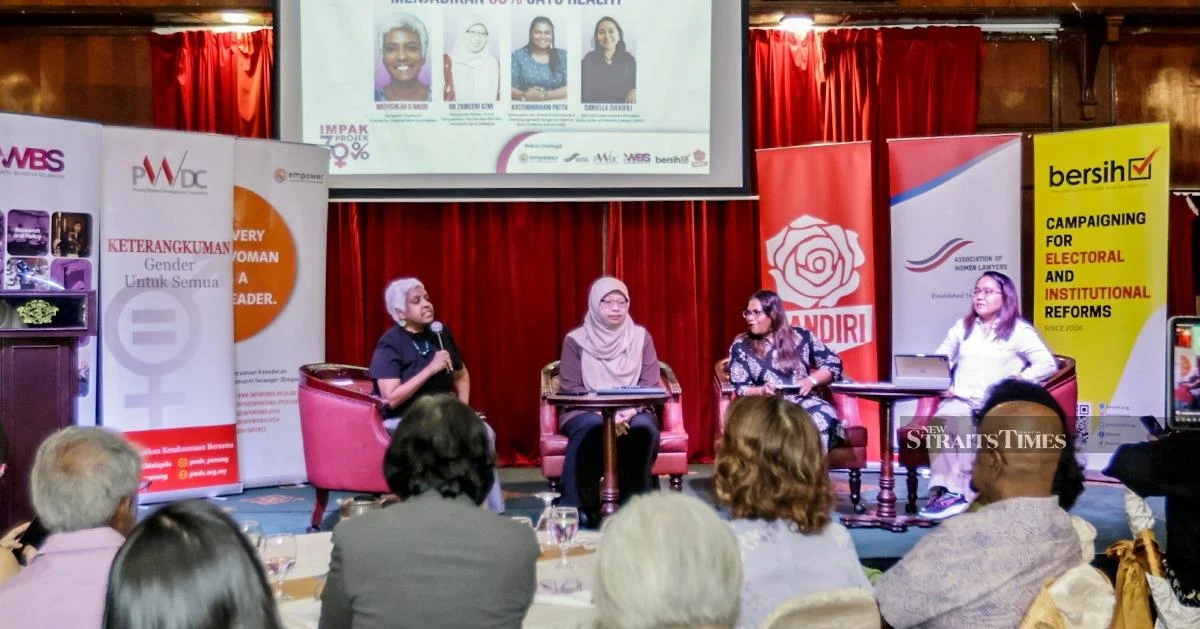
A broad coalition of civil society groups has formally presented the government with a memorandum and proposed legislation aimed at fundamentally reshaping Malaysia's electoral landscape through mandatory gender quotas. The initiative targets one of Southeast Asia's persistent political imbalances: the severe underrepresentation of women among parliamentary and state assembly candidates, and seeks to establish a legal requirement that political parties field at least 30 per cent women candidates when nominations open for the next general election.
The submission represents a coordinated effort among multiple organisations to address demographic inequality in Malaysia's political system. Rather than relying on voluntary commitments or appeals to party leadership, the coalition has opted for legislative intervention as the most effective mechanism to guarantee substantive change across all registered political parties regardless of their stated commitment to gender diversity. This approach reflects growing frustration with incremental progress and the inconsistent adoption of internal party guidelines that lack enforcement mechanisms.
Malaysia's current representation of women in elected office remains significantly below regional and international benchmarks. Women comprise roughly one-fifth of the members of parliament, a proportion that has stalled despite decades of advocacy and repeated promises from successive administrations. State assemblies and local government bodies present an even starker picture, with women holding fewer positions relative to their population share. This persistent gap has real consequences for policy outcomes, legislative priorities, and the substantive representation of women's interests within government decision-making processes.
The 30 per cent threshold chosen by the coalition aligns with international standards and recommendations from bodies such as the United Nations and regional human rights organisations. It represents a meaningful step forward without requiring absolute parity, acknowledging practical implementation concerns while still constituting genuine structural change. Countries across Asia, including neighbouring Indonesia and the Philippines, have implemented similar quotas through electoral law, providing proven models for effective execution and demonstrating that such requirements can function within Malaysia's constitutional and political framework.
Implementing such legislation would necessitate revisions to the election law and potentially amendments to party constitutions and nomination procedures. Political parties would need to establish clear mechanisms for candidate selection that comply with the quota requirement, likely including internal reforms to succession planning and candidate development pipelines. The administrative burden, while non-trivial, would be manageable for established parties with existing nomination infrastructure, though smaller parties might face greater implementation challenges requiring transitional provisions.
Resistance to such measures typically centres on claims that candidate selection should rest solely on merit and party autonomy, though critics note that existing informal quota systems already shape nominations in ways reflecting power brokers' preferences rather than objective capability assessments. Proponents argue that legislative quotas correct historical discrimination that has systematically excluded women from political candidacy, and that merit itself has been defined and gatekept by male-dominated party hierarchies that have historically given advantage to male candidates with identical or inferior qualifications.
The political economy of implementing such reform hinges on government willingness to prioritise gender equity over potential resistance from conservative party factions and traditional gatekeepers within political structures. While some major parties have publicly endorsed gender-inclusive politics and even appointed women to senior positions, others remain highly resistant to measures that would formally constrain their nomination discretion. The strength of civil society advocacy, media engagement, and grassroots support for reform will substantially influence whether the government advances the proposed legislation.
For Malaysian voters, increased women's representation carries implications extending beyond symbolic diversity. Research consistently demonstrates that women legislators prioritise different policy domains than their male counterparts, including education, healthcare, family welfare, and gender-based violence prevention. Greater parliamentary representation of women typically correlates with stronger family law protections, improved childcare provisions, enhanced workplace equality safeguards, and more comprehensive responses to domestic violence and sexual harassment.
From a regional perspective, Malaysia lags behind several neighbouring economies in women's political participation despite comparable development levels. Thailand, Indonesia, and the Philippines have all implemented or strengthened electoral gender quotas in recent years, positioning Malaysia as an outlier among major Southeast Asian democracies. For a country seeking to present itself as a modern, progressive economy attractive to international investment and talent, persistent political underrepresentation of women creates an unflattering contrast with regional competitors.
The submission of formal draft legislation marks an escalation in advocacy strategy, moving beyond consultation and awareness campaigns toward concrete legal proposals that can be debated, amended, and potentially enacted. This approach demands more direct government engagement and creates pressure for substantive parliamentary discussion rather than allowing the issue to remain in the realm of voluntary commitments. Implementation timelines will be crucial, as any law must be established well before candidate nomination periods begin to provide parties adequate time for institutional adaptation.
The success of this initiative will likely depend on whether it can build sufficient political consensus across party lines. While opposition parties may support reform as a principle, government parties must reconcile such legislation with their own internal dynamics and the preferences of incumbent power structures. Civil society's continued mobilisation, combined with voter demand for democratic inclusivity, represents the most promising avenue for translating this legislative proposal into enacted reform that reshapes Malaysia's political representation.