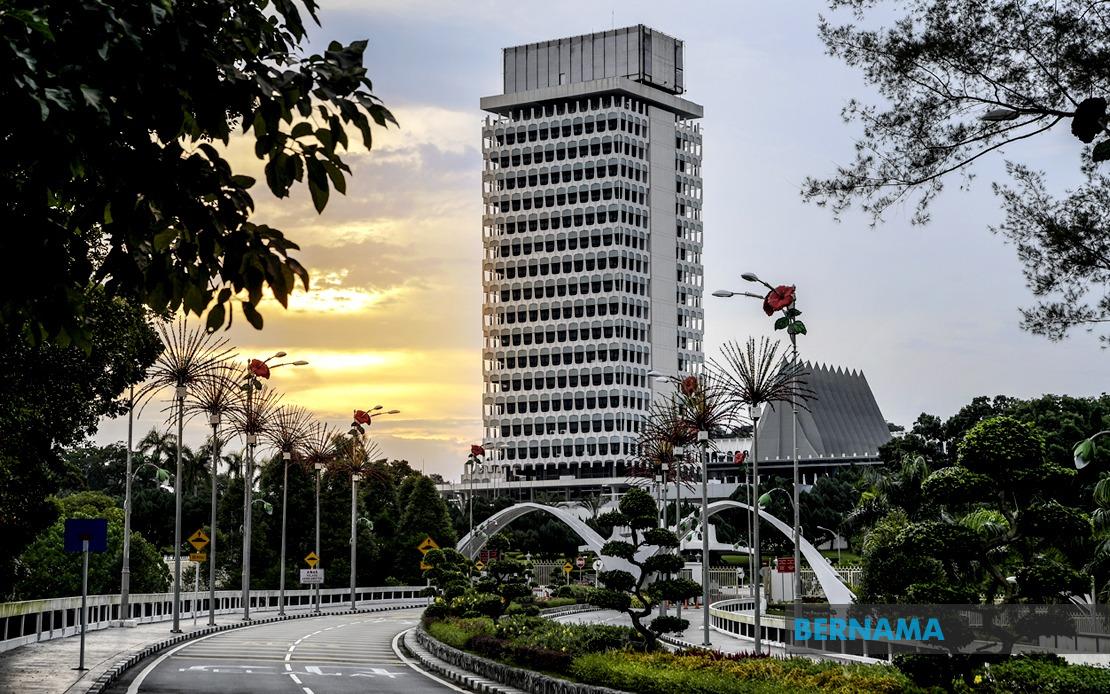
A broad coalition of Malaysian civil society organisations has issued a coordinated appeal for political stability, urging the 15th Parliament to function without interruption through to its scheduled conclusion on December 18, 2027. The 44 NGOs and 25 individual signatories view the full parliamentary term as essential to implementing deep structural reforms that could reshape Malaysia's democratic institutions and governance frameworks for years to come. This intervention reflects growing concern among civic groups that Malaysia's pattern of political uncertainty undermines the possibility of meaningful institutional change.
The joint statement, released in Kuala Lumpur on August 12, represents a rare show of unity across Malaysia's fragmented civil society landscape. Signatory organisations include prominent reform advocates such as Bersih, the C4 Center, and IDEAS, alongside faith-based groups like ABIM and IKRAM, demonstrating that the case for stability resonates across ideological and sectarian divides. The breadth of support suggests that institutional dysfunction has become a cross-cutting concern that transcends the traditional partisan divisions in Malaysian politics. By articulating a shared platform, these organisations have effectively framed parliamentary continuity not as a favour to any particular government, but as a prerequisite for democratic strengthening.
Central to the NGO coalition's proposal is an invitation for Prime Minister Datuk Seri Anwar Ibrahim to convene a cross-party leaders' forum encompassing both government and opposition blocs represented in Parliament. Such a summit would be tasked with crafting a collective reform agenda applicable to the remainder of the current parliamentary term. This call reflects recognition that Malaysia's most intractable governance challenges—corruption, weak institutions, and electoral credibility—cannot be resolved through partisan competition alone. Instead, the civic groups are advocating for a developmental consensus model wherein all parties commit to advancing institutional improvements that would benefit whichever political coalition holds power in future elections.
The proposed constitutional amendments reveal the depth of institutional dissatisfaction among Malaysia's reform-minded circles. The separation of the Attorney General's office from the Public Prosecutor function represents a fundamental restructuring of prosecutorial independence, addressing decades of concern about executive interference in law enforcement. The imposition of a ten-year maximum term for the Prime Minister would establish a precedent limiting executive concentration of power, protecting against the kind of extended premierships that have historically enabled patronage networks and reduced institutional accountability. These reforms, if enacted, would substantially alter the distribution of power within Malaysia's political system.
Beyond constitutional architecture, the coalition has identified specific legislative gaps requiring urgent attention. The proposed Ombudsman Act would create an independent grievance institution to investigate administrative misconduct, filling a notable void in Malaysia's accountability mechanisms. A Freedom of Information Act would establish legal rights to government transparency, fundamentally shifting the default from state secrecy to public disclosure. These measures represent modernisation efforts increasingly common in comparable democracies across Southeast Asia and the Commonwealth, positioning Malaysia as a latecomer to transparency norms that countries like India, the Philippines, and Thailand have already institutionalised.
The NGO coalition has also focused on redistributive mechanisms within Parliament itself. Proposals for equitable distribution of constituency development allocations across all Members of Parliament, regardless of political affiliation, directly challenge the current system wherein opposition lawmakers typically receive minimal development funds. Such a change would reduce the structural advantages of incumbency and improve the competitive environment for electoral contests. Similarly, calls for strengthened parliamentary committees, streamlined budget processes, and pathways for Private Members' Bills would enhance legislative capacity and reduce executive dominance over the legislative agenda—a chronic weakness in Malaysia's Westminster system.
Electoral system improvements feature prominently in the reform agenda, particularly regarding voting access for overseas Malaysians and those residing outside their constituencies. The current postal voting system remains cumbersome and underutilised, disenfranchising diaspora populations. Expansion of absentee voting mechanisms would align Malaysia with international best practice and acknowledge the reality of geographic mobility among voters. At the state level, the proposed introduction of party-list proportional representation alongside first-past-the-post elections would reduce the distortions created by Malaysia's plurality voting system, wherein governments can command overwhelming legislative supermajorities despite winning minority shares of the popular vote.
Representational equity constitutes another dimension of the proposed reforms. Calls for expanded participation of women, youth, Orang Asli communities, and other ethnic minorities reflect global democratic trends emphasising inclusive governance. Malaysia's current institutional structures systematically underrepresent these constituencies, creating legitimacy deficits and leaving significant portions of the population without meaningful voice in political decision-making. The NGO coalition's emphasis on these dimensions suggests that narrowly technocratic reforms focused solely on anti-corruption measures are insufficient; democratic deepening must also address historical exclusions and structural barriers to participation.
The coalition has also advocated for transparency regarding parliamentary dissolution, proposing that governments should provide advance notice of their intention to call early elections. This would allow the Election Commission, security agencies, and civil service machinery to prepare adequately, while enabling voters and civil society to mobilise effectively. The current system permits governments to call snap elections with minimal warning, conferring significant tactical advantages on the ruling coalition. Institutionalising advance notice would level the electoral playing field and reduce the strategic gaming that has characterised recent Malaysian political cycles.
All 13 state governments received explicit calls to enact parallel legislation governing assemblymen allocations and proportional representation principles. This multilevel approach reflects recognition that Malaysia's federal structure means institutional reform requires coordinated action across national and subnational governments. Without state-level alignment, national reforms could be undermined by continued inequitable resource distribution at the state assemblies, where much routine governance actually occurs. The inclusion of state governments in the reform agenda indicates that the NGO coalition views democracy strengthening as an enterprise requiring architecture-wide renovation.
For Malaysian observers, the NGO initiative reflects both optimism and pragmatism about institutional change. Optimism lies in the belief that parliamentary stability can unlock reforms benefiting citizens across partisan lines. Pragmatism appears in the implicit acknowledgment that Malaysia's fragmented political system requires coalitional consensus-building around shared democratic values. The proposal essentially argues that Malaysia's biggest political problem is not the composition of Parliament, but rather the absence of agreed institutional frameworks within which different coalitions can compete legitimately. By framing reform as in every party's long-term interest, the NGOs are attempting to transcend zero-sum electoral competition.
The timing of this statement carries significance. With the 15th Parliament entering its third year, the question of whether it will serve its full term has begun generating public speculation and political manoeuvre. Senior politicians from both government and opposition have intermittently signalled interest in earlier elections. The NGO coalition's intervention is designed to shift the default assumption from instability toward completion of the parliamentary term. By mobilising broad civil society support and articulating a substantive reform agenda, the coalition attempts to make early dissolution politically costlier by associating it with abandonment of democratic strengthening.
Whether this coalition succeeds in its objectives depends substantially on whether the political leadership—particularly Prime Minister Anwar Ibrahim—chooses to embrace the cross-party summit model and commit to advancing institutional reforms that constrain executive power. The NGO proposals are technically ambitious and constitute a serious programme for democratic deepening. Yet implementation requires political will from actors whose power would be curtailed by these very reforms. The reform agenda thus faces the perennial tension between the theoretical benefits of institutional change and the practical reluctance of power-holders to constrain their own authority. Malaysia's subsequent political trajectory will reveal whether the NGO coalition's vision of consensus-based democratic deepening can overcome the country's entrenched patterns of partisan competition and executive assertiveness.

