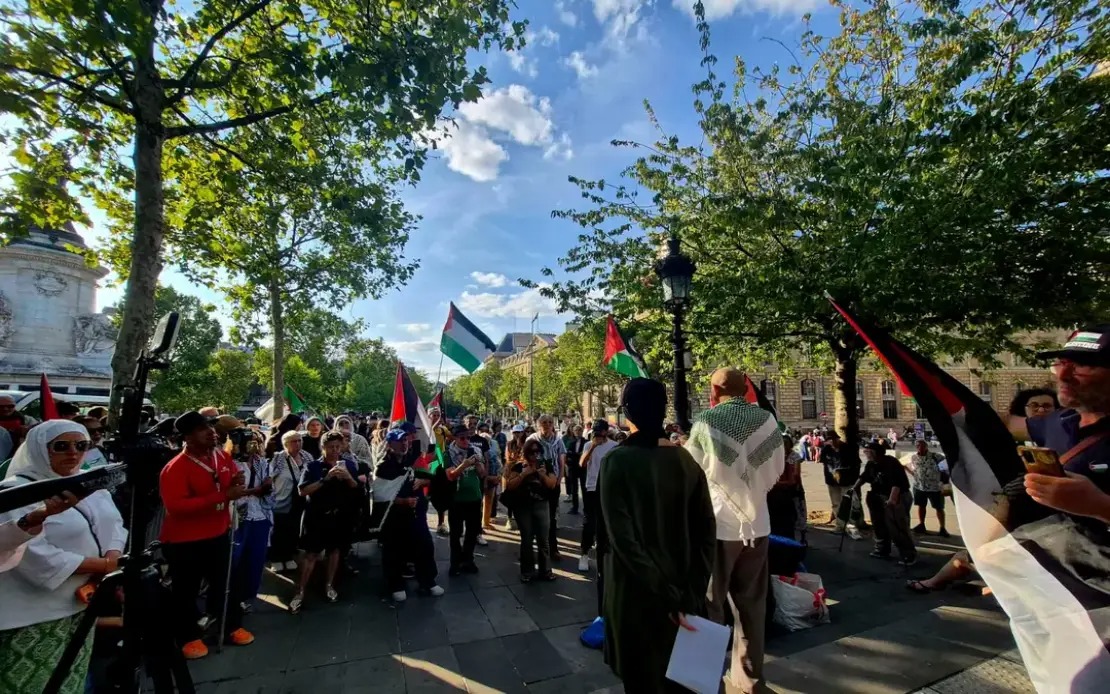
A grassroots movement calling itself Palestine Convoy has initiated an ambitious overland journey spanning multiple continents, departing France this week with the explicit goal of drawing global attention to the circumstances confronting Palestinians in occupied territories. The initiative represents a coordinated effort by independent civil society organisations and volunteers to conduct what organisers characterise as a people-powered advocacy campaign rather than a traditional humanitarian aid operation. The first staging point for participants is Srebrenica in Bosnia and Herzegovina, where delegations from various European countries are scheduled to converge before the journey continues eastward.
The symbolic choice of Srebrenica as an initial meeting location carries substantial historical weight. Organisers deliberately selected the Bosnian city, site of one of the deadliest episodes of the 1990s Balkans conflict, to commemorate significant human tragedies of the past and articulate a broader commitment to preventing future atrocities. This framing situates the Palestine cause within a longer historical narrative of international humanitarian concerns, attempting to build connections between distinct regional crises and foster a unified consciousness about preventing mass suffering globally.
From Srebrenica, the convoy plans to move toward Istanbul, where a substantially enlarged multinational assembly is anticipated. The geographical progression then unfolds through Türkiye, Iraq, and Jordan, with the ultimate convergence occurring near the West Bank border. This routing deliberately traverses multiple Muslim-majority nations in the Middle East and beyond, reflecting the organisers' intention to mobilise solidarity across diverse regions and populations. The extended journey timeline allows for sustained engagement with local populations and media attention at multiple points along the route.
The participant composition reveals the genuinely international character of the initiative. Palestine Convoy expects to welcome more than 500 individuals including activists, medical professionals, university students, labour unionists, university academics, creative practitioners, religious leaders, and other civilians. Representation includes delegations from Malaysia and Indonesia in Southeast Asia, alongside contingents from European nations including France, Germany, Switzerland, Italy, Spain, the Netherlands, Belgium, and Finland. North American participation comes from Canada and the United States, while additional participants from Australia, Chile, South Africa, Tunisia, Algeria, Libya, Morocco, and the United Kingdom complete an exceptionally diverse coalition.
The practical mechanics of the journey accommodate various forms of terrestrial transportation, with participants employing personal vehicles, vans, buses, motorcycles, and bicycles. This deliberate choice to utilise non-motorised and low-capacity transport options reinforces the grassroots, people-centred character of the operation, distinguishing it from state-sponsored or large-scale institutional initiatives. The slower pace of overland travel also extends the convoy's visibility across multiple jurisdictions and allows for unscheduled encounters with local communities.
Throughout the journey, organisers intend to facilitate meetings, public gatherings, and awareness-raising events designed to stimulate discussions about Palestinian circumstances and encourage active solidarity expressions. These staged interventions represent the core advocacy mechanism, prioritising direct human engagement and information dissemination over material aid distribution. The public events framework enables conversations with journalists, local officials, civil society organisations, and ordinary citizens encountered along the route, potentially generating media coverage and amplifying the convoy's message across traditional and digital platforms.
Palestine Convoy's stated objectives extend beyond general humanitarian advocacy to encompass specific political positions. The movement explicitly opposes what it characterises as Israel's occupation of Palestinian territories, positioning this opposition as central to its mission. Additionally, organisers have highlighted recent Israeli legislative changes introducing capital punishment, which the movement describes as discriminatory in application toward Palestinian prisoners. This focus on specific legislation illustrates how the convoy functions as a targeted political advocacy campaign rather than a broad humanitarian relief operation.
For Malaysian observers, this initiative carries particular significance given the substantial participation of Malaysian nationals and the country's historical diplomatic positions regarding Palestinian matters. Malaysia has maintained consistent support for Palestinian statehood and has hosted numerous pro-Palestinian events and statements from government officials. The presence of Malaysian participants in this international convoy reflects ongoing civil society engagement with Middle Eastern conflicts and demonstrates how Malaysian activists connect domestic political consciousness to global solidarity movements. The convoy's transit through multiple Muslim-majority nations also resonates with Malaysia's positioning within international Islamic and Non-Aligned Movement forums.
Organisers have explicitly committed to maintaining peaceful and non-violent methodologies throughout the campaign. This principled stance distinguishes Palestine Convoy from more confrontational activism forms and potentially broadens its appeal to mainstream audiences and sympathetic governments. The emphasis on civil discourse, public engagement, and advocacy rather than disruptive tactics suggests organisers are calculating that sustained visibility and reasoned argument will prove more effective than confrontational approaches in shifting international perceptions.
The convoy's journey unfolds amid intensified global attention to Israeli-Palestinian dynamics, with international public opinion increasingly polarised around the conflict. By mobilising substantial numbers of citizens from established Western democracies alongside participants from Global South nations, the movement attempts to demonstrate that concern for Palestinian circumstances transcends traditional geopolitical alignments and reflects authentic grassroots sentiment rather than state propaganda. Whether the initiative achieves its advocacy objectives will depend substantially on media engagement, local receptiveness across the route, and the sustained commitment of participating organisations and individuals throughout the extended journey.

