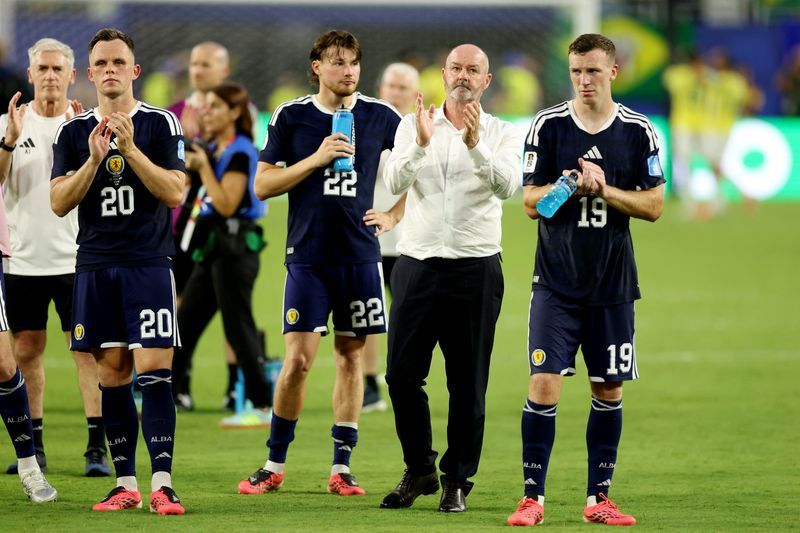
Scotland's World Cup adventure faces an almost certain ending following their 3-0 defeat to Brazil on Wednesday in Miami, with coach Steve Clarke expressing little optimism about his team's prospects of surviving as one of the tournament's eight best-performing third-place finishers. The Scots still sit on three points after their Group C campaign, which technically leaves an avenue to the knockout stages open, yet Clarke appeared resigned to the reality that his side has exhausted their hopes in Qatar after a return to the global tournament for the first time since 1998.
The Scottish manager's assessment of the loss to the five-time world champions was brutally candid, acknowledging that Brazil had been gifted their goals through defensive lapses rather than superior attacking brilliance. Clarke's tactical analysis pointed to a pattern of self-sabotage, with the Tartan Army's opponents converting straightforward opportunities that Scotland had carelessly presented. The Brazil match exposed fundamental weaknesses in how Clarke's side defended transitions and managed pressure in crucial moments, reinforcing the coach's underlying concern about where Scottish football stands relative to the world's elite.
While the mathematics remain technically viable—with Scotland's record currently ranking sixth among third-place teams and twenty group matches still to be concluded across the remaining tournament fixtures—Clarke's pessimistic view reflects a realistic appraisal of the likely outcome. He expects that at minimum two other third-place teams will accumulate superior goal difference or additional victories, pushing Scotland out of contention. The coach's straightforward honesty about the impending exit marks a departure from the more optimistic messaging that preceded the tournament, when Scotland's qualification itself was celebrated as a significant achievement.
Clarke's frustration centred not on malice from the opponents but on Scotland's inability to perform at their established level. He emphasised that his players had demonstrated higher standards in recent competitive campaigns that carried them through the qualifying process. The coach appeared particularly troubled by the gulf between Scotland's actual output and their demonstrated capabilities, suggesting a performance that fell short of what these players had previously shown on the international stage. This gap between potential and execution, he implied, represented the most disappointing aspect of the Brazil encounter.
The goalkeeper Angus Gunn received credit from Clarke for making several important interventions that prevented the scoreline from becoming even more lopsided, acknowledging that Scotland had created minimal clear-cut chances of their own throughout the encounter. The manager noted that Brazil had also squandered certain attacking opportunities, indicating that the tactical structure existed at moments, yet the overall dominance proved too comprehensive. Scotland's attacking play generated little meaningful threat, with Clarke admitting that his team failed to fashion the kind of clean chances necessary to trouble an opponent of Brazil's pedigree.
Beyond the immediate implications for Scotland's tournament participation, Clarke raised systemic concerns about the development pathway within Scottish football as a whole. The contrast between the physicality, power, and technical execution displayed by both Morocco and Brazil highlighted what Clarke identified as structural deficiencies in how Scotland produces elite-level international players. His comments suggested that the coaching infrastructure, academy systems, and player development models require substantial investment and reform if Scotland is to consistently field competitive World Cup squads in future tournaments.
Clarke's observations about player development resonated with long-standing critiques about the Scottish game's capacity to nurture world-class talent. The coach implied that the problem extends beyond tactical preparation or immediate squad selection—it reflects deeper issues within the domestic game regarding how young players are coached, the intensity of competitive club environments, and whether the Scottish football ecosystem can adequately prepare athletes for the demands of international competition at the highest level. This assessment carries implications for Scottish football's strategic planning over the coming years.
Despite his disappointment with the performance, Clarke directed praise toward the Scotland supporters whose presence in the United States had demonstrated considerable passion and helped create a strong national presence throughout the tournament. The manager acknowledged the Tartan Army's role as cultural ambassadors for Scotland while also gently reminding fans that the players themselves bore responsibility for creating the opportunity for this World Cup experience. His comments struck a balance between validating supporter contributions and emphasizing that the squad's own qualification achievement should not be overshadowed by the disappointment of early elimination.
Clarke's point about the players enabling the supporter experience carried weight within the broader context of Scottish football's recent trajectory. After decades of World Cup absence, the 2022 campaign represented a significant milestone regardless of tournament outcomes. The coach's reminder that Scotland might otherwise be watching the World Cup from home without this group's efforts earlier in qualifying served as context for understanding the achievement that qualification itself represented, even if advancement through the group stage proved beyond reach.
The broader implications for Scottish football extend beyond the immediate tournament disappointment. The structural critiques Clarke raised suggest that even with qualified squads, Scotland faces fundamental challenges in competing against established football powers. The gap illustrated by the Brazil loss points to systemic issues that cannot be resolved through tactical adjustments or motivational intensity alone. Scotland's football authorities will likely face scrutiny regarding investment in youth development, coaching standards, and the overall competitiveness of the domestic league environment.
Looking ahead, Clarke's honest assessment of Scotland's limitations provides a foundation for realistic planning regarding future competitive cycles. Rather than offering false hope about the third-place qualification pathway, the manager signalled to supporters and stakeholders that meaningful progress requires acknowledging current shortcomings. This candour, while disappointing in the immediate term, may serve Scottish football better than artificial optimism, potentially prompting the kind of structural examination and investment that could improve future tournament showings.

