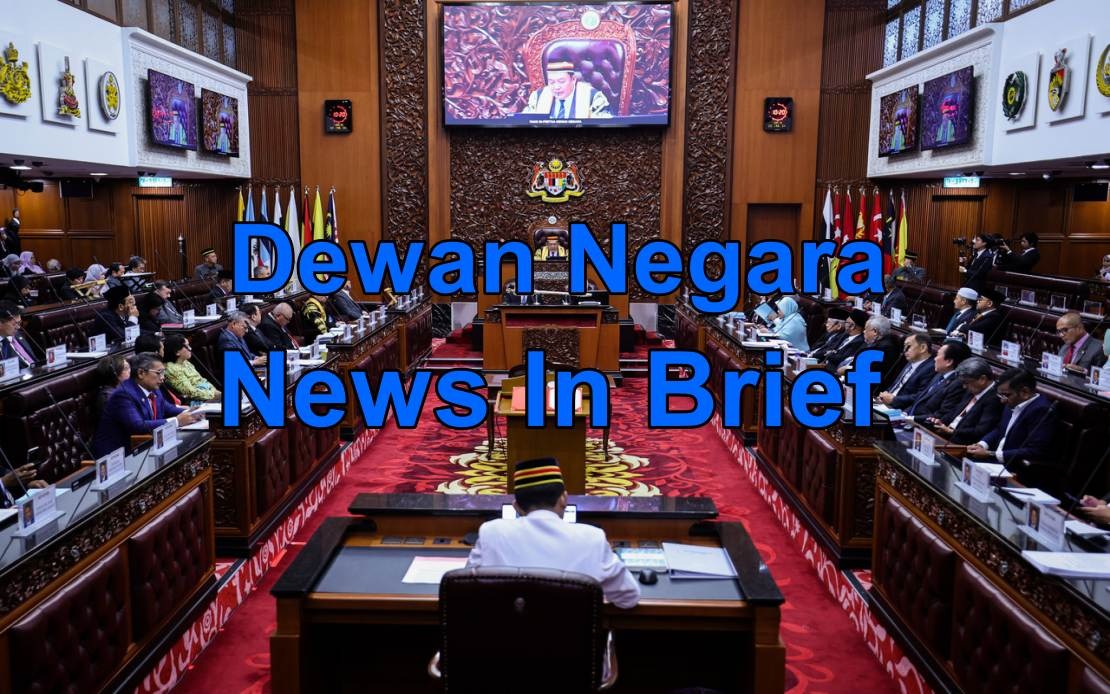
Between February and June this year, Malaysia's natural resources ministry deployed cloud seeding operations at 35 locations across the country as part of a broader strategy to manage the combined effects of El Niño conditions and protect the nation's water security. Deputy Natural Resources and Environmental Sustainability Minister Syed Ibrahim Syed Noh outlined this multi-agency initiative during parliamentary questioning, underscoring the government's proactive approach to a climate phenomenon expected to persist through early 2027.
The cloud seeding operations represent a coordinated effort involving the National Disaster Management Agency and the Royal Malaysian Air Force, implemented when atmospheric conditions favour their success. These interventions serve multiple objectives beyond simple rainfall enhancement: they aim to boost water levels in key dams, shield communities from extreme heat and drought impacts, and mitigate the public health and visibility hazards posed by seasonal haze. The strategy reflects growing recognition that traditional water management approaches require supplementation by modern atmospheric interventions as climate patterns become more volatile.
For Malaysian citizens and businesses, the significance of these operations extends beyond temporary relief. El Niño cycles have historically disrupted water supplies to major population centres, threatened agricultural productivity, and strained industrial operations dependent on consistent water availability. By maintaining dam levels through deliberate cloud seeding, the government seeks to prevent the sudden rationing and supply cuts that occurred during previous droughts, protecting both household access and economic activity. This forward-planning contrasts with reactive crisis management of earlier years.
On the economic front, the Progressive Wage Policy has demonstrated measurable success in lifting entry-level workers above subsistence income levels. Economy Minister Akmal Nasrullah Mohd Nasir reported that median wages for this cohort climbed from RM1,900 to RM2,200 monthly—a 15.79 per cent increase—while surpassing initial participation targets with 51,363 benefiting employees. The policy's reach among participating employers has also expanded, with 4,025 businesses now enrolled in the scheme, indicating growing acceptance across the private sector.
The wage improvements for entry-level workers carry particular weight for Malaysia's lower-income households and for regional competitiveness concerns. In a regional economy where wage stagnation has prompted migration to higher-paying jurisdictions, demonstrating tangible income growth may help retain skilled workers and signal commitment to improving working conditions. The government's RM300 million allocation for the 2025-2027 period indicates sustained policy investment, and the commission of a comprehensive impact assessment suggests serious consideration of broader sector expansion.
Non-entry-level workers have also benefited, though at a more modest rate. Their median wage increased 10.86 per cent from RM2,199.15 to RM2,438 monthly, reflecting the policy's cascading effect across wage tiers. This structuring prevents wage compression at higher levels whilst prioritising those earning least, addressing the government's equity objectives without destabilising established pay scales. The consistency of employer participation despite the wage obligations indicates that many businesses view the scheme as compatible with operational viability—a critical acceptance factor for policies aiming to reshape labour market standards.
In the cultural realm, the government has committed to a formal pathway for recognising Malaysian Tamil music as national heritage. Deputy Tourism, Arts and Culture Minister Chiew Choon Man clarified that such recognition requires systematic research, documentation, and evaluation under the National Heritage Act 2005, ensuring that designations rest on demonstrated artistic, cultural, and historical significance rather than political expedience. This methodical approach respects the legal framework whilst opening doors previously thought closed to non-Malay cultural expressions.
The heritage initiative addresses long-standing concerns within Malaysia's Tamil-speaking communities that their cultural contributions remain underdocumented and undervalued in official national narratives. Tamil music carries centuries of history reflecting migration patterns, social upheaval, and artistic evolution across the subcontinent and within Malaysia itself. Formal heritage status would not only affirm cultural legitimacy but could also support archival preservation, academic study, and educational incorporation—tangible outcomes that translate symbolic recognition into institutional support.
Simultaneously, the government has signalled willingness to reassess the Sumbangan Asas Rahmah (SARA) assistance initiative's cost structure, particularly regarding small traders. The one per cent merchant discount rate (MDR) funding the programme has drawn concern from retail associations worried about margin compression. Finance Minister II Datuk Seri Amir Hamzah Azizan confirmed that periodic reviews would continue, with explicit consideration of relief measures for smaller merchants whose proportional burden may exceed larger retailers' capacity to absorb such charges.
The SARA mechanism exemplifies the practical tensions within social assistance design. By shifting costs from the government budget to merchants through transaction-linked charges, the scheme avoids direct taxation or deficit spending. However, this distributional approach may inadvertently penalise smaller retailers with thinner margins whilst remaining manageable for large chains with higher transaction volumes and greater purchasing power. The government's acknowledgment of this dynamic and commitment to periodic review suggests recognition that policy sustainability depends on perceiving fairness across affected constituencies.
These parliamentary updates collectively illustrate the government's management of interconnected challenges: climate vulnerability, wage stagnation, cultural recognition, and equitable wealth distribution. None represents a single, decisive intervention, but rather ongoing calibration of existing frameworks. Whether these cumulative adjustments achieve transformative impact will depend on effective implementation, sustained political will, and willingness to make further corrections as evidence accumulates. For Malaysian readers monitoring progress on livelihood security, cultural respect, and environmental resilience, these developments signal governmental attentiveness—though their ultimate success remains conditional on factors extending well beyond parliamentary statements.

