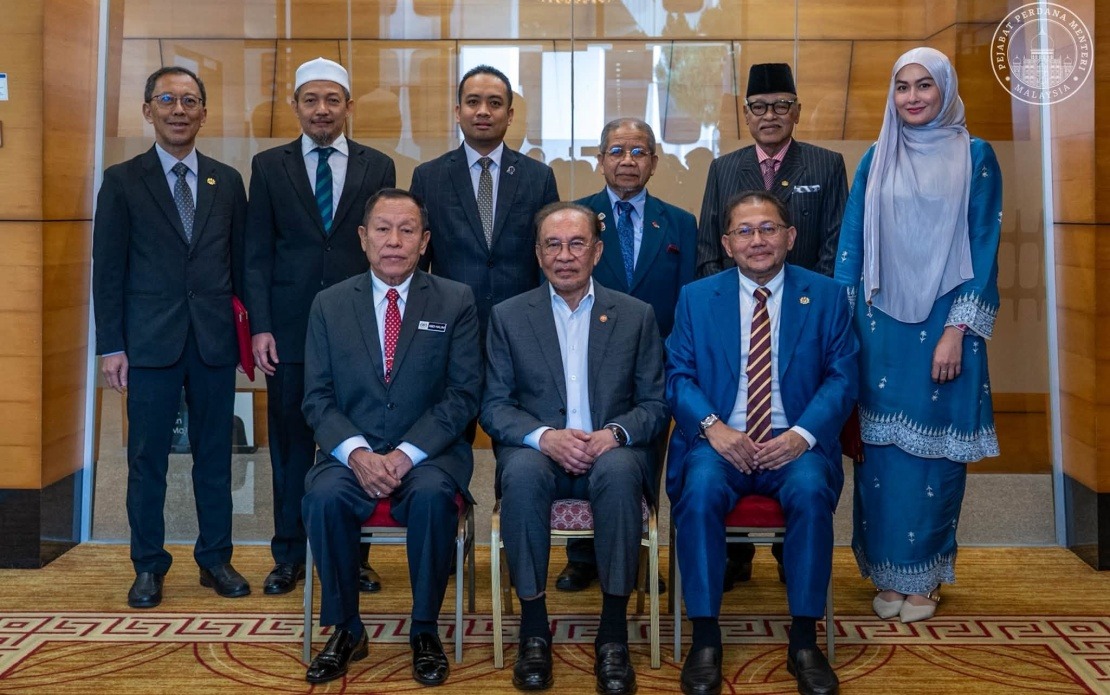
Prime Minister Datuk Seri Anwar Ibrahim has stressed that the battle against corruption demands a comprehensive, whole-of-nation approach rather than relying on any single institution to bear the burden. Speaking after presenting appointment documents to newly appointed members of the Special Committee on Corruption (JKMR) and the Anti-Corruption Advisory Board (LPPR) at Parliament, he underlined the critical importance of establishing interconnected safeguards across multiple sectors of Malaysian society.
The prime minister's statement reflects a recognition that corruption—a longstanding challenge in Malaysia—cannot be dislodged through enforcement mechanisms in isolation. Instead, he outlined a collaborative framework involving law enforcement agencies, oversight bodies, legislators, government departments, the business community and citizens working in tandem. This layered approach suggests an understanding that anti-corruption initiatives must permeate institutional culture, regulatory systems and public consciousness simultaneously to create meaningful change.
The JKMR and LPPR occupy distinct but complementary roles within Malaysia's anti-corruption architecture. The JKMR, established under Section 14 of the Malaysian Anti-Corruption Commission Act 2009 (Act 694), functions as a parliamentary oversight mechanism with membership drawn from both the Government and Opposition benches in the Dewan Rakyat and Senate. This cross-party composition theoretically ensures that the committee maintains independence from partisan political interests and provides scrutiny that transcends electoral cycles. The inclusion of opposition members signals an intention to insulate anti-corruption work from shifting political allegiances.
The LPPR operates on a different principle, drawing its membership from accomplished individuals demonstrating exceptional integrity and professional distinction across various fields. Established under Section 13 of the same legislation, the board functions as an advisory body bringing diverse expertise and credibility to anti-corruption deliberations. By recruiting members from outside the political establishment, the LPPR provides an independent perspective intended to safeguard the anti-corruption agenda from political manipulation or compromise.
Anwar emphasised that despite the varied professional backgrounds and organisational affiliations of newly appointed members, they share a unifying mission: strengthening Malaysia's collective capacity to identify, investigate and prevent corruption. This framing attempts to transcend individual interests and institutional rivalries by appealing to a common commitment to national integrity and accountability. The appointment process itself—requiring the consent of the Yang di-Pertuan Agong—adds constitutional legitimacy and distance from day-to-day political pressures.
The multi-stakeholder model articulated by the prime minister reflects international best practices in anti-corruption governance. Countries achieving sustained progress against corruption typically employ mechanisms that distribute responsibility across government, legislative oversight, civil service reforms, business conduct standards and civil society watchdogs. Malaysia's approach, incorporating parliamentary committees, advisory boards and implicit expectations of public and private sector participation, mirrors this evidence-based framework.
However, the effectiveness of such structural arrangements depends critically on institutional culture and political will. Thailand, Indonesia and other regional neighbours have established comparable oversight bodies, yet corruption remains entrenched in various forms. The Malaysian model's success will hinge on whether appointed members exercise genuine independence, whether their recommendations receive serious consideration from enforcement agencies, and whether Parliament acts on their findings. Without meaningful power to investigate, prosecute or enforce consequences, even well-intentioned advisory bodies risk becoming decorative rather than transformative.
The public sector's role in this ecosystem merits particular attention. Government departments must institutionalise integrity through transparent procurement processes, merit-based recruitment and asset declaration systems that withstand scrutiny. Malaysia has implemented various measures in these areas, yet persistent allegations of patronage, inflated contracts and misallocation of public resources suggest implementation gaps remain significant. The PM's invocation of the public sector as a partner in anti-corruption efforts implicitly acknowledges this challenge.
Private sector engagement presents a different dimension. Malaysian businesses operating in contexts where informal payments and opaque dealings have become normalised face coordination problems in simultaneously pursuing ethical standards. When competing firms maintain that cutting corners through corruption is essential to survival, individual companies adopting clean practices risk commercial disadvantage. Collective private sector buy-in—supported perhaps through industry standards, international investment conditionality and consumer pressure—could shift competitive dynamics toward integrity.
Civil society and public participation represent the ultimate foundation of sustainable anti-corruption progress. Citizens willing to report wrongdoing, journalists investigating malfeasance, and activists demanding accountability create an environment where officials recognise that corruption carries reputational and professional consequences. Malaysia's media landscape has demonstrated capacity for rigorous investigative journalism, and non-governmental organisations focusing on governance have grown more assertive. Mobilising this civic energy requires government openness to criticism and protection for whistleblowers and journalists.
The timing of Anwar's statement carries significance given Malaysia's recent political history. The nation has witnessed high-profile corruption cases, leadership transitions, and ongoing scrutiny of past administrations. Framing anti-corruption as a shared societal responsibility rather than a partisan weapon could help insulate integrity efforts from cycles of electoral change and factional politics. By presenting the JKMR and LPPR as cross-party, independent institutions, the government seeks to establish anti-corruption as a non-negotiable national value transcending particular administrations.
Yet questions persist about implementation. How will Parliament respond when JKMR investigations implicate sitting legislators or senior officials? Will the LPPR maintain independence if members fear professional retaliation? Can enforcement agencies act on committee recommendations without political interference? These practical questions will ultimately determine whether Malaysia's multi-sector approach succeeds in meaningfully reducing corruption or remains largely aspirational.
The prime minister's vision represents necessary thinking about anti-corruption governance, acknowledging that no single institution can reverse entrenched patterns. Whether Malaysia translates this rhetoric into sustained, coordinated action across government, Parliament, business and civil society will require consistent political commitment, institutional courage and citizen vigilance in the months and years ahead.

