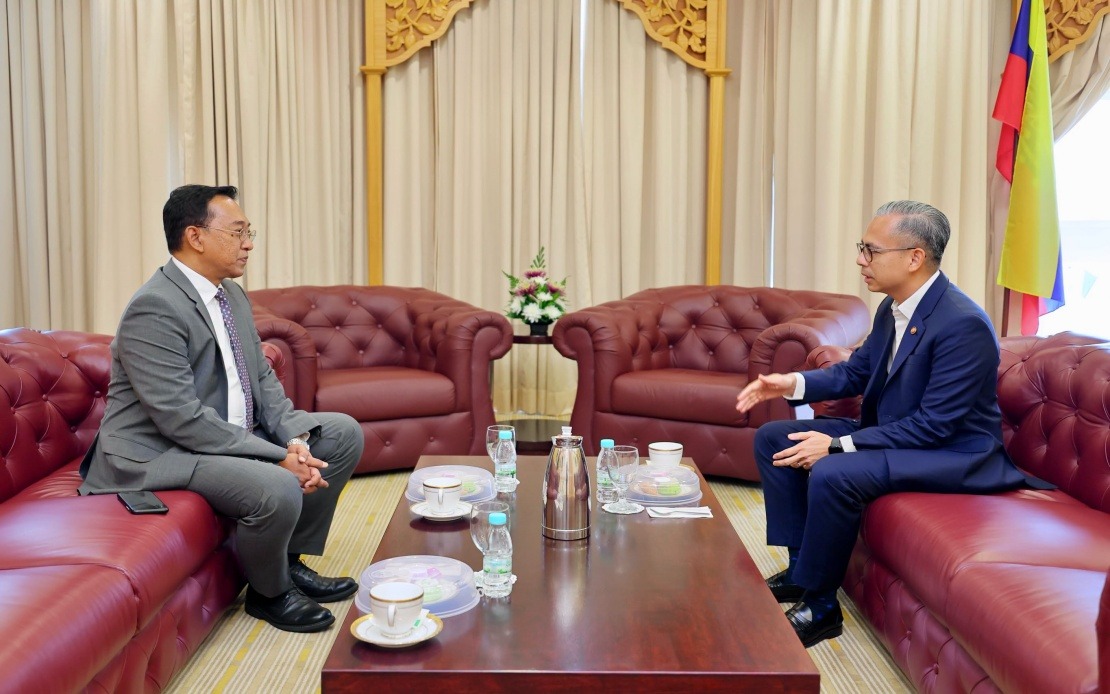
Communications Minister Datuk Fahmi Fadzil hosted Malaysia's newly appointed Ambassador to Lebanon, Anwar Udzir, in a courtesy call aimed at reinforcing diplomatic channels and coordinating on matters of mutual interest. The meeting underscores the importance Malaysia places on its relationship with Lebanon, a strategically located nation in the Middle East that serves as a crucial nexus for regional telecommunications, trade, and political engagement.
Anwar Udzir received his letter of appointment as Malaysia's Ambassador to Lebanon directly from His Majesty Sultan Ibrahim, King of Malaysia, on May 18, 2026, formally cementing his role as the kingdom's chief diplomatic representative in Beirut. This appointment represents a significant institutional commitment to strengthening Malaysia's presence in Lebanon during a period when diplomatic engagement in the region carries heightened importance for Malaysian foreign policy objectives.
During their discussion, Fahmi and Udzir focused on broadening and consolidating the working relationship between their respective domains—communications and diplomacy. The minister emphasised the value of coordinated efforts to advance Malaysia's strategic interests on the international stage, particularly in sectors where telecommunications infrastructure and digital connectivity intersect with broader foreign policy goals. Such alignment between domestic ministerial departments and overseas diplomatic missions proves essential for presenting a coherent Malaysian position in multilateral forums.
The two officials also exchanged perspectives on current developments affecting Malaysia's international standing and economic interests. This exchange of views allows both parties to identify emerging opportunities and challenges within Lebanon's political and economic landscape, information that informs policy decisions back in Kuala Lumpur and shapes how Malaysia calibrates its engagement with Lebanese counterparts and regional actors.
Fahmi noted that his prior familiarity with Ambassador Udzir stems from their collaboration during the Asia-Pacific Telecommunity Ministerial Meeting held in Tokyo, Japan, the previous year. During that gathering, Udzir and his team played instrumental roles in facilitating the logistical and diplomatic arrangements necessary for successful multilateral telecommunications dialogue among Asia-Pacific nations. This existing working relationship provides a solid foundation for their continued partnership, enabling more efficient communication and smoother coordination on emerging issues.
The communications sector represents an increasingly vital dimension of Malaysia's engagement with Middle Eastern nations, including Lebanon. As digital infrastructure continues to transform economies and societies across the region, Malaysia's telecommunications expertise and technological capabilities position the country as a potential partner for capacity-building and knowledge-sharing initiatives. Ambassador Udzir's appointment thus carries implications extending beyond traditional diplomatic channels into technical cooperation and commercial partnerships.
Lebanon, despite facing considerable economic and political challenges in recent years, remains a significant player in Middle Eastern affairs and hosts numerous international organisations and regional headquarters. Malaysia's diplomatic presence there facilitates broader Southeast Asian engagement with Middle Eastern partners and provides listening posts for understanding regional developments that affect Malaysian interests in trade, security, and cultural exchange.
Fahmi's public acknowledgment of this meeting through social media represents contemporary diplomatic practice, where transparency about official interactions reinforces institutional credibility and keeps stakeholders informed about government activities. The minister's expression of confidence in Ambassador Udzir's capabilities and his wishes for the diplomat's success signal organisational support that can enhance the ambassador's effectiveness in navigating Lebanon's complex political environment.
The appointment of new ambassadors and their reception by senior government officials follows established protocol, yet carries substantive significance. Such courtesy calls provide opportunities to reset priorities, clarify expectations, and ensure that diplomatic missions operate with full ministerial backing. In Udzir's case, receiving direct audience with the Communications Minister signals that Malaysia regards his posting as consequential for national objectives.
Looking forward, the relationship between Fahmi's ministry and Ambassador Udzir's diplomatic mission may facilitate collaboration on telecommunications regulatory matters, digital infrastructure projects, and technology transfer opportunities that benefit both Malaysia and Lebanon. The minister's emphasis on exchanging views about international developments suggests an openness to regular consultation, which could yield practical cooperation beyond ceremonial diplomacy.
For Malaysia's broader foreign policy architecture, this engagement reflects the interconnected nature of modern diplomacy, where communications and technology considerations feature prominently alongside traditional concerns. By publicly investing time in substantive discussion with its Lebanese ambassador, the government demonstrates commitment to coherent, whole-of-government approaches to international relations that increasingly characterise successful national strategies in the competitive global environment.

