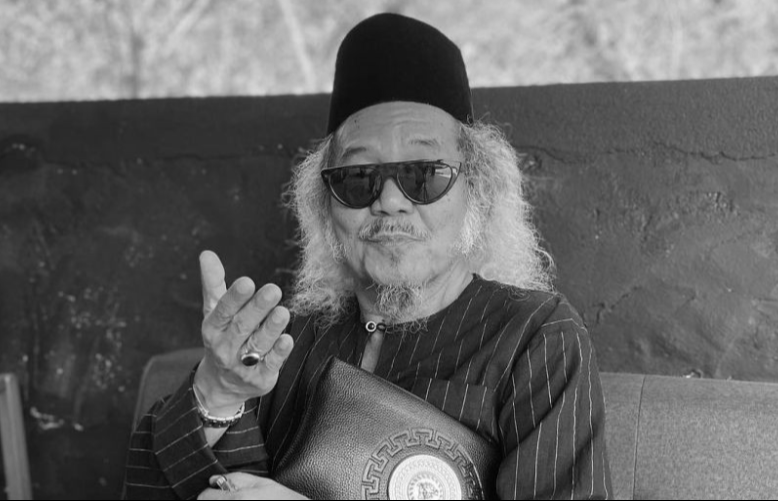
Kamarool Yusoff, the legendary Malaysian actor affectionately known as Cik Man throughout his career, passed away on August 5 at the age of 68. He was undergoing treatment for heart disease at Tanah Merah Hospital when he succumbed to his condition at 5:30 pm. His son, Ahmad Fakhrol Aliff, aged 23, confirmed the death to media outlets, marking the end of a significant chapter in Malaysian entertainment history.
News of Cik Man's passing rippled through the local entertainment community, with comedian Mohammad Amirullah Azmi, popularly known as Amir Raja Lawak, being among the first to share the sorrowful announcement on social media. Through a heartfelt Facebook post, Amir Raja Lawak extended sympathies to the bereaved family and offered Islamic prayers for the departed soul, writing a touching eulogy that acknowledged both the actor's professional identity and his given name, Kamarool Haji Yusoff, by which he was also known as Farok.
Communications Minister Datuk Seri Fahmi Fadzil joined the chorus of tributes, recognising Cik Man's immense contribution to Malaysia's arts landscape. In his own Facebook statement, Fahmi underscored how audiences who grew up watching Malay cinema during the 1980s would instantly recall the actor's unforgettable performance as Farouk, the charismatic leader of the Gagak Hitam gang in the 1986 film that became a cornerstone of Malaysian popular culture. That role cemented Cik Man's status as a household name and demonstrated his ability to inhabit complex, morally ambiguous characters with remarkable authenticity.
The minister's tribute went beyond mere condolences, framing Cik Man as a respected figure within the broader artistic community and among those devoted to preserving Malaysia's cultural heritage. Fahmi acknowledged that the actor's influence transcended the film industry itself, touching the hearts and minds of multiple generations who had grown up with his work. This recognition underscores how certain performers become woven into the national cultural fabric, serving as touchstones for shared memories and collective experiences across society.
Cik Man's filmography extended well into the 2000s, demonstrating his longevity and continued relevance in an industry that often discards veteran performers. His appearance in the 2010 comedy film showed his willingness to adapt to changing entertainment trends and his enduring appeal to audiences seeking nostalgia-tinged productions. This capacity to remain visible across different eras of Malaysian cinema, rather than fading from public view after an initial period of fame, speaks to his versatility and the genuine affection audiences held for him.
The loss carries particular resonance for Malaysian audiences because it marks the passing of someone whose career spanned transformative decades in the nation's film industry. The 1980s and 1990s represented a golden age for Malay cinema, before the industry faced competition from television and later streaming platforms. Cik Man belonged to that generation of actors who helped define what Malaysian film culture looked like during those formative years, creating reference points that subsequent filmmakers and audiences would continually return to and celebrate.
Fahmi's formal acknowledgment of Cik Man's passing through official channels reflects how the government recognises the value of cultural figures to national identity. By invoking the actor's contributions alongside religious well-wishes, the minister's statement positioned Cik Man as someone whose work held not merely entertainment value but cultural significance worthy of state-level recognition. This type of tribute, coming from a senior government official, signals to the public that the nation values its artistic heritage and those who built it.
The circumstances of Cik Man's death—from heart complications while hospitalised—underscores the vulnerability even celebrated public figures face as they age. For an actor whose career was built on physical presence and dynamic on-screen energy, the news of his passing from cardiovascular disease reflects the universal human condition that transcends fame and achievement. His son's confirmation of the details provided closure to speculation and allowed the family, the entertainment community, and the broader public to begin the process of mourning and remembrance.
Cik Man's legacy extends beyond individual films or performances; it encompasses the formative viewing experiences of countless Malaysians and the cultural identity shaped by Malay cinema during his active years. The 1986 film featuring his role as Farouk remains a reference point in local film history, frequently cited in retrospectives and discussions about the industry's evolution. Future generations encountering his work through digital platforms or retrospective screenings will discover an actor who brought depth and memorability to his roles, cementing his place in the nation's entertainment archives.
As tributes continue to flow from colleagues, fans, and government officials, Cik Man is remembered not merely as an actor but as a cultural ambassador who helped define an era. The outpouring of condolences reflects the deep connection audiences maintained with him throughout his life, a testament to the quality of his performances and his accessibility as a public figure. His passing represents the end of a living link to Malaysian cinema's golden age, making the preservation and celebration of his work increasingly important for maintaining continuity with the nation's cultural past.
The entertainment industry in Malaysia has lost one of its pioneering voices, someone whose contributions helped establish the template for Malay cinema that influenced filmmakers and actors for decades to come. While Cik Man is no longer physically present, his body of work ensures his continued influence on Malaysian popular culture. For audiences who grew up with his films and for those discovering his performances anew, the actor's legacy will remain a cherished part of the nation's cinematic heritage, a reminder of a time when local cinema captured the imagination and defined the cultural conversation across generations.

