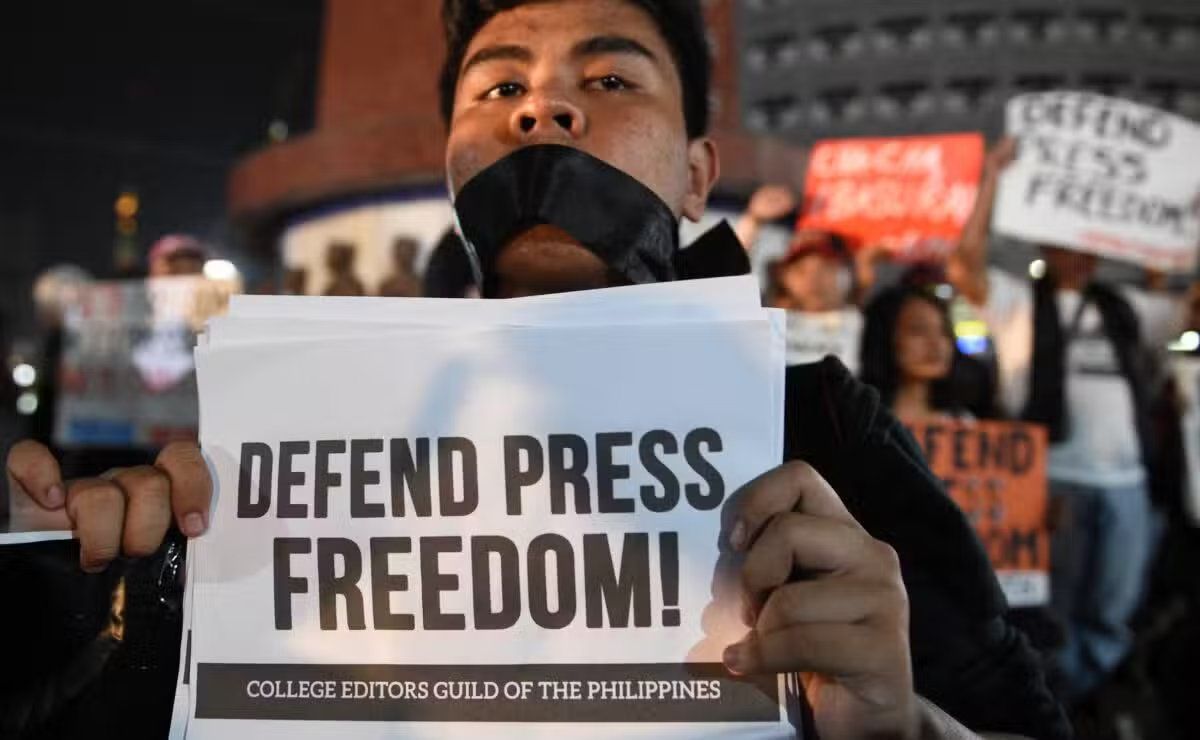
The Philippines faces a deteriorating climate for press freedom under President Ferdinand Marcos Jr.'s administration, with the National Union of Journalists of the Philippines documenting roughly 260 incidents of violence and intimidation against media workers in just over four years. Yet the raw numbers mask a more troubling reality: those bearing the greatest costs are journalists operating far from the capital's protective structures, working for smaller outlets and community radio stations that struggle to shield their staff from harm.
According to NUJP data, more than 180 of these recorded attacks targeted media workers employed by local newspapers, provincial radio broadcasters, alternative news platforms, and campus publications. This concentration reveals a pattern of vulnerability that extends beyond statistical analysis. Journalists in smaller newsrooms typically earn modest salaries, lack institutional legal support networks, and operate in environments where local political and business elites wield considerable influence over public discourse. The combination creates a precarious situation where the stakes of critical reporting are highest but the safety nets are nearly absent.
The challenges facing community journalists differ fundamentally from those confronting their counterparts in major metropolitan newsrooms. Provincial reporters must navigate reporting environments where their physical presence, family ties, and business relationships intertwine with their professional responsibilities. They cover stories affecting their own neighbourhoods, scrutinise officials they encounter regularly, and face consequences that extend into their personal lives. This proximity to source material, which theoretically strengthens journalism, becomes a liability when power holders seek retribution for unflattering coverage.
Jay Lavapiez, station manager of Baskog Radyo in Roxas City, Capiz, embodies these pressures. The 48-year-old broadcaster survived an assassination attempt in June when motorcyclists blocked his vehicle and fired four rounds from a 9 millimetre pistol. His experience reflects broader patterns of escalation beyond conventional intimidation. Prior to the attack, Lavapiez and his wife India faced multiple legal complaints stemming from their reporting on a cemetery controlled by a local official and associated allegations of corruption and abuse. These cyberlibel cases were filed across different jurisdictions—Manila, Muntinlupa, and Capiz—suggesting a coordinated strategy to overwhelm the family through legal harassment rather than single dramatic confrontation.
Community journalist RJ Ledesma's killing in Toboso, Negros Occidental in April exemplifies the ultimate cost of provincial reporting. Ledesma was conducting grassroots work and documenting the effects of renewable energy projects on agricultural communities when he was caught in a military operation that a fact-finding mission concluded involved serious violations and indiscriminate firing. His death represents not merely a statistical tragedy but the erasure of one voice among many small outlets that investigate local abuses escaping national attention.
The financial disparity between provincial and metropolitan journalism compounds these dangers. Community reporters earn salaries they acknowledge as inadequate relative to their risks, operating on budgets that permit neither security consultants nor sophisticated legal defences. This economic reality forces a stark calculation upon local journalists: pursue accountability in their communities despite personal jeopardy, or abandon reporting that their neighbours and constituents desperately need. Most persist despite the arithmetic clearly favouring caution.
Lavapiez articulates the psychological burden particular to provincial journalism. Community reporters cannot simply relocate after threatening reporting; they must return to the same neighbourhoods, continue broadcasting from familiar studios, and interact with the same officials and subjects of their investigations. This permanence, combined with what Lavapiez describes as the test of courage required for uncomfortable questioning about public funds and citizen grievances, transforms journalism from professional practice into an act of sustained defiance.
The vulnerabilities facing community journalists in the Philippines carry implications extending across Southeast Asia. Regional authoritarian drift has coincided with shrinking resources for independent news gathering, forcing more journalism onto smaller outlets operating at the margins of economic viability. The Philippines illustrates how this structural precarity becomes a tool for suppressing inconvenient reporting about corruption, rights abuses, and misuse of public resources. When journalists covering their own communities become isolated targets, their displacement leaves governance abuses unobserved and communities voiceless.
What distinguishes Lavapiez's articulation of his circumstances is his refusal to frame community journalism as a special category deserving exceptional protection. Instead, he grounds his demands in the universal principles that ought to protect all journalists: freedom from threats, harassment, prosecution designed to silence inquiry, and physical harm for asking questions. This framing resists victimisation narratives while insisting that basic professional security represents not privilege but minimum standards.
The concentration of attacks against community media within the NUJP's broader documentation suggests a pattern rather than coincidence. Powerful interests benefit from the absence of scrutiny in provincial areas, where major news organisations rarely deploy resources and internet penetration historically lagged behind urban centres. As community outlets have filled this informational vacuum, they have become targets for those accustomed to unexamined authority. Suppressing local journalism thus accomplishes what broader censorship struggles to achieve: the practical elimination of accountability in areas where alternatives hardly exist.
Lavapiez's observations about the vulnerability arising from proximity and recognisability highlight how provincial geography becomes a disciplinary tool. In communities where journalist and subject cannot avoid each other, where professional distance dissolves into neighbourly interaction, the threat of personal or family harm carries particular weight. This environment favours self-censorship among those lacking institutional support, effectively ceding local democratic space to unobserved abuses.
The pattern documented by NUJP suggests that press freedom in the Philippines cannot be measured solely through examination of major newsrooms or high-profile cases. Community journalists represent the distributed networks through which ordinary citizens access information about local corruption, rights violations, and accountability. Their suppression represents not merely a threat to professional standards but a systemic shift that renders entire regions effectively information deserts, subject to governance without scrutiny and available only to those with resources for private information networks.

