The stilt village of Kampung Nunuyan Laut in Sandakan experienced a harrowing early morning when fire engulfed several homes around 3 am on Monday, but the rapid mobilisation of residents armed with makeshift firefighting equipment prevented what could have been a far more catastrophic loss. The community's coordinated effort to establish firebreaks by saturating adjacent houses with water ultimately protected 162 residential structures from succumbing to the advancing flames, even as 28 non-permanent dwellings fell victim to the inferno.
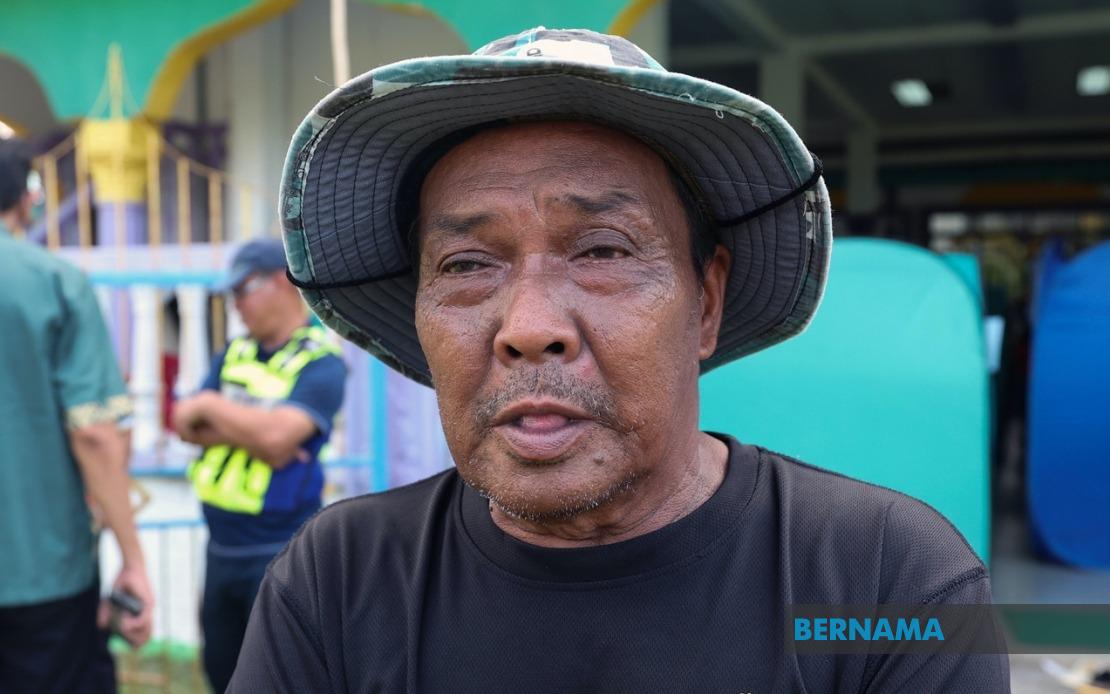
Village headman Mohd Sutri Mohd Nurdin credited the decisive action of his neighbours and the availability of water pumps as critical factors in containing what strong winds were rapidly spreading through the densely packed timber structures. Speaking to reporters, Mohd Sutri explained that he did not hesitate to lend his pump to residents fighting the blaze, recognising that without immediate intervention the fire would continue jumping from roof to roof. The strategy of focusing efforts on wetting houses directly in the fire's path rather than attempting to extinguish the already-burning structures proved instrumental in halting the disaster's expansion across the village.
The firebreak approach, though relatively simple in principle, required coordinated action during chaotic circumstances. Residents worked frantically to soak timber walls and roofs of homes still untouched by flames, creating a zone that the fire could not easily cross even as powerful winds pushed the inferno forward. Mohd Sutri's willingness to contribute equipment and lead community members reflected the collective responsibility felt among villagers whose homes and livelihoods faced imminent destruction. The absence of modern firefighting infrastructure in this maritime settlement meant that neighbours themselves became the frontline defence against catastrophe.
The human cost of the disaster extended beyond physical loss. Kaslan Etin, 38, recounted waking to frantic shouts of "fire" from outside his home, then discovering approximately one-third of his house already engulfed in flames. In the panic of evacuation, his family managed only to retrieve personal documents while leaving behind nearly everything else. The timing proved especially cruel—Kaslan had been preparing wedding items for his sister-in-law's December nuptials, all of which perished in the flames. His experience illustrated how such disasters destroy not merely structures but also the accumulated preparations and hopes embedded in family life.
Not all residents possessed the physical mobility to self-evacuate. Kasmah Rashid, a 69-year-old living alone, remained trapped in her home as smoke and fire spread through the village. A neighbour's quick thinking and willingness to venture into the dangerous environment proved lifesaving—the neighbour knocked repeatedly on Kasmah's door and guided her to safety before the flames reached her residence. Kasmah's later expressions of gratitude highlighted how community interdependence becomes quite literally a matter of survival during emergencies, and how elderly and vulnerable residents depend entirely on neighbours' alertness and courage.
The evacuation process, though urgent, proceeded without loss of life or serious injuries—a remarkable outcome given the fire's rapid spread and the hazardous conditions residents faced. By 8 pm on the day of the fire, 109 residents representing 29 families had been accommodated at a temporary relief centre established at Al Fattah Mosque within the village itself. The establishment of this shelter represented institutional response to community crisis, providing affected residents with basic sanctuary even as they processed the scale of their losses.
Governmental agencies moved to address immediate needs and coordinate longer-term support. The Social Welfare Department (JKM) began distributing emergency assistance designed to help victims meet pressing requirements for food, temporary shelter provisions, and basic necessities during the initial days following displacement. Simultaneously, JKM personnel conducted assessments to identify residents requiring additional or specialised support, recognising that vulnerability extends beyond immediate material loss to encompass medical needs, disability requirements, and family circumstances demanding tailored intervention.
The Sandakan Municipal Council opened a formal temporary relief centre to supplement the initial emergency sheltering at the mosque, creating dedicated space for the community to organise assistance distribution and maintain records of affected families. This layering of institutional responses—from village-level emergency action through municipal infrastructure to state welfare coordination—demonstrated how disaster response operates across multiple governance levels. Yet this formal machinery emerged only after residents had already demonstrated that the most effective disaster mitigation arose from community alertness and neighbours' willingness to share resources.
Authorities have launched an investigation into the fire's origins, with findings yet to be released. Understanding how the fire started holds significance not merely for accountability but for identifying whether prevention measures might reduce future risk in a village where timber construction and tight spacing create inherent vulnerability to rapid conflagration. The speed with which flames consumed 28 houses suggested either the fire originated in a location allowing rapid spread before discovery, or local conditions—wind patterns, building materials, spacing between dwellings—created conditions favouring acceleration.
The Kampung Nunuyan Laut fire offers insights relevant across Malaysia's diverse residential landscape. Many riverside and maritime communities, particularly in Sabah and Sarawak, comprise similar timber stilt structures built according to traditional designs prioritising water access and customary patterns rather than contemporary fire safety codes. While such construction provides cultural continuity and practical adaptation to wetland environments, it inherently limits occupants' escape options and complicates firefighting efforts. The fire also underscores that in communities without municipal fire services, community preparedness and mutual aid constitute the actual frontline response to such emergencies.
Looking forward, the incident highlights opportunities for improving disaster preparedness in vulnerable villages. Community-held water pumps and firefighting equipment, systematically positioned and regularly maintained, could enhance response capacity. Training residents in basic firebreak techniques and evacuation procedures might further reduce casualties and losses. Simultaneously, the episode demonstrates that formal institutions—municipal councils, welfare departments, disaster management agencies—function most effectively when community members have already taken decisive initial action, having protected the most vulnerable and prevented exponential spread of destruction.
The residents of Kampung Nunuyan Laut will require months to rebuild lost homes and reconstitute their lives. For now, their decisive action during those terrifying early morning hours stands as testimony to community resilience and the protective power of neighbours' willingness to act decisively when crisis strikes. Though 28 homes were lost, 162 others survived because ordinary residents recognised threat and responded with courage and coordination—a pattern that should inspire broader conversations about disaster preparedness across Malaysian villages where formal safety infrastructure remains limited.

