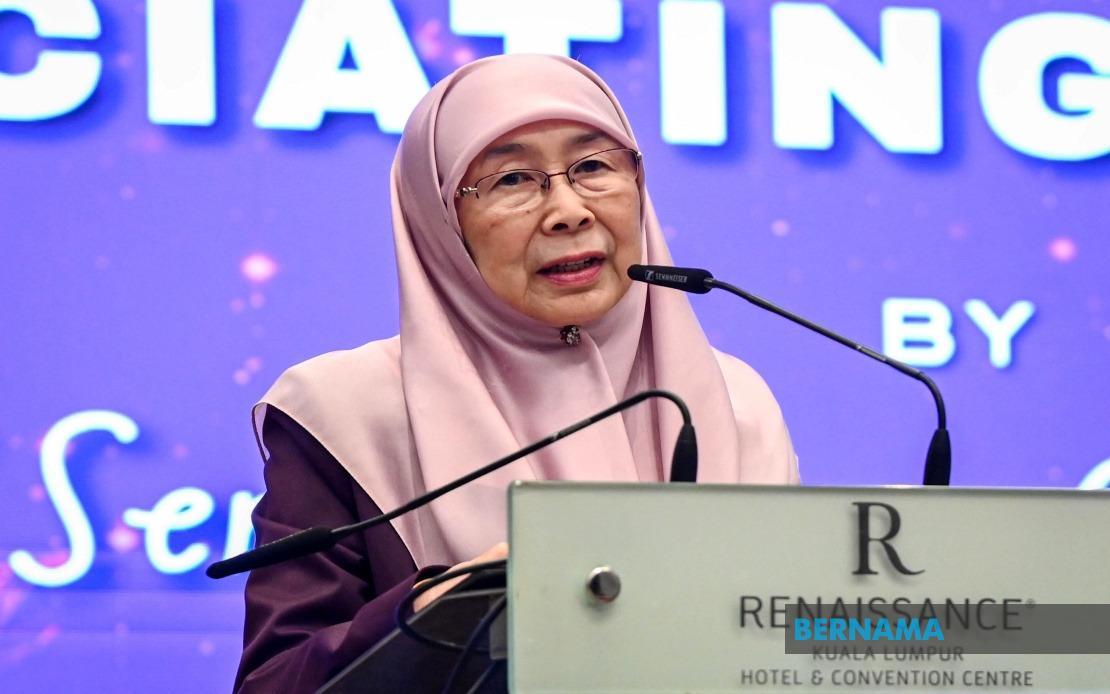
Datuk Seri Dr Wan Azizah Wan Ismail has warned that technological advancement and clinical excellence in maternal healthcare cannot succeed without a foundation of genuine compassion and human-centred care. Speaking at the launch of the 16th Malaysian Obstetric Anaesthesiology Symposium (MyOASym) 2026 in Kuala Lumpur, the Prime Minister's wife articulated a vision where innovation serves the emotional and psychological wellbeing of mothers and families, not merely their physical recovery.
The distinction Wan Azizah drew reflects a growing recognition within Malaysia's healthcare sector that maternal care extends far beyond safe delivery and clinical indicators. She argued persuasively that the measure of excellence in obstetrics should encompass the dignity afforded to patients, the respect shown throughout their journey, and the emotional scaffolding provided during one of life's most transformative and vulnerable experiences. This holistic framework challenges healthcare systems to recalibrate their priorities, ensuring that each woman receives care that acknowledges her as a complete person rather than a collection of clinical parameters.
At the heart of her message lies a cautionary principle: that innovation divorced from compassion becomes mere technique. While acknowledging the vital role that advancing medical knowledge and technology play in saving lives, Wan Azizah emphasised that the manner in which treatment is delivered fundamentally shapes patient outcomes and satisfaction. The interpersonal dimension of healthcare, often overlooked in discussions dominated by technological capability, emerges here as essential rather than supplementary to quality maternal care.
Maternal healthcare in Malaysia has grown increasingly complex, reflecting demographic and lifestyle trends visible across Southeast Asia. Wan Azizah highlighted the particular challenges posed by advanced maternal age, rising obesity rates among pregnant women, complicated cardiac conditions complicating pregnancy, and the critical risk of obstetric haemorrhage. These factors demand not only sophisticated clinical infrastructure but also healthcare professionals equipped with both technical mastery and the collaborative mindset necessary to navigate multifaceted cases. The convergence of these complications requires systems thinking and integrated approaches rather than siloed specialised responses.
To address these escalating complexities, Wan Azizah advocated for structured multidisciplinary simulation training as a cornerstone of professional development. By bringing anaesthesiologists, obstetricians, and neonatologists together in simulated high-stakes scenarios, healthcare teams can rehearse crisis management, identify communication breakdowns, and build the muscle memory essential when genuine emergencies unfold. This proactive investment in team preparedness represents a strategic shift from reactive crisis management toward anticipatory resilience.
The implementation of early warning systems emerged as another priority in her remarks, anchored in the principle that clear communication and collaborative culture can transform potential disasters into survival stories. Wan Azizah's observation that healthcare professionals sometimes work in isolation highlighted a systemic weakness present across many institutions in the region. Breaking down these silos requires deliberate cultural change, leadership commitment, and systems redesign that facilitate rather than obstruct cross-functional dialogue.
For young healthcare professionals, Wan Azizah articulated an aspirational model of professional development that integrates technical excellence with human qualities. Her advice to remain curious, embrace lifelong learning, seek mentorship, and ask questions without hesitation reflects an understanding that medicine remains fundamentally a learning discipline. Equally significant was her emphasis on developing empathy alongside technical skills, recognising that the most competent clinician lacks essential capability if disconnected from the human dimensions of suffering and hope.
The international participation at MyOASym 2026, drawing healthcare professionals from Singapore, Hong Kong, Pakistan, and across Malaysia, underscores the region's commitment to knowledge exchange on maternal healthcare. This cross-border engagement facilitates the transfer of best practices, comparative learning from different healthcare systems, and the networking necessary for continuous improvement in obstetric care. For Malaysia specifically, such symposia provide platforms to benchmark practices, identify gaps, and accelerate adoption of proven innovations.
Wan Azizah's remarks carry particular significance within the Malaysian context, where maternal mortality remains a public health concern despite substantial progress. The emphasis on compassion-centred innovation suggests a recognition that improving outcomes requires attention not only to medical interventions but to systemic factors affecting access, quality, and patient experience. Her positioning as both a senior political figure and advocate for patient-centred care lends institutional weight to these principles, potentially influencing healthcare policy and resource allocation decisions.
The symposium itself represents a dedicated space for anaesthesiologists, who play a critical but sometimes under-recognised role in obstetric emergencies and complex deliveries. Anaesthetic expertise in managing pregnant women with comorbidities, in crisis obstetric situations, and in providing pain relief during labour constitutes an essential specialisation within maternal healthcare. Elevating the profile of this specialty through regional symposia supports recruitment, retention, and professional recognition of these essential practitioners.
Looking forward, Wan Azizah's vision suggests a trajectory where Malaysian maternal healthcare systems increasingly integrate technological capability with structural safeguards for patient dignity and emotional care. Implementation of her recommendations—particularly enhanced multidisciplinary training and communication-centred cultural change—would require investment, leadership, and institutional commitment across public and private healthcare sectors. The challenge lies in translating these principles from symposium platforms into everyday clinical practice.
Ultimately, the message conveyed at MyOASym 2026 reflects a maturing understanding within Southeast Asia's healthcare leadership that excellence in maternal care cannot be disaggregated from compassion. This perspective, articulated at a high political level by Wan Azizah, has potential to shape policy conversations and professional standards across the region, positioning Malaysia as a thoughtful voice advocating for patient-centred, innovation-informed approaches to obstetric care.

