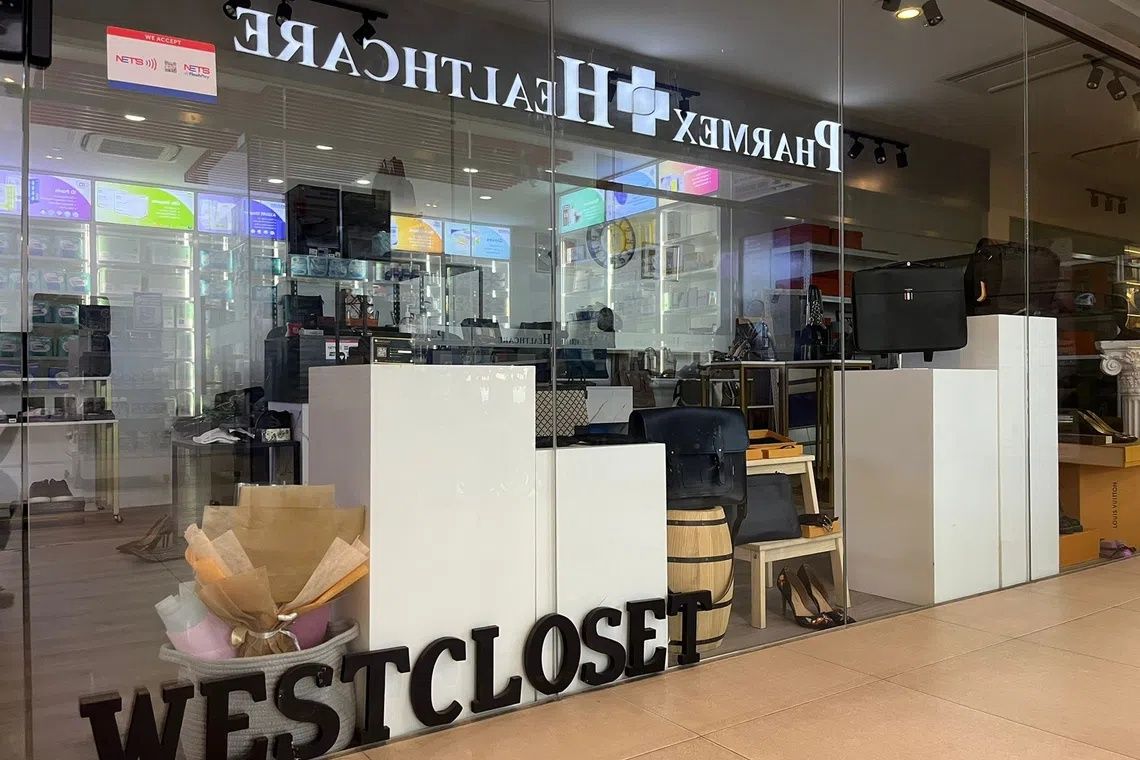
A 36-year-old Indonesian woman has been sentenced to eight months imprisonment after systematically misappropriating funds from customers at her Shenton Way consignment store. Ringga Dwi Rizky Irianto, who operated West Closet at the OUE Downtown Gallery shopping mall, exploited customers' trust by pocketing nearly S$140,000 intended for the sale of designer handbags. She pleaded guilty to three counts of criminal breach of trust and was convicted on Thursday, 13 August, with a fourth dimension to her case — the overall pattern of fraud — factored into sentencing.
The West Closet business model appeared straightforward to consumers who discovered the enterprise through Carousell and Instagram advertisements. Customers could leave luxury bags at the store on a 60-day consignment basis, with sellers facing a S$60 penalty if collection was delayed. The store would retain a commission ranging from S$200 to S$900 after completing sales, a structure common in Singapore's secondhand luxury market. Ringga's operation garnered sufficient reputation to attract high-value clientele willing to entrust designer pieces worth tens of thousands of dollars to her care — a confidence she systematically betrayed.
The first major theft illustrates the deceptive mechanics of her scheme. In July 2022, a victim deposited three luxury bags — two Hermès and one Chanel piece — at West Closet with explicit written guarantees promising S$51,000 upon sale and payment within seven days of transaction completion. Ringga did indeed sell all three bags for approximately the guaranteed amount but diverted the money instead to fulfilling another customer's separate order, leaving the original seller unpaid. This wasn't a simple accounting error but a calculated decision to use incoming funds to manage other customer expectations while pocketing the difference.
Two additional victims fell prey to identical tactics. A second customer placed a single Hermès bag for consignment and was left S$33,500 short when Ringga misappropriated those proceeds. A third victim suffered a similar loss of S$23,500 after consigning another Hermès bag. The pattern suggests Ringga operated a quasi-Ponzi mechanism within her small business, using newer customer payments to mask earlier shortfalls rather than maintaining genuine separation of customer funds — a practice that would constitute serious financial misconduct in any jurisdiction.
The three counts to which Ringga pleaded guilty involved S$108,000 of the S$140,000 total loss. Two additional charges relating to the remaining victims and amounts were weighed during sentencing, though court documents do not specify whether she entered guilty pleas to those charges or whether they remained under consideration. Deputy Public Prosecutor Darren Sim presented evidence demonstrating the deliberate nature of the misappropriations, distinguishing this case from mere negligence or poor recordkeeping.
Partial restitution has already been made, with Ringga having paid S$41,000 back to victims since her arrest in September 2022. However, she remains liable for S$91,950 in additional compensation to be paid through the investigation officer managing her case. Should she fail to remit this outstanding amount, Singapore law mandates an automatic additional 24-day jail sentence, creating financial pressure beyond her primary custodial term. This arrangement prioritizes victim compensation within the criminal justice framework, though enforcement depends on Ringga's capacity and willingness to earn funds while incarcerated or post-release.
The delay between arrest and formal charges reflects Singapore's typical court processing timeline. Arrested in September 2022, Ringga was not charged until 2024, a gap of approximately 18 months that may reflect investigation complexity, bail review procedures, or prosecution preparation. Her bail was set at S$15,000 when sentence was handed down, and she is scheduled to commence her eight-month jail term in October, allowing time for personal and financial arrangements.
Criminal breach of trust charges carry substantial potential penalties under Singapore law, with maximum sentences reaching seven years imprisonment, unlimited fines, or both. Ringga's eight-month sentence sits at the lower-to-middle range for offences involving five victims, suggesting either mitigating factors such as her restitution efforts, her guilty pleas, or prosecutorial recommendations for leniency. The relatively brief custodial term may also reflect her status as a first-time offender, though this leniency contrasts sharply with the premeditation evident in her scheme.
For Malaysian readers, this case carries particular relevance given the popularity of online consignment platforms across the region and the growth of secondhand luxury markets. The West Closet fraud demonstrates how businesses operating in grey zones between formal retail and informal peer-to-peer sales can exploit minimal regulatory oversight. Platform operators like Carousell operate across Malaysia and Singapore with limited vetting of vendors, creating opportunities for fraud. Consumers engaging in high-value consignment arrangements should insist on explicit written guarantees, independent escrow arrangements, or transactions through platforms offering buyer protection mechanisms.
The case also illuminates vulnerabilities in Southeast Asia's digital commerce ecosystem. Many regional consumers remain accustomed to informal trust-based transactions, assumptions that leave them exposed when bad actors infiltrate seemingly professional operations. Ringga's sophisticated deployment of written guarantees and established business credentials at a premium shopping mall enhanced her credibility, allowing her to accumulate substantial victim losses before detection. Similar fraud patterns have emerged across the region in resale platforms, freelance service marketplaces, and investment schemes.
Beyond individual criminality, the West Closet case suggests gaps in business licensing and consumer protection frameworks for consignment operations. Singapore's regulatory environment is comparatively stringent, yet Ringga operated for years before facing investigation. Malaysia's loosely regulated consignment sector may face similar vulnerabilities, particularly given the cross-border nature of online platforms and the challenge of monitoring small individual operators. Regulatory authorities across the region increasingly recognize that platform-era commerce requires updated oversight mechanisms addressing trust accounts, escrow requirements, and seller verification protocols.
The financial impact extends beyond direct victims to broader consumer confidence in online consignment channels. Each fraud case erodes willingness to participate in these marketplaces, potentially constraining legitimate secondhand commerce and circular economy initiatives that reduce waste. Platforms and regulators must balance accessibility for small operators with consumer protections that prevent opportunistic fraud, a tension particularly acute in developing Asian economies where informal business practices remain common.
Ringga's case will serve as precedent demonstrating that Singapore's courts treat consignment fraud seriously, particularly when perpetrators target multiple victims and demonstrate systematic misappropriation. The eight-month sentence, coupled with mandatory compensation and potential additional jail time for non-payment, signals that business operators cannot exploit customer trust with impunity. For the broader Southeast Asian region, the conviction underscores the need for consumer vigilance, platform accountability, and regulatory evolution to protect participants in the booming online luxury resale market.

