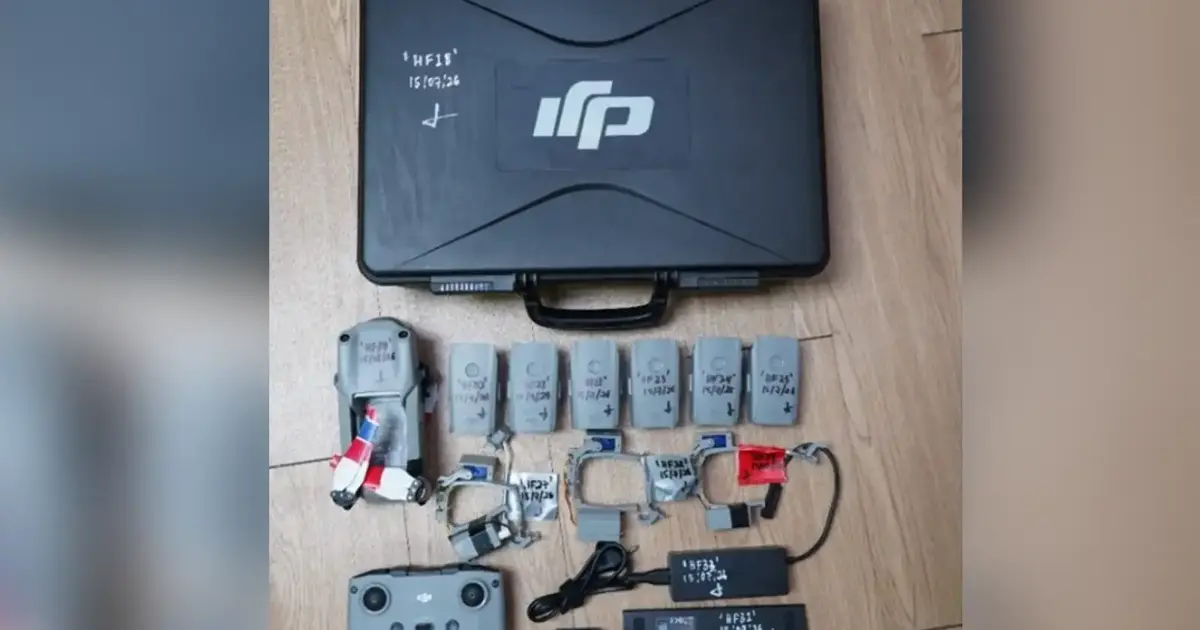
A couple has been arrested by Melaka police on suspicion of attempting to deliver contraband tobacco into a state prison facility using an unmanned aerial vehicle, marking the latest case of sophisticated smuggling methods targeting correctional institutions across Malaysia. The operation, which drew the attention of law enforcement authorities, is believed to have been orchestrated in collaboration with a prisoner held within the facility, highlighting ongoing security challenges facing the state's penal system.
The Melaka police chief revealed that investigators have strong grounds to believe the smuggling activity was not a spontaneous act but rather a carefully coordinated effort involving multiple parties. The involvement of an inmate in the scheme underscores the persistent problem of internal collaboration between detainees and accomplices on the outside, a security concern that has preoccupied prison administrators nationwide. Such coordinated attempts represent a significant breach in the security protocols of correctional facilities and demonstrate the lengths to which individuals will go to supply prohibited items to prisoners.
The use of drone technology in this incident reflects an evolving trend in prison contraband smuggling across the region. Unlike traditional methods such as concealment during visits or bribery of staff, aerial delivery systems present novel challenges for prison security personnel who must now monitor airspace above their facilities. The relatively low cost and ease of operation of commercially available drones have made them an attractive tool for those seeking to bypass conventional security measures, prompting correctional authorities nationwide to reassess their perimeter surveillance capabilities.
Tobacco products remain among the most commonly smuggled items into Malaysian prisons, commanding premium prices within the inmate economy due to strict regulations governing their availability. The high demand for such contraband creates substantial financial incentives for smuggling networks, particularly those operating in areas with large prisoner populations. Beyond addiction, tobacco serves as a currency in the prison economy, making its control critical to maintaining order and reducing internal conflicts over valuable commodities.
The arrest of this couple comes amid broader concerns about security breaches at correctional institutions throughout the country. Prison authorities have repeatedly identified contraband smuggling as a threat to facility management, inmate safety, and the integrity of rehabilitation programmes. The involvement of outside accomplices in such schemes complicates enforcement efforts, as it requires law enforcement to coordinate investigations beyond prison walls and identify the network of individuals facilitating illicit supply chains.
The Melaka incident also highlights the challenge facing security personnel in adapting to new technological methods of circumventing established protocols. While drones represent a relatively recent development in smuggling techniques, prison officials have limited experience and resources dedicated specifically to countering aerial delivery attempts. Many facilities lack dedicated drone detection equipment or comprehensive policies governing airspace security, leaving them vulnerable to such operations. The incident may prompt facility administrators throughout the state to evaluate and upgrade their security infrastructure accordingly.
Investigators are now tasked with determining the full extent of the smuggling network, including whether the apprehended couple was involved in previous smuggling attempts or supplying other facilities. The identity and role of the inmate collaborator remains a critical element of the investigation, as authorities seek to understand how the coordination was established and whether other prisoners were involved in the scheme. Such investigations often reveal broader security lapses that extend beyond a single incident.
The case raises important questions about communication systems within prisons, as coordinated smuggling operations typically require some method of the inmate communicating with outside associates. Authorities must investigate how contact was maintained and whether existing communication monitoring systems failed to detect preliminary planning or coordination related to the attempted delivery. These findings will likely inform recommendations for enhanced surveillance and communication restrictions at the facility.
This incident reflects a persistent challenge facing Malaysia's correctional system as it balances the security imperative of preventing contraband introduction with operational constraints and resource limitations. The growing sophistication of smuggling methods, combined with the involvement of motivated outside networks, suggests that traditional security measures alone are insufficient to address the problem. Prison administrators, law enforcement agencies, and policymakers will need to collaborate on developing comprehensive strategies that incorporate technology, personnel training, and intelligence gathering to effectively counter such smuggling networks.
For Malaysian residents and the broader Southeast Asian context, the case illustrates how prison security remains an ongoing concern with implications for public safety and the rehabilitation of offenders. The involvement of drones and coordinated external networks demonstrates that organised crime continues to find innovative ways to operate despite regulatory constraints. As correctional facilities across the region grapple with similar challenges, information sharing between authorities and the adoption of best practices in security protocols will be essential to mitigating such risks and maintaining the integrity of the penal system.

