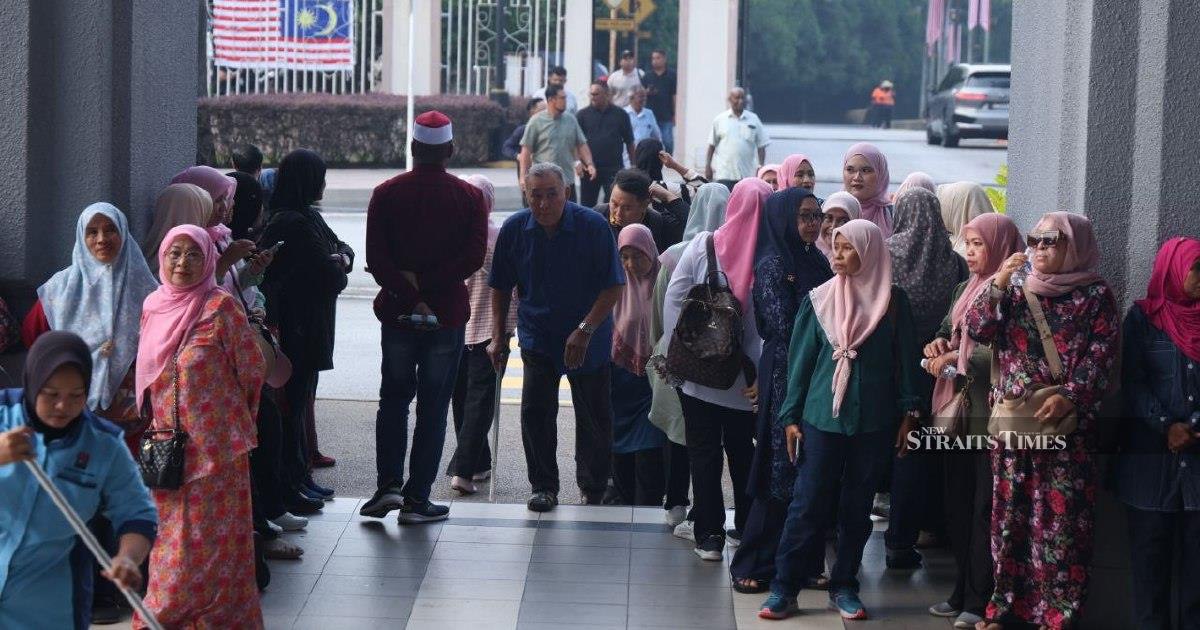
The Kuala Lumpur Court Complex is experiencing heightened activity as media representatives gather in anticipation of former Prime Minister Datuk Seri Ismail Sabri Yaakob's appearance for what is expected to be a significant legal proceeding. Over 30 journalists have assembled in the court's main lobby, positioning themselves to document the arrival and subsequent developments in this closely watched case that has captured national attention.
The convergence of media personnel underscores the gravity with which Malaysian society and the political establishment regard this legal challenge involving one of the country's highest office holders in recent years. Ismail Sabri's tenure as Prime Minister concluded in August 2023, following a relatively brief period leading the coalition government. His potential facing of formal charges represents a watershed moment in Malaysia's ongoing efforts to demonstrate the independence and impartiality of its judicial system.
The gathering of media outlets reflects both the intrinsic newsworthiness of the situation and broader public interest in matters of governance and political accountability. When former heads of government navigate legal proceedings, the proceedings themselves become emblematic of a nation's commitment to the rule of law, regardless of an individual's previous political status or influence. This principle has been under scrutiny in Malaysian public discourse for several years, making today's events particularly significant.
For observers tracking Malaysia's judicial landscape, this moment carries implications extending beyond the individual case. The handling of such high-profile proceedings influences public confidence in institutional frameworks and shapes perceptions about whether the legal system operates uniformly across all social strata. Media documentation and public awareness of court procedures contribute to transparency, a cornerstone of institutional credibility.
The presence of substantial journalistic representation also indicates the case's resonance across different news organisations and audience demographics. From major broadcasters to print publications and digital platforms, the breadth of coverage reflects recognition that this proceeding intersects with multiple public interests including governance, political development, and constitutional matters affecting Malaysia's democratic framework.
Ismail Sabri's political career reached its apex during a turbulent period in Malaysian politics characterised by coalition realignments and shifting parliamentary dynamics. His appointment as Prime Minister followed a period of considerable political volatility, and his administration navigated economic pressures and public health considerations during the tail end of the COVID-19 pandemic. His subsequent departure from the premiership marked another chapter in Malaysia's complex political trajectory.
The formal charging process represents transition from investigative phases into judicial proceedings proper. For the accused, this stage initiates proceedings where legal arguments take precedence over media narratives and political commentary. The court becomes the arbiter of factual claims and legal standards, a role that underscores Malaysia's commitment to adjudicating disputes through established legal frameworks rather than through political or public opinion channels.
For Malaysia's international standing, handling such cases transparently contributes to the nation's credibility as a functioning democracy with independent institutions. Global observers often use the treatment of former officials in legal proceedings as barometers of institutional health. The visible presence of media, the procedural formality, and the independent exercise of judicial authority collectively communicate commitment to institutional principles.
The practical logistics of managing substantial media presence itself reveals how Malaysian courts have adapted to contemporary information environments. Designated media areas and manageable access protocols balance the imperative of public transparency with courtroom functionality. These administrative arrangements reflect decades of evolution in how judicial systems accommodate the information requirements of modern societies.
For legal practitioners and observers of Malaysian jurisprudence, proceedings involving prominent political figures often generate case law and procedural precedents affecting broader interpretations of statute and constitutional principle. Arguments advanced, rulings issued, and appellate considerations potentially influence future legal development in Malaysia. This layer of institutional consequence adds weight to careful attention from the legal community.
The coming hours will determine what specific charges Ismail Sabri faces, the conditions of any bail arrangement, and the timeline for subsequent proceedings. These details will shape the trajectory of the case and establish parameters within which legal arguments will unfold. Media documentation of these developments ensures public access to information about proceedings affecting the political class and government institutions.
Beyond immediate legal outcomes, this moment reflects Malaysia's maturation as a constitutional democracy where former leaders remain subject to the same legal frameworks as other citizens. The presence of media practitioners documenting the process publicly affirms that accountability functions operate across all societal levels. Whether the ultimate judicial determination vindicates or challenges the initial charging decision, the visible operation of legal processes itself communicates institutional commitment to rule of law principles that underpin Malaysia's governance framework.
As proceedings commence, attention will centre on the courtroom itself, where legal arguments and judicial reasoning will determine the path forward. The assembled media presence serves as custodian of public awareness regarding this significant legal chapter involving a former occupant of Malaysia's highest executive office.

