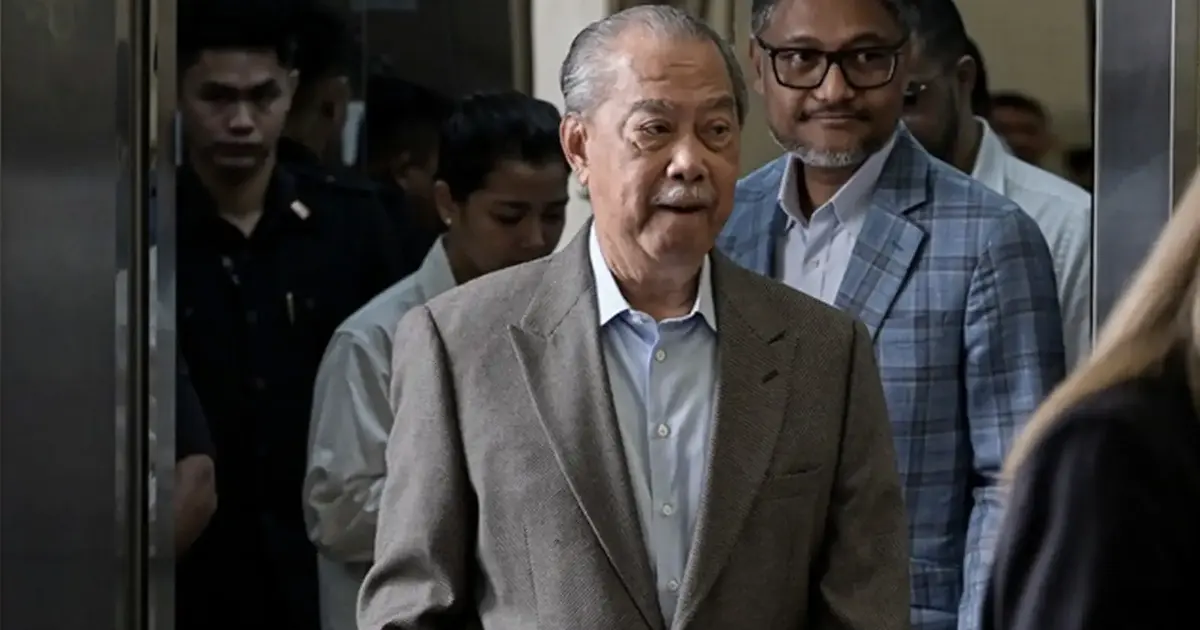
A senior finance ministry officer has told a Malaysian court that KCJ Engineering did not meet the required technical standards when first evaluated, raising fresh questions about the procurement process that led to the company's involvement in the Jana Wibawa economic stimulus initiative. The testimony, delivered during ongoing proceedings, indicates that the firm underwent formal assessment following a direct recommendation from then prime minister Muhyiddin Yassin to award it the contract, a sequence that may have circumvented standard competitive procurement practices.
The revelation places further scrutiny on decision-making during the Muhyiddin administration's approach to major government projects. Jana Wibawa, a substantial economic recovery programme unveiled during the height of pandemic-related economic uncertainty, was designed to stimulate domestic activity and provide relief to affected sectors. The timing and nature of the appointment process for key contractors involved in implementing this initiative have become subjects of intense judicial examination as Malaysia continues investigating procurement irregularities from the period.
The finance ministry's formal assessment procedures appear to have encountered an unusual situation when KCJ Engineering initially did not satisfy technical requirements. Standard governmental procurement frameworks typically demand that companies demonstrate requisite capabilities before contract award. The fact that an initial failure did not prevent subsequent involvement suggests either that reassessment occurred, alternative pathways were activated, or that the normal technical vetting process was subordinated to higher-level political direction.
The officer's courtroom account provides documentary evidence of the assessment outcome, establishing a clear timeline of events. This testimony becomes particularly significant because it demonstrates that the technical evaluation mechanism existed and functioned, yet apparently did not prove dispositive in determining final contract allocation. Such gaps between assessment findings and ultimate decisions often indicate the influence of factors outside conventional procurement logic, potentially including ministerial preference or other considerations that overrode professional recommendation.
Muhyiddin Yassin's tenure as prime minister, spanning February 2020 to August 2021, was characterised by substantial economic policy interventions necessitated by the severe disruptions caused by the Covid-19 pandemic. During this period, government spending priorities shifted dramatically, and emergency procurement procedures were sometimes implemented to accelerate deployment of relief measures. However, the balance between operational urgency and transparent, competitive tendering practices remains contentious in retrospective analysis of that era's governmental decisions.
The Jana Wibawa programme itself represented a government initiative combining infrastructure investment, business support, and social assistance mechanisms. The scale of expenditure involved and the speed of implementation meant that contractor selection carried significant implications for programme effectiveness and public resource management. Subsequent accountability mechanisms, including judicial proceedings, have focused on whether standard safeguards were maintained or whether political influence inappropriately shaped vendor allocation.
KCJ Engineering's ultimate involvement in the initiative, notwithstanding its initial technical shortcomings, illustrates the complex dynamics between ministerial direction and bureaucratic procedure. The finance ministry officer's testimony establishes that official channels did identify deficiencies, yet the company proceeded to involvement anyway. Understanding how this occurred—whether through formal appeal processes, revised assessment, additional submissions, or direct ministerial override—becomes crucial to evaluating whether due process was observed.
For Malaysian readers and observers across Southeast Asia, this case exemplifies broader governance challenges inherent in reconciling rapid policy implementation with institutional accountability mechanisms. During crisis periods, government agencies frequently face pressure to accelerate processes that normally operate at deliberate pace. The tension between these competing imperatives—speed and oversight—surfaces regularly in emerging market governance contexts where institutional capacity remains developing and ministerial power often exceeds bureaucratic institutional checks.
The court proceedings occurring around Jana Wibawa represent Malaysia's institutional mechanisms attempting to examine and potentially correct decisions from the recent past. The specificity of the finance ministry testimony—identifying that technical assessment occurred and that the initial verdict was unfavourable—provides a factual anchor for subsequent legal analysis. Determining whether KCJ Engineering's appointment constituted appropriate governance or an irregularity requiring remedy remains the crux of ongoing adjudication.
This case carries implications beyond the specific contract involved. It signals to Malaysian public agencies and international observers that judicial examination of government procurement decisions continues even for politically sensitive matters involving former prime ministers. The willingness of civil servants to testify about negative assessments despite apparent political pressure behind company appointment demonstrates institutional resilience, though questions persist about why initial technical failures did not prove determinative.
Regional governance specialists monitoring Malaysia's institutional performance will note this proceeding as evidence of accountability mechanisms functioning, albeit belatedly. The court's hearing of evidence about procurement irregularities during the Muhyiddin period reflects Malaysia's complicated relationship with its recent political history—acknowledging the need for examination while navigating the sensitive nature of challenging decisions made by former leadership during a genuine national crisis.
Looking forward, the Jana Wibawa proceedings may inform how Malaysia structures emergency procurement frameworks. Building in clearer escalation procedures for technical assessment failures, establishing documentation requirements for ministerial override decisions, and creating more transparent pathways for competitive selection even during crisis periods could strengthen institutional practices. The testimony currently emerging from courts suggests that such strengthening remains necessary to prevent recurrence of unclear decision-making patterns in future government contracting.

