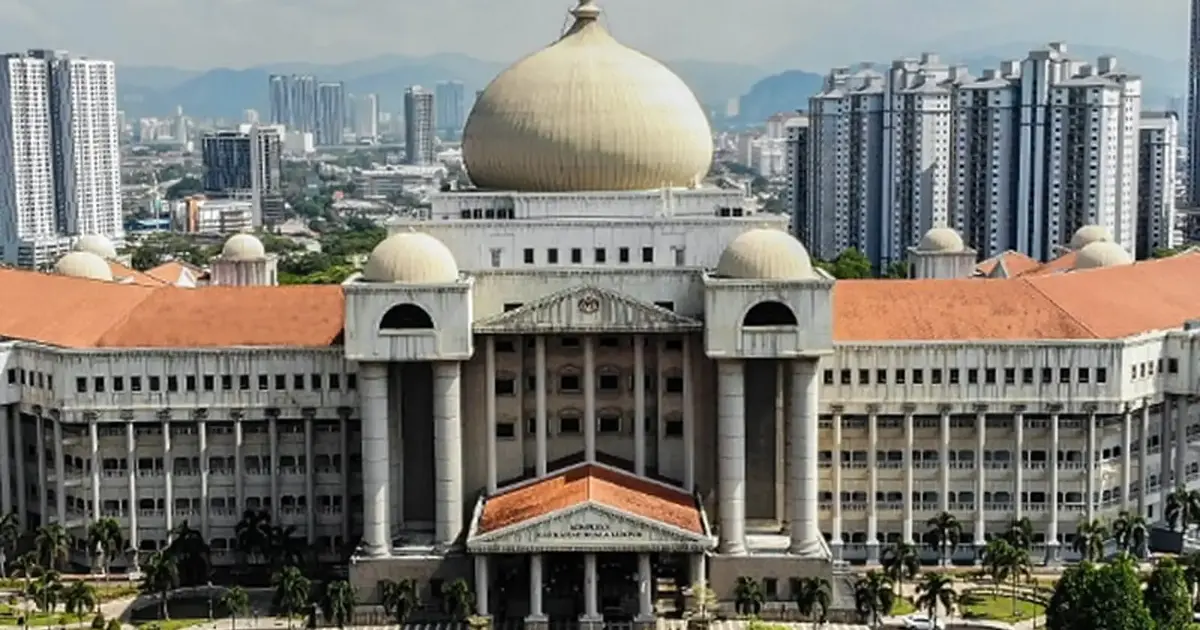
The Malaysian Anti-Corruption Commission's (MACC) investigation into alleged financial misconduct has resulted in a significant asset forfeiture case, with the courts ordering the surrender of 23 Rolex watches and substantial jewellery holdings to the government. The luxury items were confiscated from Nor Shahira Atirah Anuar @ Kamaruddin during a January enforcement action as part of a broader probe into unexplained wealth accumulation.
The case has drawn public attention given the family connections involved, with Nor Shahira Atirah Anuar @ Kamaruddin holding the position of sister-in-law to a former military leader. Such high-profile asset seizures underscore the MACC's intensified focus on investigating potential corruption among individuals connected to the armed forces establishment and their family networks, a sector that has faced heightened scrutiny in recent years.
Forfeiture proceedings represent a critical enforcement mechanism in Malaysia's anti-corruption framework, distinct from criminal prosecution. Under civil forfeiture procedures, authorities can seek to recover assets believed to derive from illicit activities without necessarily securing criminal convictions. This approach has gained prominence as enforcement agencies seek to disrupt the financial ecosystems that enable corruption to flourish across institutional hierarchies.
The seizure of 23 timepieces—a quantity that suggests systematic luxury acquisition rather than casual ownership—highlights how investigators track patterns of high-value consumer purchases as indicators of illicit enrichment. Rolex watches, particularly rare or vintage models, represent both functional assets and investment vehicles in certain circles, making them attractive targets for individuals seeking to discretely store wealth outside conventional financial channels.
The inclusion of jewellery alongside the timepieces in the forfeiture order suggests a broader asset base that investigators deemed inconsistent with legitimate income sources. Such tangible luxury goods often escape scrutiny through informal transactions, private sales, and inheritance claims that leave minimal documentary trails. The MACC's success in securing forfeiture of these items reflects strengthened evidentiary standards and judicial cooperation in tracing questionable asset accumulation.
For Malaysian citizens, this case demonstrates the persistent challenge of combating elite-level corruption that extends beyond individual officials into familial wealth networks. The interconnected nature of such relationships—where spouses, siblings, and in-laws potentially benefit from proximity to power and privileged access—remains a structural vulnerability in anti-corruption enforcement. The forfeiture order sends a message that asset protection through family transfer strategies does not guarantee immunity from investigation.
The timing of the January seizure, within the broader context of Malaysia's anti-corruption initiatives following political transitions in recent years, reflects institutional momentum in enforcement activities. The MACC has progressively expanded its investigative reach into historical cases and institutional networks previously considered politically sensitive, representing a notable shift in enforcement appetite at the apex of the anti-corruption hierarchy.
Regional observers note that Malaysia's forfeiture proceedings align with international best practices in asset recovery, signalling alignment with regional and global standards in addressing transnational corruption. Southeast Asian countries increasingly recognise that coordinated asset recovery mechanisms serve as force multipliers in combating corruption that frequently involves cross-border wealth transfers and offshore banking arrangements.
The case also reflects evolving judicial interpretation of unexplained wealth provisions, whereby courts increasingly infer illicit sourcing from significant asset holdings absent plausible legitimate explanations. This shifting burden of proof—placing increasing onus on asset holders to demonstrate lawful acquisition—represents a judicial adaptation to the sophisticated techniques employed by individuals seeking to obscure corrupt enrichment through layering and integration mechanisms.
Stakeholders in Malaysian governance will view this forfeiture as both a symbolic and substantive assertion of state capacity to recover stolen public resources from the extended networks of those in power. The order demonstrates that family ties do not insulate individuals from civil asset recovery proceedings, potentially deterring future attempts to shield illicit wealth through marriage alliances or corporate vehicles controlled by relatives.
Looking forward, the implications extend beyond this single case. The successful prosecution of forfeiture actions against relatives of high-ranking officials establishes legal precedent and investigative methodology that enforcement agencies can deploy across comparable networks. As Malaysia continues refining its anti-corruption apparatus, cases involving luxury asset seizures and forfeiture orders will likely increase in frequency, signalling evolving sophistication in tracing and recovering the fruits of corruption.
The 23 Rolex watches and associated jewellery now belonging to the Malaysian government represent not merely monetary value but symbolic triumph for an enforcement framework previously criticised as selective or inadequate. Whether these assets ultimately fund public services, educational institutions, or remain stored as evidence of institutional reform, their forfeiture reinforces the principle that ill-gotten gains cannot permanently reside outside state authority.

