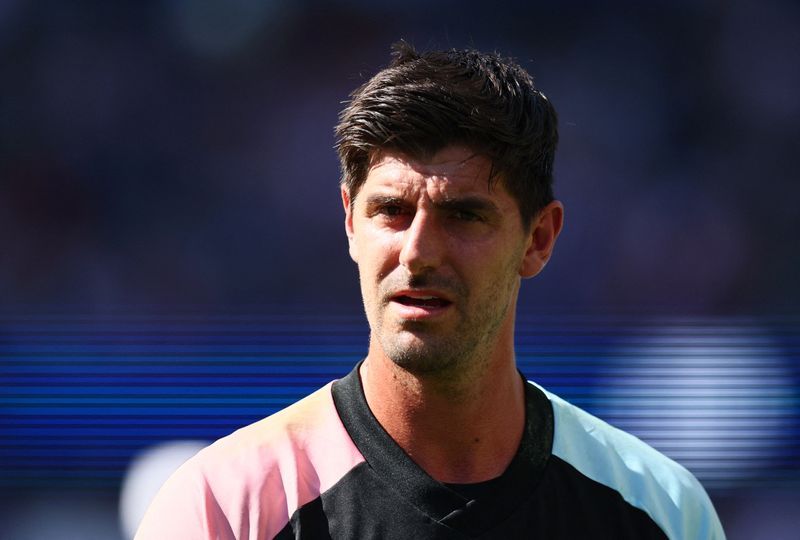
Veteran goalkeeper Thibaut Courtois has given his backing to Mark van Bommel's installation as Belgium's head coach, signalling that the former Dutch international's appointment carries significant credibility within the squad. Speaking at a sponsorship engagement in Brussels, the Real Madrid stopper acknowledged that Van Bommel's credentials as a coach combined with his elite-level playing pedigree should command natural respect from players accustomed to competing at football's highest echelon.
Van Bommel took over the Belgian national team shortly after the country's disappointing quarter-final elimination at the World Cup, which effectively concluded Rudi Garcia's tenure with the federation opting not to extend the Frenchman's contract. The swift succession underscored Belgium's determination to move decisively past their tournament setback, though the appointment itself was less a shock than a confirmation of months of speculation surrounding the former Bayern Munich midfielder's candidacy for the vacant position.
Courtois's endorsement carries particular weight given his stature within Belgian football circles and his experience as a cornerstone of the national team through multiple competitive campaigns. The 34-year-old noted that Van Bommel had already proven his managerial mettle during a successful stint with Royal Antwerp, where he earned widespread plaudits from players who had worked under his direction. This track record, combined with his intimate familiarity with the demands of elite international football, positioned him as an attractive candidate precisely because he could relate authentically to the pressures his charges would face.
Yet Courtois's comments also revealed a more complex picture regarding his personal involvement moving forward. The Real Madrid goalkeeper suggested that his continuation with Belgium—something he expressed genuine desire to pursue following the World Cup campaign—hinges substantially on forthcoming negotiations with Van Bommel concerning his match schedule and rotation policy. Specifically, Courtois indicated he would seek exemption from the Nations League fixtures, viewing such rest periods as essential given his age and the accumulated fatigue from a demanding club season.
The goalkeeper's position reflects a broader tension within modern international football between national team commitments and club-level sustainability, particularly acute for veteran players managing multiple competitions annually. Courtois framed his thinking pragmatically rather than as defiance, casting the Nations League break as a necessary component of any potential agreement to continue serving Belgium. His willingness to condition his involvement on such terms suggests Van Bommel faces immediate relationship-building challenges with some of his most experienced personnel.
Courtois also revisited Belgium's World Cup exit against Spain, which unfolded dramatically after he sustained an injury during the knockout tie in Los Angeles on July 10. His replacement, Senne Lammens, made a critical error that proved decisive in the 2-1 defeat by the eventual champions. Though Belgium fell despite their previous momentum in the tournament, Courtois maintained he could have continued performing effectively despite his physical limitations, noting he could still execute sideways passes and that a defender might have taken goal kicks in his stead.
The goalkeeper's retrospective analysis reflected a player processing his team's elimination through a professional lens, acknowledging the coaching decision even as he questioned its necessity from a footballing standpoint. Courtois emphasised there existed no fractious disagreement with Garcia over the substitution, characterising it rather as a philosophical difference rooted in the coach's stated requirement that only fully fit players take the field. This measured response contrasted sharply with the extensive criticism Garcia himself faced regarding his tactical and selection decisions throughout the tournament.
Courtois's diplomatic framing of Garcia's tenure hinted at wider squad sentiment regarding accountability following Belgium's underwhelming World Cup campaign. The team, widely expected to challenge seriously given their semi-final appearance in 2018 and their status as second-ranked side at tournament commencement, instead exited in the quarter-finals amid questions about preparation, in-game adjustments, and personnel choices. Courtois's refusal to direct blame toward his former coach suggested an inclination within the squad to compartmentalise disappointment and focus forward.
The appointment of Van Bommel thus represents an opportunity for Belgium to reset expectations and approach their competitive calendar with renewed direction. For Courtois personally, it presents a junction between retirement and selective participation, with the shape of his international future dependent on how Van Bommel navigates these early conversations with established players demanding tailored arrangements. The outcome of such discussions will indicate whether the new regime intends to rotate experienced personnel strategically or maintain a more demanding availability standard.

