The Comprehensive and Progressive Agreement for Trans-Pacific Partnership, a 12-nation trading bloc representing economies across the Asia-Pacific and beyond, has issued a formal endorsement of the recent US-Iran agreement following a virtual ministerial gathering on Friday. The joint statement reflects growing anxiety among member states about the fragility of international energy markets and the potential for geopolitical tensions to destabilize critical maritime routes. For Malaysia and other Southeast Asian nations reliant on steady petroleum imports, such reassurances carry substantial economic weight, as disruptions to energy supplies can quickly cascade into broader inflation and industrial slowdowns across the region.
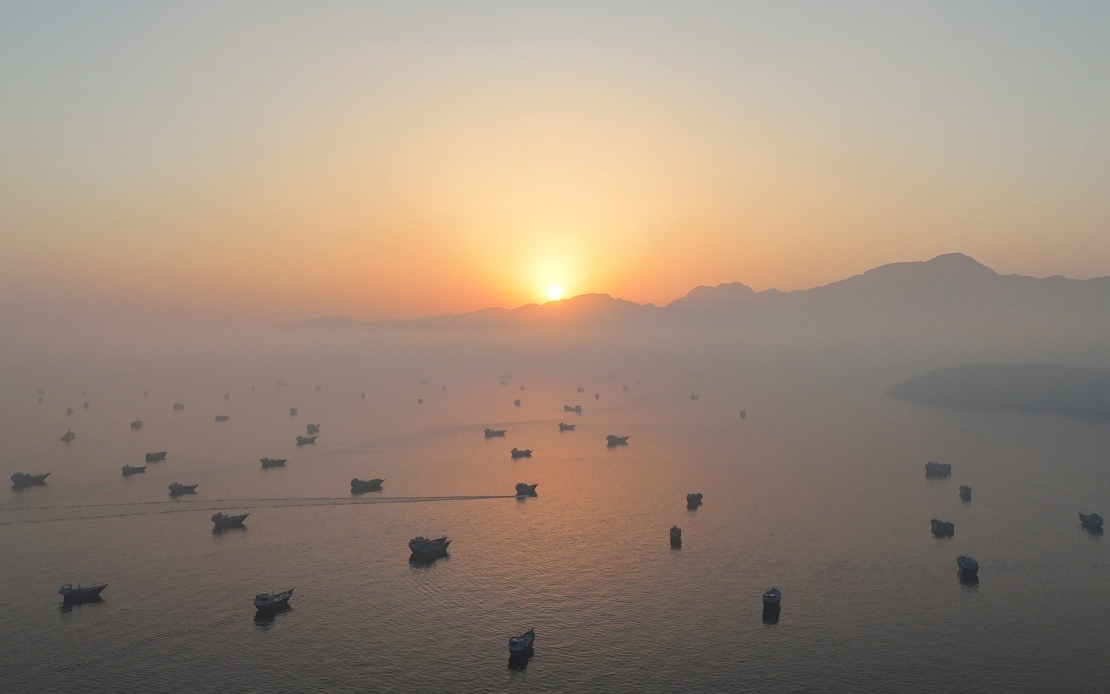
At the heart of the CPTPP statement lies an explicit recognition that the Strait of Hormuz—a waterway through which roughly one-third of globally traded seaborne crude oil passes annually—must remain open and secure for unimpeded commerce. The bloc's members, which include Australia, Brunei, Canada, Chile, Japan, Malaysia, Mexico, New Zealand, Peru, Singapore, the United Kingdom and Vietnam, underscored that freedom of navigation and overflight in this critical chokepoint are non-negotiable prerequisites for economic stability. The emphasis on "safe, unimpeded and continuous transit passage" signals concern that recent years of heightened tensions in the Persian Gulf region have already imposed measurable costs on traders and consumers throughout Asia and beyond.
Beyond the immediate geopolitical dimensions, the ministerial statement addresses a substantive economic reality: the global energy sector depends on the seamless flow of crude oil, diesel, liquefied natural gas, and petrochemical derivatives across maritime networks. When such flows are threatened or disrupted, the ripple effects touch fertilizer markets, manufacturing indices, and consumer prices for goods as diverse as plastics and pharmaceuticals. Member economies from Vietnam to Chile recognize that their prosperity hinges partly on the ability of producers in the Middle East and other regions to reach their markets without facing arbitrary obstacles or security risks. The CPTPP's willingness to wade into this geopolitical terrain—a domain many trade organizations avoid—reveals the seriousness with which member states view the matter.
The statement additionally reaffirms the bloc's commitment to adherence with the United Nations Convention on the Law of the Sea, the international legal framework that governs maritime conduct and dispute resolution. By anchoring their position in UNCLOS, the CPTPP members are signaling that any resolution to regional tensions must respect established international law rather than permit unilateral assertions of control or blockade. This framing has particular salience for Southeast Asian states, many of which have their own maritime claims and interests in upholding predictable rules-based frameworks. The message is unmistakable: energy security cannot be achieved through coercion or the arbitrary closure of shared waterways.
The bloc explicitly cautioned against the imposition of unjustified trade restrictions, calling on all nations to refrain from such measures. This language targets both sanctions regimes and informal trade barriers that, while sometimes justified on security grounds, can nevertheless distort markets and harm innocent parties. For Malaysian exporters and importers, such warnings carry direct implications, as trade restrictions imposed by major powers can reverberate through supply networks and alter pricing for everything from raw materials to finished goods. The CPTPP's collective stance suggests that member states will resist protectionist measures cloaked in security rhetoric, though the statement stops short of naming specific countries or policies.
A noteworthy dimension of the ministerial communiqué is its acknowledgement of regional initiatives aimed at building resilience into energy supply chains, particularly the Partnership On Wide Energy and Resources Resilience Asia—POWERR Asia. This initiative reflects a growing recognition that Southeast Asian and Pacific economies require mechanisms to coordinate on energy sourcing, distribution, and crisis management. By emphasizing coordination between producer and consumer nations, the CPTPP signals that resilience derives not from isolation or self-sufficiency but from transparent, institutionalized cooperation. For Malaysia, which sits at the crossroads of critical shipping lanes and possesses its own hydrocarbon resources, participation in such frameworks aligns closely with national interests.
The statement reserves particular concern for small-island developing states in the Pacific region, which face acute vulnerability to energy supply shocks owing to their geographic isolation and limited storage capacity. These nations, some of which are CPTPP members, lack the economic scale to absorb price volatility or negotiate favorable long-term supply contracts independently. The bloc's explicit attention to this constituency underscores a broader commitment to ensuring that trade liberalization benefits all members proportionately and that the most vulnerable are not left exposed to market failures. This inclusive framing distinguishes the CPTPP from narrower bilateral arrangements and reflects the institutional maturity of the bloc.
The timing of this ministerial statement arrives amid what the CPTPP characterizes as a "time of crisis for global supply chains." Beyond energy, manufacturing networks across the region continue to absorb shocks from pandemic-related disruptions, geopolitical friction between major powers, and emerging bottlenecks in semiconductors, rare earths, and other critical inputs. The agreement by 12 diverse economies to reaffirm their collective determination to uphold open markets suggests that, notwithstanding tensions between members on other issues, there exists a baseline consensus that protectionism and market fragmentation serve no party well. For Malaysian policymakers monitoring regional stability, such solidarity provides a degree of reassurance, even as underlying structural challenges persist.
The virtual format of the ministerial meeting itself merits note, as it reflects the practical constraints and preferences that have become entrenched in international governance since 2020. Despite technological barriers and the loss of informal networking opportunities, member states deemed it sufficiently urgent to convene and issue a unified statement on energy security and maritime commerce. This suggests that the CPTPP, despite earlier skepticism about its institutional vigor, has evolved into a forum where critical economic and geopolitical concerns find serious institutional expression. For Malaysia and other Southeast Asian members, the bloc increasingly functions as a counterweight to unilateral actions by larger powers and a platform for advancing regional interests within a rules-based framework.
Looking ahead, the challenge for CPTPP members will be translating rhetorical commitments into concrete mechanisms that enhance energy security and supply chain resilience. The statement's repeated emphasis on "free and open" trade, while rhetorically powerful, requires substantiation through coordinated policy action, investment in infrastructure, and mutual recognition of each member's legitimate interests. The explicit welcome for the US-Iran agreement, moreover, carries implicit recognition that geopolitical tensions cannot be resolved through trade mechanisms alone; rather, diplomatic progress in areas like nuclear negotiations creates the conditions under which economic cooperation can flourish. For Southeast Asia, this interdependence between security and prosperity underscores the premium placed on maintaining regional stability and advancing dialogue mechanisms that can prevent crises before they erupt into supply chain disruptions.

