Cuban President Miguel Diaz-Canel launched a scathing critique of the Trump administration's latest sanctions regime on Friday, framing the measures as part of a broader ideological campaign that resurrects the spectre of 1950s anti-communist hysteria. Speaking through social media platform X, the Cuban leader characterised Washington's approach as a "new and more dangerous version of McCarthyism," arguing that contemporary US policy targeting what he termed a global "radical left" echoes Senator Joseph McCarthy's witch-hunts against alleged communist sympathisers during the Cold War period.
Diaz-Canel's inflammatory rhetoric extended to comparisons with historical authoritarian movements, drawing parallels between current transnational far-right alliances and both Nazi fascism and Operation Condor, the notorious covert campaign of political repression and state terrorism orchestrated across Latin America during the 1970s and 1980s. By invoking these historical atrocities, the Cuban president sought to position his government as a victim of systematic ideological persecution rather than addressing substantive criticisms of his administration's governance record. The comparison reflects Cuba's longstanding strategy of deflecting domestic accountability by situating national problems within a narrative of external aggression.
The accusation of revived McCarthyism carries particular symbolic weight in Latin American political discourse, where the legacy of US-backed anti-communist campaigns remains deeply embedded in collective memory. Diaz-Canel's invocation of this analogy suggests that Cuban leadership perceives the latest sanctions not merely as economic policy instruments but as manifestations of ideological hostility toward leftist governance models across the Western Hemisphere. This framing attempts to mobilise anti-American sentiment within Cuba and potentially resonate with left-leaning constituencies throughout the region who harbour historical grievances regarding US foreign interventionism.
On the broader geopolitical stage, Diaz-Canel attributed responsibility for multiple international crises to the United States and its allies, including the humanitarian catastrophe in Gaza, irregular immigration enforcement actions that he characterised as persecution, the bombing of an Iranian girls' school, and Cuba's decades-long trade embargo. This sweeping indictment represents an attempt to position Cuba within a global anti-hegemonic coalition resisting what the government frames as American imperialism, though the assertion that the US bears primary responsibility for these distinct international situations lacks nuance and obscures the complex causality involved in each conflict.
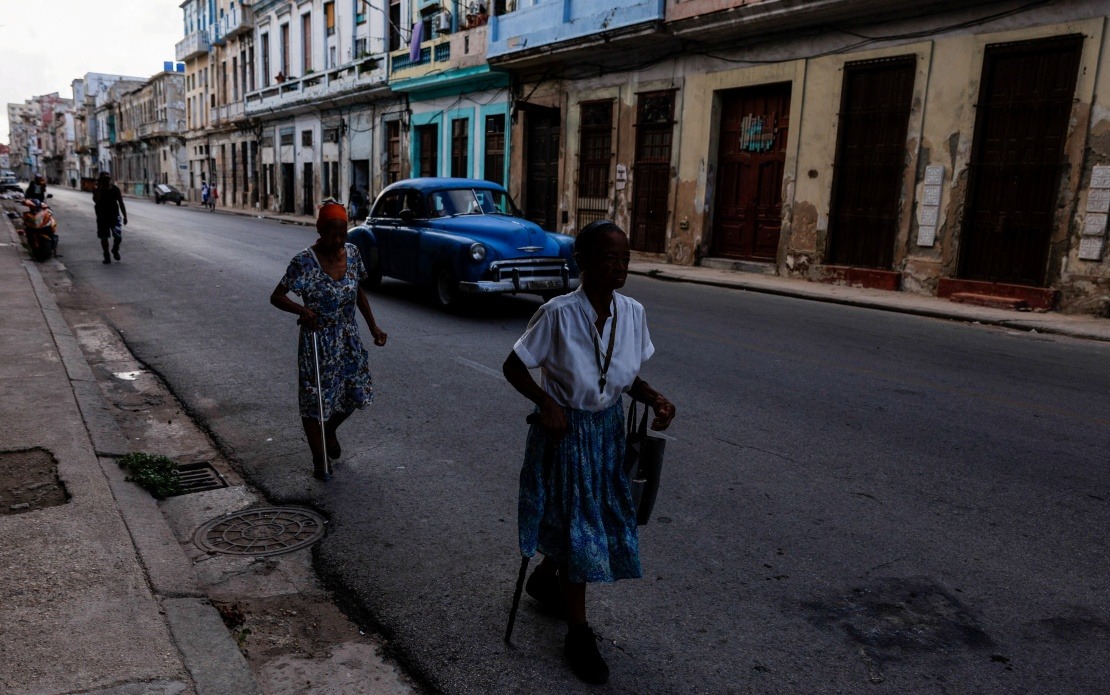
The timing of Diaz-Canel's denunciation coincides with increasingly severe economic deterioration across the Cuban archipelago. The island nation is currently experiencing its most consequential economic contraction since the collapse of Soviet subsidies in the early 1990s, characterised by acute fuel scarcity, systematic energy deficits, and widespread electricity rationing that has become the defining feature of daily life for ordinary Cubans. Official statistics reveal that power outages averaged 20 hours daily during the first half of 2026, with the electricity shortfall reaching 1,955 megawatts—a staggering deficit that has paralysed essential services, disrupted food production, compromised healthcare provision, and severely constrained industrial and commercial activity.
Cuban authorities have consistently attributed this economic catastrophe to intensified American sanctions and embargo measures rather than to domestic policy choices, structural rigidities, inefficient central planning, or the government's inability to diversify the economy away from tourism and nickel extraction. The administration argues that Washington has systematically disrupted petroleum supplies essential to Cuba's functioning, pressured international companies to sever commercial relationships with the island, and prevented access to global credit markets and financing mechanisms that would enable economic recovery and restructuring. While US sanctions undoubtedly contribute to Cuba's economic hardship, this official narrative largely externalises responsibility for institutional failures and mismanagement that predate recent American policy escalations.
President Donald Trump's administration has escalated sanctions pressure through multiple executive actions. In May, Trump signed an executive order targeting Cuban officials and state entities, citing repression of civilian populations and alleged threats to American national security and foreign policy interests. This represented a continuation and intensification of Trump's first-term policy reversals that dismantled the Obama administration's diplomatic opening toward Cuba, reinstating Cold War-era restrictions on travel, remittances, and commercial engagement. The administration's underlying logic treats regime change as the appropriate ultimate objective of sanctions policy, establishing conditions designed to generate public discontent and potentially destabilise the government through economic coercion.
Additionally, the Trump administration established an innovative sanctions mechanism in January through an executive order declaring a national emergency regarding Cuban oil supplies. This mechanism authorises the imposition of tariffs on goods originating from any nation that sells or supplies petroleum to Cuba, effectively expanding the geographic reach of sanctions beyond the island itself and targeting Cuba's primary energy suppliers, including Venezuela. This extraterritorial approach represents an escalation in sanctions intensity, as it attempts to manipulate global energy markets and international commercial patterns to maximise pressure on the Cuban economy.
For Malaysian and Southeast Asian observers, the US-Cuba sanctions saga illustrates broader tensions between the principles of national sovereignty and the practical exercise of American economic coercion through unilateral trade measures. The controversy highlights how smaller nations, particularly those pursuing independent foreign policies or aligned with non-Western powers, navigate an international order in which economic sanctions have become routine instruments of great-power statecraft. Cuba's experience demonstrates both the severe humanitarian costs of prolonged economic isolation and the limitations of sanctions as instruments of political transformation when target populations rally around national governments framed as defending against external aggression.
Moreover, the escalating US sanctions regime reflects the Trump administration's broader confrontational approach toward leftist and non-aligned governments throughout Latin America and globally. This ideological dimension to American foreign policy creates potential implications for other developing nations pursuing state-led development models or maintaining geopolitical autonomy from Washington's strategic preferences. The Cuban government's rhetorical framing of sanctions as McCarthyism resonates within international forums where developing nations increasingly assert that unilateral coercive measures violate international law and constitute illegal economic warfare against sovereign states.
The economic crisis unfolding across Cuba raises fundamental questions about the sustainability of a governance model that has historically depended on external patronage—first from the Soviet Union, subsequently from Venezuela—and the capacity of any political system to maintain legitimacy when confronted with simultaneous externally-imposed sanctions and internally-generated economic dysfunction. Cuban citizens face a daily reality of power shortages, commodity scarcity, and severely constrained economic opportunities that no amount of anti-American rhetoric can ameliorate, potentially generating pressure for policy recalibration regardless of the ideological commitments of the ruling elite. The intersection of sanctions pressure and internal economic deterioration creates a complex political environment in which regime survival depends simultaneously on nationalist mobilisation against external enemies and on delivering minimal improvements in living standards for an increasingly strained population.

