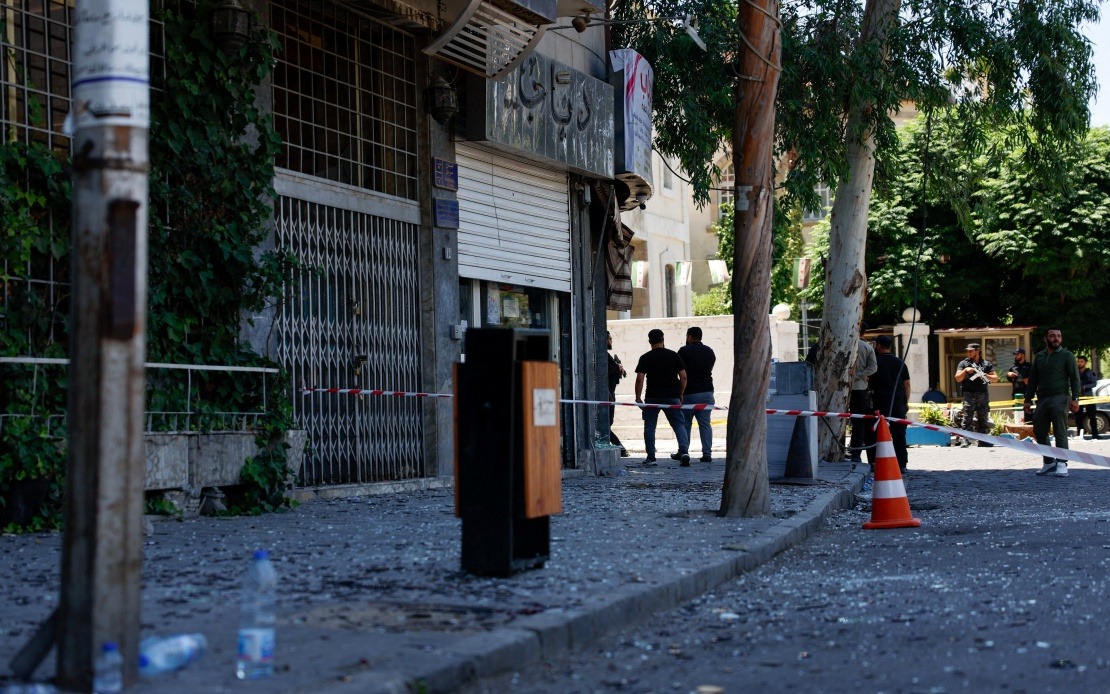
Two improvised explosive devices detonated in Damascus on Tuesday, injuring at least 18 people including four members of the police force, according to Syria's Interior Ministry. The incidents occurred during a high-profile visit by French President Emmanuel Macron, marking a significant moment in regional diplomacy and raising fresh security concerns about stability in the Syrian capital.
According to the Syrian Observatory for Human Rights, a London-based human rights monitor, the first explosion was followed within seconds by a considerably more powerful blast, both in proximity to accommodation where Macron was understood to be residing. The rapid succession of the two detonations suggested a coordinated attack, though initial assessments remained unclear. Emergency personnel and medical teams deployed swiftly to the affected zones, while security forces established perimeters around the wider vicinity to prevent further incidents and aid investigation efforts.
The Élysée Palace in Paris immediately confirmed that Macron had sustained no injuries from the explosions. The French leader proceeded with diplomatic engagements as planned, remaining at the Syrian presidential palace where high-level delegation discussions between French and Syrian officials were progressing. The decision to continue official business despite the security incident underscored the significance France places on the visit and its diplomatic objectives in the region.
Macron's arrival in Syria on Monday evening represented a watershed moment for European engagement with Damascus. As the first leader from any European Union member state to visit the country since 2010, his presence carries substantial symbolic weight, particularly given the international isolation Syria has experienced following years of internal conflict and accusations regarding government conduct. The visit signals a potential thawing of relations between Europe and the Assad administration, though such rapprochement remains controversial among international observers and rights advocates.
The explosions generated considerable anxiety among Damascus residents, many of whom remain traumatised by years of conflict-related violence. The immediate vicinity of the incidents was secured by authorities, and the security response appeared swift and coordinated. However, the timing of the attack during a visit by a major Western leader raises uncomfortable questions about security vulnerabilities in the capital and the persistence of underground opposition elements capable of mounting operations despite enhanced security measures.
For Malaysia and the broader Southeast Asian region, the developments carry implications for understanding international engagement patterns with nations emerging from conflict. The visit demonstrates how major powers reassess relationships with previously isolated governments, a dynamic relevant to regional players considering their own diplomatic postures. Additionally, the bombing illustrates enduring security challenges that can undermine stability even as political reconciliation efforts advance, a concern pertinent to several Southeast Asian states managing their own transitional security environments.
The incident also highlights the complex security environment characterising Damascus as Syria moves toward normalisation on the international stage. Previous explosions in the capital have been attributed to various armed groups, militants, and remnants of opposition forces, though determining responsibility for such attacks remains challenging given the fractured security landscape. The speed and coordination demonstrated by the perpetrators suggest operational capability despite years of counter-insurgency operations.
Macron's diplomatic visit was intended to facilitate discussions on reconstruction, economic cooperation, and Syria's potential reintegration into regional and international affairs. France has emphasised the humanitarian dimensions of engagement, whilst also signalling willingness to normalise relations contingent on improvements in governance and human rights standards. The attack threatens to complicate this messaging, potentially emboldening critics who argue that engagement with the Assad administration legitimises a government with a contested human rights record.
Security analysts will scrutinise the incident for clues about the organisational capacity and intentions of anti-government elements. The targeting of the location housing a major Western leader suggests either extensive planning capability or opportunistic exploitation of heightened security operations. Either interpretation raises questions about the depth of stabilisation achieved in Syria and the durability of current security arrangements.
The broader context involves Syria's gradual rehabilitation in Arab League circles and regional diplomacy following years of suspension and isolation. Arab states have been slowly reengaging with Damascus, driven partly by pragmatic interests in stabilisation and partly by shifting geopolitical alignments. European engagement, represented by Macron's visit, potentially reflects recognition that Western isolation has not achieved stated policy objectives and that diplomatic engagement might offer alternative pathways to influence Syrian governance and policies.
As investigations into the explosions proceed, their impact on Macron's visit and broader European policy towards Syria remains to be fully assessed. The incident underscores the precarious security environment persisting in Damascus despite apparent stabilisation and the capacity of armed groups to mount significant attacks. For regional observers, including those in Southeast Asia monitoring Syria's trajectory, the attack demonstrates that political normality and security stability remain distinct challenges requiring parallel attention and resources.
The coming days will reveal whether the explosions significantly alter the diplomatic agenda or whether French-Syrian discussions will proceed despite the security challenge. The response will signal international resolve regarding Syrian engagement and the weight assigned to security incidents versus political objectives in determining diplomatic trajectories.

