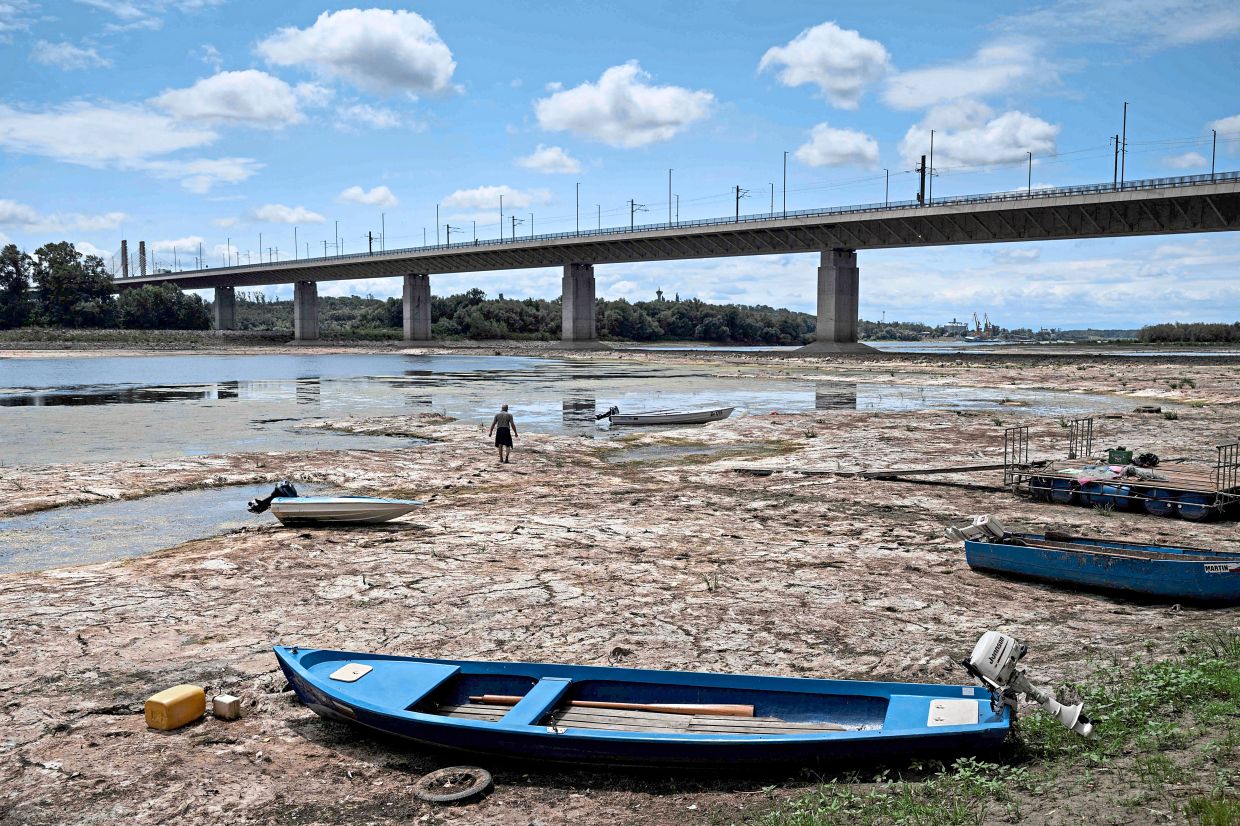
Central Europe is confronting an environmental crisis as the Danube River recedes to historically unprecedented levels, laying bare a continental waterway that has sustained trade, tourism and power generation for centuries. The prolonged drought afflicting the region—compounded by successive heat waves pushing temperatures above 38 degrees Celsius—has transformed one of Europe's most vital arteries into a struggling trickle, with far-reaching consequences for the ten nations through which it flows from southwestern Germany to the Black Sea.
The scale of the water shortage became starkly apparent when Hungary's national water authority recorded the Danube's level at Budapest at merely 23 centimetres on 29 July, obliterating the previous record low of 33 centimetres established in 2018. This collapse in water depth has fundamentally altered the landscape, revealing underwater features that have remained hidden for generations. Photographers and residents have documented the surreal spectacle of exposed rock formations, sand bars and submerged vessels emerging from the riverbed, particularly around Budapest's Margaret Bridge, where archaeological and wartime relics are now within reach at ground level.
The meteorological conditions driving this crisis reflect a broader climatic pattern enveloping the continent. The Hungarian Meteorological Service has documented that precipitation across nearly the entire country over a 90-day period falls between 80 and 130 millimetres below long-term averages, indicating a structural deficit rather than a temporary anomaly. Successive heat waves have dramatically accelerated evaporation rates across Central Europe's river systems, while the absence of significant rainfall in the coming forecast window suggests further deterioration is imminent. For residents and officials accustomed to seasonal water management patterns, the persistence and severity of this drought represents a tangible manifestation of changing climatic realities.
The disruption to river commerce has been immediate and severe. Major cruise operators have been compelled to relocate docking facilities far upstream from Budapest's tourist precincts, eliminating the convenient embarkation points that make river tourism operationally viable. Cargo shipping, the economic lifeblood of the Danube corridor, has contracted to near-total cessation along critical stretches. In Serbia's Novi Sad, the spectacle of hundreds of small vessels and dozens of commercial cargo ships marooned on exposed riverbanks has become emblematic of the crisis. Radovan Segrt, who operates river excursions commercially, candidly acknowledged that the water's retreat of between 15 and 20 metres from the shoreline has effectively terminated the summer tourism season for his business.
The human toll of these disruptions extended to a dramatic rescue operation when Bulgarian authorities evacuated 186 tourists from the Viking Ullur cruise ship on 28 July after it ran aground near Vidin. The vessel, unable to access the port where supplies were scheduled to be loaded, found itself stranded on a shallow shoal with rapidly dwindling food and water resources. The 52 crew members faced an indeterminate period of confinement aboard the grounded vessel, dependent on uncertain refloating prospects and navigation conditions—a scenario that encapsulates the unpredictable hazards created by extreme water conditions.
Beyond immediate logistical disruptions, the low Danube levels have triggered a cascade of consequences for the region's energy infrastructure. Nuclear power plants across multiple countries rely on Danube water for cooling reactor systems, a dependency that has become critically exposed. In Romania, where the Danube's flow rate plummeted to approximately 1,630 cubic metres per second—roughly one-third of typical July averages—authorities made the safety-critical decision to shut down a reactor unit at the Cernavoda power plant, with additional reactors slated for shutdown imminently. Hungary's Paks nuclear facility, which furnishes nearly half the country's electricity supply, commenced reactor powering-down procedures on 29 July due to restricted cooling-water availability, following two consecutive power reductions across separate reactor units in the preceding days. These interventions underscore how climate extremes cascade through interconnected infrastructure systems, amplifying vulnerabilities across energy security, industrial production and grid stability.
The exposed riverbed itself has created secondary hazards demanding urgent management. Hungarian authorities closed Budapest's Margaret Bridge after receding waters revealed a World War II-era bomb resting at the structure's foundation—a stark reminder that the Danube's depths have long harboured historical ordnance and unexploded munitions. This discovery highlighted the unpredictable risks attending extreme water retreat, with potential implications for public safety across multiple riverside communities.
Yet the crisis has also created unanticipated opportunities for those with specialised interests in historical recovery. Zsolt Horvath, a treasure hunter, has exploited the exceptional water conditions to retrieve metal objects from the exposed riverbank using powerful magnets, recovering relics including wartime bullet casings and vintage electronic equipment. His acknowledgement that extreme low water levels represent both opportunity and curse encapsulates the paradox of the current situation—while enabling archaeological and historical investigations impossible under normal conditions, the broader implications of such extreme water scarcity remain deeply troubling. The Danube's crisis represents not an isolated weather phenomenon but rather a preview of the structural water security challenges that may increasingly confront Central European economies, infrastructure networks and societies as climate patterns shift.

