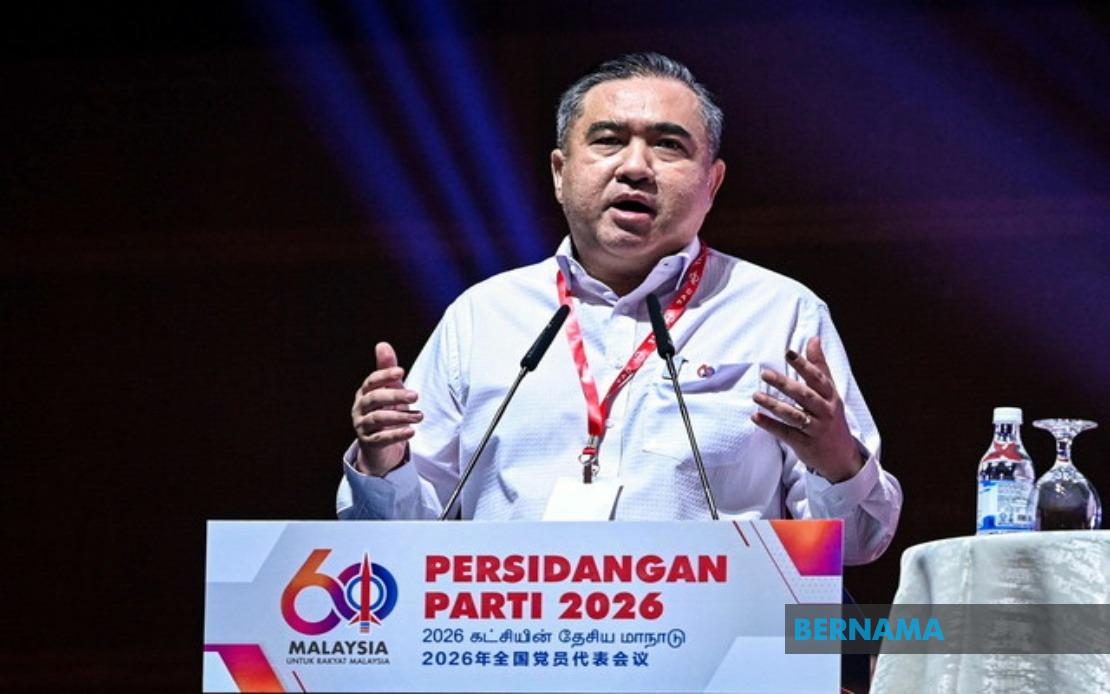
The Democratic Action Party has declared unequivocal backing for the government's move to repeal the Universities and University Colleges Act (AUKU), with party secretary-general Anthony Loke framing the decision as vindication of a decades-long political battle. Delivering his policy address at the DAP 2026 National Conference at the Putrajaya International Convention Centre on August 16, Loke emphasised that the party's participation in government extends beyond the pursuit of ministerial posts, instead aiming to materialise substantive policy transformation aligned with its electoral commitments.
Prime Minister Datuk Seri Anwar Ibrahim had announced the repeal proposal during the PKR 2026 National Congress, signalling a watershed moment for student activism in Malaysian public universities. The Cabinet will consider the formal proposal next Wednesday, following representations from student leaders who have long advocated for dismantling restrictions that limit democratic participation. The move represents a significant reversal of the restrictive posture the legislation has traditionally enforced since its enactment in 1971.
Loke seized upon the announcement to call for momentum to extend beyond AUKU's repeal alone, urging the Prime Minister to pursue an equally ambitious portfolio of promised reforms. Notably, he highlighted ensuring equitable access to higher education regardless of racial background as a priority reform requiring parallel attention. This framing positions the AUKU repeal not as an isolated gesture toward student rights, but as the opening salvo in a more comprehensive reimagining of Malaysia's tertiary education landscape.
The 1971 Act has undergone seven amendments across more than five decades, each revision a small compromise with student demands and democratic norms. The 2012 amendment initially granted students permission to engage in political party activities beyond campus precincts, a modest concession that acknowledged the tension between institutional control and democratic participation. More recent modifications have gradually chipped away at the legislation's more draconian provisions, yet the fundamental structure constraining student freedom has persisted, making the prospect of outright repeal genuinely transformative.
Two particularly consequential amendments occurred in 2024, reflecting evolving understanding of student governance. The first transferred disciplinary authority from vice-chancellors to a Student Disciplinary Committee, institutionalising due process protections and reducing the arbitrary power wielded by university leadership. The second amendment to Section 15A expanded financial autonomy for Student Representative Councils and student bodies, permitting them to raise funds and accept contributions under regulatory oversight. These incremental changes laid groundwork for the more expansive freedom the repeal would confer.
Repeal of AUKU would fundamentally alter the regulatory framework governing student political organising on campus. Currently, the Act constrains student unions' ability to function as autonomous voices, limiting their capacity to organise independently around issues affecting tertiary education and broader national concerns. Removal of these statutory restrictions would align Malaysian universities with international norms where student bodies exercise genuine representative functions and operate without legislative shackles.
For Malaysian universities and their international standing, AUKU's repeal carries profound implications. Many global academic institutions champion student autonomy as integral to institutional vitality and democratic culture. The continuing presence of restrictive legislation has occasionally complicated Malaysia's positioning within international academic networks and exchange programmes. Liberalising the legal framework could enhance the attractiveness of Malaysian universities to international students and strengthen partnerships with overseas institutions that prioritise academic freedom.
The timing of this legislative push reflects broader political calculations within the ruling coalition. Both DAP and PKR have historically championed student rights as part of their democratic credentials. By synchronising announcements and expressing mutual support for AUKU repeal, the coalition parties signal alignment on a policy domain where they have cultivated consistent advocacy credentials. This coordination consolidates their reform narrative whilst managing potential coalition friction on other contentious issues.
However, the path from announcement to legislative reality remains contingent. Cabinet consideration next Wednesday represents the formal hurdle, but parliamentary passage will require navigating potential resistance from Barisan Nasional and other coalition partners who may harbour reservations about unfettered student political activity. Conservative forces within government and the broader political ecosystem may fear that expanded student freedoms could generate activism challenging government policies or highlighting administrative shortcomings.
For Malaysian students themselves, the prospective repeal carries immediate significance. Current cohorts have operated within legal constraints designed during an era when student activism was perceived as a security threat. Liberation from AUKU would permit more vibrant campus discourse, autonomous student governance, and capacity to organise around issues from academic standards to social justice. The psychological shift toward viewing students as stakeholders rather than subjects of institutional control cannot be underestimated.
The broader context involves Malaysia's ongoing negotiation between democratic governance and administrative control. Student rights historically served as proxy battlegrounds for larger questions about civil liberties, free expression, and participatory democracy. AUKU's persistence reflected an era when governments viewed student activism with suspicion. Contemporary commitment to repeal acknowledges evolving understanding that robust student engagement strengthens rather than destabilises educational institutions and democratic health.
Implementing AUKU repeal will require developing transitional frameworks determining which existing regulations remain valid and which require replacement. Universities will need to adapt institutional policies governing student conduct, ensuring accountability whilst respecting expanded freedoms. This administrative architecture matters considerably for determining whether theoretical liberation translates into meaningful autonomy or whether substitute restrictions simply rename existing constraints.
Does the DAP's vocal support signal genuine transformative commitment or strategic positioning ahead of elections? The party's framing emphasising contribution to national progress beyond office-holding suggests deeper ideological investment. Yet observable outcomes will ultimately determine whether AUKU repeal becomes a genuine watershed or a symbolic gesture absorbed into unchanged institutional practices. The coming weeks will clarify whether the government demonstrates equivalent resolve for Loke's broader education agenda.

