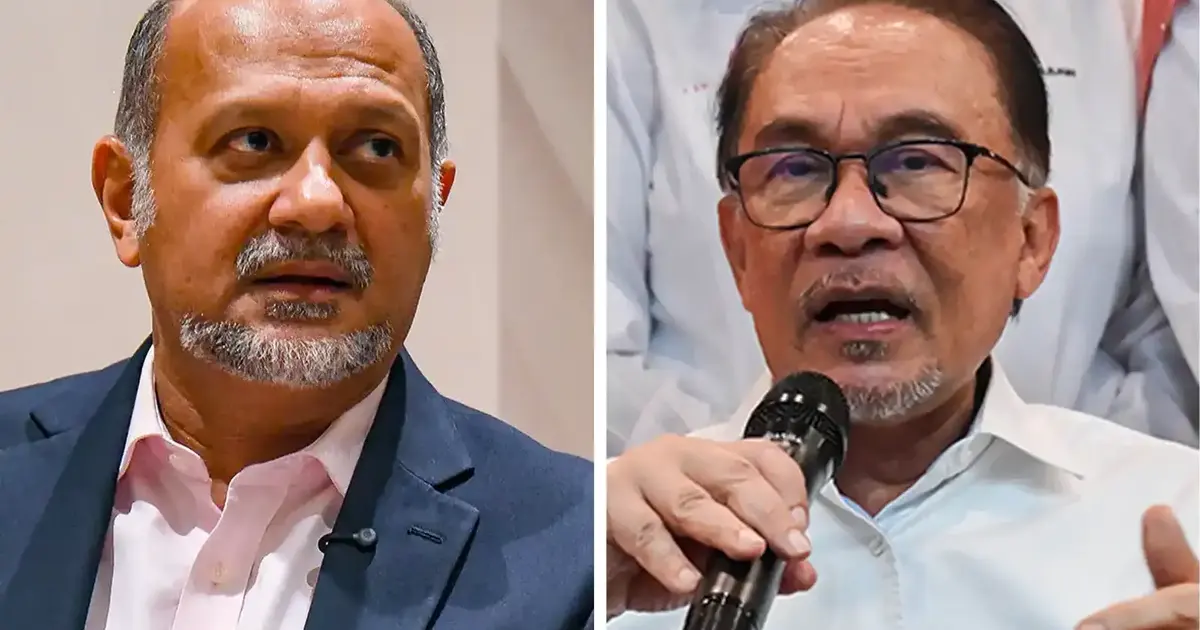
The Democratic Action Party is intensifying pressure on Prime Minister Anwar Ibrahim to codify equal parliamentary funding across all Members of Parliament through formal legislation, signalling frustration with informal arrangements that have characterised budget allocation to the nation's lawmakers. Gobind Singh Deo, speaking on behalf of the party, revealed that DAP has engaged the premier multiple times on the matter, indicating that previous appeals through conventional channels have not yielded the desired outcome.
The party's push for legislative backing reflects a broader concern within Malaysia's political establishment about the fairness and transparency of how parliamentary resources are distributed. Currently, the allocation of operating funds and facilities to MPs appears to operate under administrative discretion rather than statutory obligation, creating potential disparities based on which coalition controls the federal government or the political affiliation of individual legislators. By advocating for a law, DAP seeks to remove political considerations from what should be a fundamental right of democratic representation.
This proposal carries particular significance in Malaysia's evolving political landscape, where coalition dynamics have shifted dramatically over recent years. The formation of the Unity Government under Anwar's leadership brought together previously opposing political blocs, yet fundamental questions about resource equality among legislators remain unresolved. DAP's intervention suggests that concerns about differential treatment persist despite efforts toward greater parliamentary cohesion.
The principle underlying the DAP proposal is straightforward: every MP, regardless of party affiliation, represents constituents who have equal democratic standing. The resources allocated to these representatives should therefore reflect this constitutional equality rather than reflecting the political preferences of whoever occupies the executive. This distinction between administrative practice and statutory right becomes critical when administrations change or coalition arrangements shift.
From a practical standpoint, equal funding would standardise the allocation of staff allowances, office maintenance budgets, constituent service provisions, and other operational expenses across the entire parliament. Such standardisation would enhance administrative efficiency while eliminating a potential source of grievance among opposition or minority coalition legislators who might otherwise perceive themselves as disadvantaged compared to government-aligned colleagues.
Malaysia's experience with coalition politics in recent years demonstrates why legislative safeguards matter. The fluidity of parliamentary alignments—where MPs have crossed between coalitions and where government composition has shifted—creates scenarios where yesterday's governing partners become today's opposition members. Without statutory protection, MPs could face dramatic reductions in funding as their political fortunes change, undermining their capacity to serve constituents effectively.
The DAP's repeated engagement with the Prime Minister suggests this is not a new concern but rather a persistent issue that has survived previous discussions at the leadership level. The decision to publicise the call indicates frustration with the pace or substance of response from the executive office, and represents an attempt to elevate the matter into public discourse where it can gain traction through political pressure.
For other opposition parties and non-government-aligned MPs, the DAP initiative offers a potential rallying point. While the parties occupy different positions on the political spectrum, they share a common interest in ensuring that resource allocation does not become a tool for executive advantage over legislative independence. A law guaranteeing equal funding would strengthen the parliament's institutional position relative to the executive branch, a principle that transcends partisan divisions.
The timing of this push is also noteworthy, occurring during a period when Malaysia's governance structures remain subject to ongoing negotiation and refinement. The Unity Government itself represents an experiment in Malaysian politics, bringing together parties that fought bitterly in previous elections. Issues like parliamentary funding protocols provide opportunities to establish new norms that could either entrench the current arrangement or be modified depending on future electoral outcomes.
From a Southeast Asian perspective, Malaysia's approach to parliamentary funding reflects broader questions about democratic institutionalisation across the region. Countries attempting to strengthen democratic institutions must eventually move beyond personalised or informal arrangements toward rule-based systems. The DAP's call for legislation thus reflects a maturation of expectations about how modern democracies should function.
Implementation of such a law would require careful drafting to address numerous technical questions: whether funding should be strictly identical or whether adjustments for constituency size or geographic factors would be permitted, how funding would be indexed for inflation, and what grievance mechanisms would exist if MPs believed they were being treated unequally. These practical considerations explain why this is not simply a matter of issuing an executive directive.
The proposal also intersects with broader questions about parliamentary privilege and institutional independence. Securing equal funding through law rather than through administrative discretion would create a situation where any government attempting to punish opposition MPs through budget reductions would face explicit legal violations, thereby strengthening legislators' capacity to operate free from executive coercion.
As Malaysia continues to refine its democratic institutions following years of political turbulence, the DAP's call for legislating equal parliamentary funding represents an important contribution to the conversation about how democratic safeguards should operate. Whether Prime Minister Anwar's government will respond positively to this proposal remains to be seen, but the issue is unlikely to disappear given its fundamental connection to democratic fairness and parliamentary independence.

