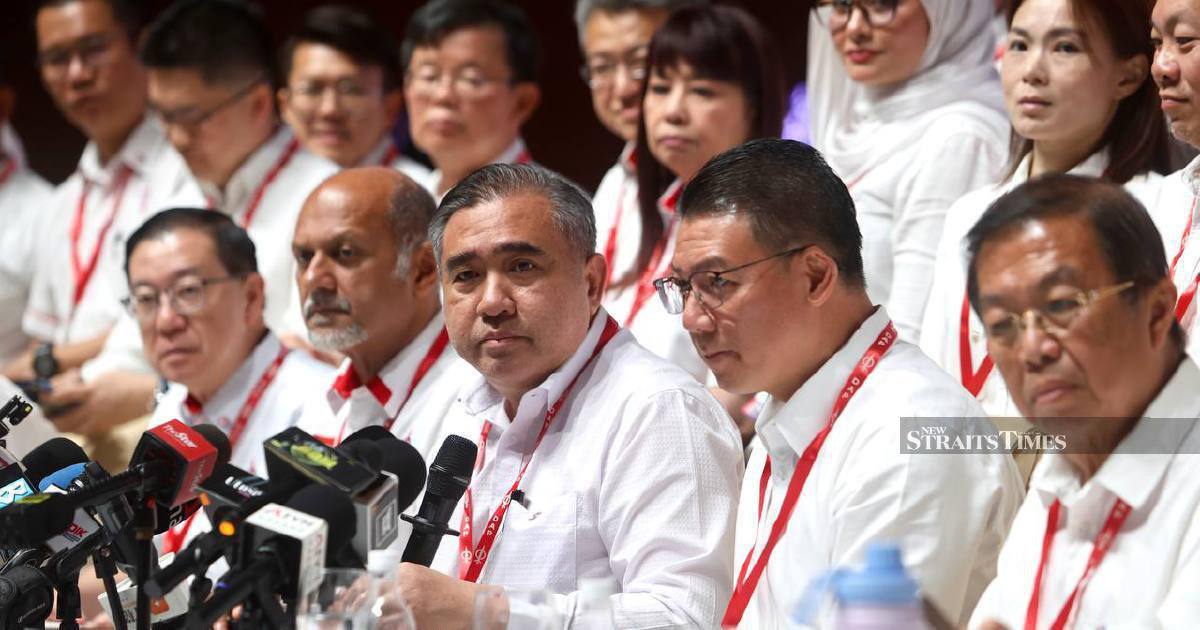
The Democratic Action Party has confirmed it will press ahead with its collaborative arrangements with Umno, notwithstanding mounting frustration within its grassroots over the legal outcome affecting Barisan Nasional chairman Datuk Seri Ahmad Zahid Hamidi. The commitment, articulated by party transport minister Loke Siew Fook in Putrajaya, underscores the delicate balancing act required within Malaysia's current political architecture, where governing coalitions demand sustained cooperation across ideological and historical divides.
The discharge without acquittal verdict—a legal classification that falls short of formal exoneration—has emerged as a flashpoint threatening the stability of the Pakatan Harapan-Umno alliance that anchors the present administration. Within DAP circles, significant numbers of members and supporters have expressed dismay that a prominent figure from a party long positioned as the architect of systemic corruption could avoid complete judicial vindication. This sentiment has percolated through grassroots meetings and party forums, creating tangible pressure on leadership to adopt a harder stance.
Yet Loke's public reaffirmation represents a pragmatic assessment of political necessity. The coalition structure that emerged from the 2022 elections depends fundamentally on Umno's continued participation, particularly given demographic and geographical voting patterns that make single-party dominance mathematically difficult. A breakdown in Umno relations would unravel the careful architecture of the current government, potentially destabilising parliamentary arithmetic and inviting scenarios of political crisis. For the DAP, which functions as the largest non-Umno component of the ruling coalition, maintaining constructive engagement serves both immediate governance requirements and longer-term institutional stability.
The Zahid case itself carries dimensions beyond the immediate personalities involved. The DNAA verdict in August 2023 on charges involving alleged misappropriation at the Yayasan Akal Budi Mulia foundation generated broader conversation about Malaysia's justice system, the application of evidentiary standards, and the public perception of accountability among the political elite. The fact that a serving chairman of Barisan Nasional could avoid conviction—even while not achieving full acquittal—struck many observers as emblematic of structural inequities in how the legal system functions when powerful politicians are involved.
Within the DAP specifically, the tension reflects a broader ideological contradiction inherent in the current coalition arrangement. The party built much of its political identity during the Reformasi movement and subsequent years by positioning itself against patronage politics, corruption, and the entrenchment of power among elites. Umno represented, in this framing, the institutional embodiment of these vices. The shift toward working partnership with Umno after the 2020 Sheraton Move and subsequent realignments required significant narrative reframing, but has never fully resolved the underlying tension for many party members whose political consciousness was shaped by opposition to everything Umno represented.
Loke's intervention suggests the party leadership believes that articulating the pragmatic case for continued cooperation—emphasizing the governance benefits, development projects, and policy outcomes achievable through the alliance—remains more persuasive than yielding to base sentiment. This reflects a characteristic tension within Malaysian politics between principled positions and administrative viability. The minister would likely argue that withdrawing from the alliance would serve neither the party's electoral interests nor the country's political stability, and would ultimately harm the constituencies and communities the DAP represents.
The sustainability of this approach remains an open question, particularly if legal proceedings or political developments further implicate senior Umno figures. The coalition's stability depends partly on DAP members and voters accepting that pragmatic governance requires working with political adversaries and even tolerating outcomes they find morally unsatisfying. But there exist real limits to such acceptance; if the perception grows that the alliance is simply shielding corrupt politicians from accountability, the political cost to DAP could intensify significantly.
From a Southeast Asian perspective, Malaysia's experiment with cross-coalition government reflects patterns visible across the region, where fragmented parliaments force unlikely partners into shared governance. Thailand, Indonesia, and the Philippines have all navigated similar arrangements, with varying degrees of success. The Malaysian case offers a distinctive illustration of how parties navigate the tension between maintaining sufficient political distance to preserve separate identities while achieving practical cooperation on legislative and executive matters.
The coming months will likely test the depth of DAP's commitment to this arrangement. Further legal developments, parliamentary votes on contentious legislation, or expressions of grassroots discontent could all shift the calculus. For now, however, Loke's statement represents the official position: the partnership continues, even as the Zahid situation registers as a persistent source of internal friction that requires careful management rather than resolution.

