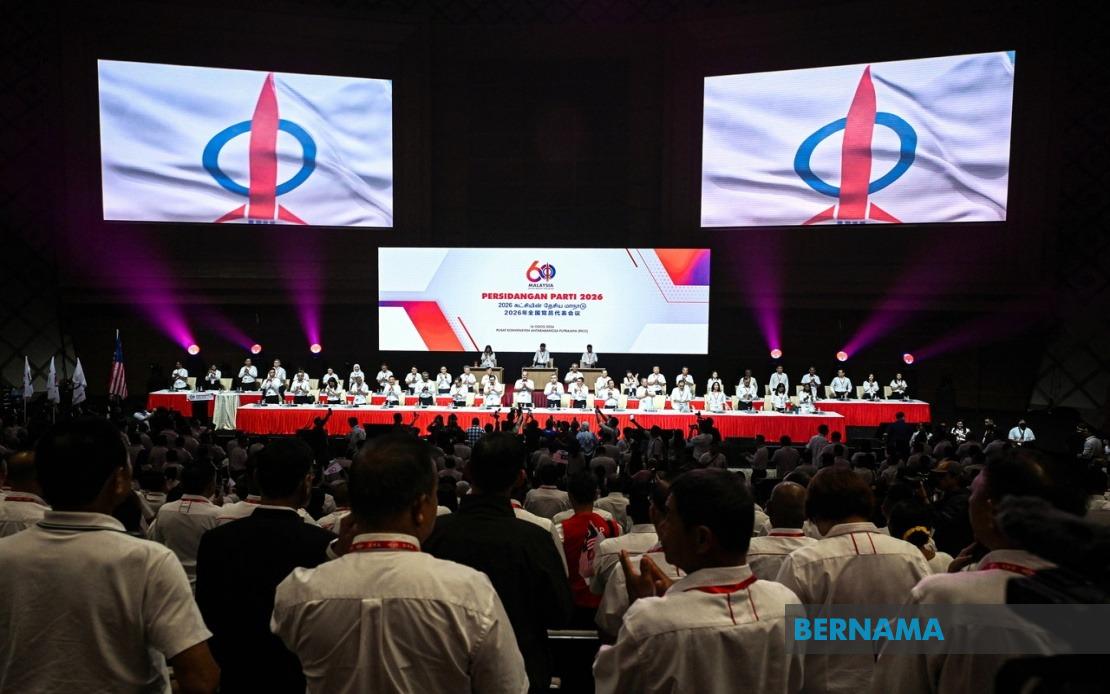
The Democratic Action Party's national conference in Putrajaya has witnessed overwhelming backing from regional representatives for the party to maintain its position within the federal Unity Government coalition. During deliberations at the DAP 2026 National Conference held at Putrajaya International Convention Centre, 14 state delegates articulated their support for DAP to remain a component of the administration led by Prime Minister Datuk Seri Anwar Ibrahim, framing the decision as essential to delivering on commitments made to voters and preserving Malaysia's political landscape from unnecessary turbulence.
The delegates presented a multifaceted rationale for continued government participation that extends beyond simple political calculation. Their arguments encompassed the opportunity to drive institutional reform, strengthen anti-corruption initiatives, address rising living costs, safeguard the interests of Malaysia's multicultural population, preserve policy continuity, and mitigate the prospect of a snap election. These priorities reflect the bread-and-butter concerns that preoccupy voters across the country, particularly as economic pressures mount and citizens remain alert to governance standards.
Perak representative Jason Ng Thien Yong articulated a pragmatic perspective during the debate, acknowledging that despite electoral setbacks in certain state contests, the party would demonstrate greater maturity by remaining within government and implementing meaningful reforms from within the administration. He contended that reform initiatives pursued from inside the cabinet carried greater weight and efficacy than opposition posturing. His emphasis on strategic positioning ahead of the coming general election underscores DAP's calculation that demonstrable performance in office will prove more persuasive to voters than opposition rhetoric.
A veteran party figure from Pahang, Leong Ngah Ngah, similarly counselled delegates to adopt a measured approach, invoking the three years of achievements under the Unity Government's stewardship. The appeal to maturity and evidenced outcomes represents a response to internal party critics who may view continued coalition involvement as ideologically compromised. By cataloguing specific successes attributed to the government's tenure, Leong sought to establish that partnership governance need not entail abandoning fundamental principles or reform aspirations.
The Selangor contingent, represented by Muhammad Shakir Amerr Mohideen, channelled optimism about DAP's capacity for renewal and repositioning in the electoral landscape. His assertion that the party's administrative competence and governance record constitute the foundation for recovering lost voter confidence in previously sympathetic constituencies reflects DAP's broader electoral strategy—that good governance serves as the ultimate campaign instrument. This represents a confidence that despite recent electoral disappointments, proper administration will reverse perceptual damage.
Melaka's Jason Tze-Xi Nathan introduced an additional dimension: the reputational hazard of abandoning government when no compelling alternative coalition exists. The awkwardness of explaining withdrawal to constituents—particularly in areas where DAP retains meaningful support—constitutes what he framed as a compelling reason to persist. This argument acknowledges the practical reality of Malaysian electoral mathematics, where sudden coalition shifts generate voter confusion and potential backlash.
The eastern perspectives were represented by Sabah's Yap Wui Lip, whose contribution highlighted subnational concerns. His insistence that continued government participation need not silence advocacy for Malaysia Agreement 1963 implementation and Sabahan rights protections addresses anxieties that peninsula-based coalition partners might marginalize East Malaysian interests. This framing suggests that DAP envisions its role as an internal advocate for overlooked constituencies and constitutional obligations, rather than passive coalition participation.
Ten additional state delegates across every region of Malaysia—from Kelantan through Terengganu, Sarawak, Kedah, Negeri Sembilan, Johor, Kuala Lumpur, Perlis, and Penang—contributed to the supportive chorus. The geographic breadth of this backing indicates that support for continued government participation transcends regional factional divisions within DAP, suggesting organizational cohesion around the chosen direction, though the conference structure allowed alternative viewpoints to be aired and considered.
Secretary-General Anthony Loke's closing remarks during the debate winding introduced an important qualification: continuation in government, should delegates vote affirmatively, would not constitute a blank cheque to either the Central Supreme Committee leadership or the Prime Minister. This clarification attempts to reconcile DAP's coalition role with its identity as an independent political force capable of critical engagement. The emphasis that reform and renewal commitments remain the conditional foundation for continued participation speaks to concerns that coalition discipline might subordinate DAP's reform agenda to broader government imperatives.
The procedural arrangements for the vote carry their own significance. With 4,264 delegates from 1,704 eligible branches entitled to participate through secret ballot, the conference represents the largest expression of DAP grassroots opinion available. The secret ballot mechanism, in particular, provides delegates cover to vote their conscience rather than responding to perceived pressure from senior leadership. A substantial majority vote in favour would represent a genuine grassroots endorsement rather than a top-down diktat, lending legitimacy to whatever decision emerges.
The timing of this conference, coinciding with DAP's 60th anniversary celebrations, infuses the deliberation with historical weight. The party is one of three principal components within the Pakatan Harapan coalition structure alongside PKR and Amanah. The decision to remain in the Unity Government therefore carries implications beyond DAP itself, affecting the stability and trajectory of the broader Pakatan formation. Should delegates approve continued participation, it signals that at least this major coalition component intends to contest the next general election from within government, equipped with administrative credentials and reform accomplishments to present to voters.
For Malaysian political observers and Southeast Asian analysts watching coalition dynamics, this conference represents a critical juncture in evaluating whether Malaysia's experiment in broad-based coalition governance can sustain itself through electoral cycles. The arguments presented by delegates—centred on delivering results, managing reform within institutional constraints, and maintaining policy stability—contrast with opposition narratives emphasizing ideological purity and wholesale change. The outcome will help determine whether Malaysian voters ultimately reward administrative performance or respond more powerfully to change-oriented messaging in coming elections.

